



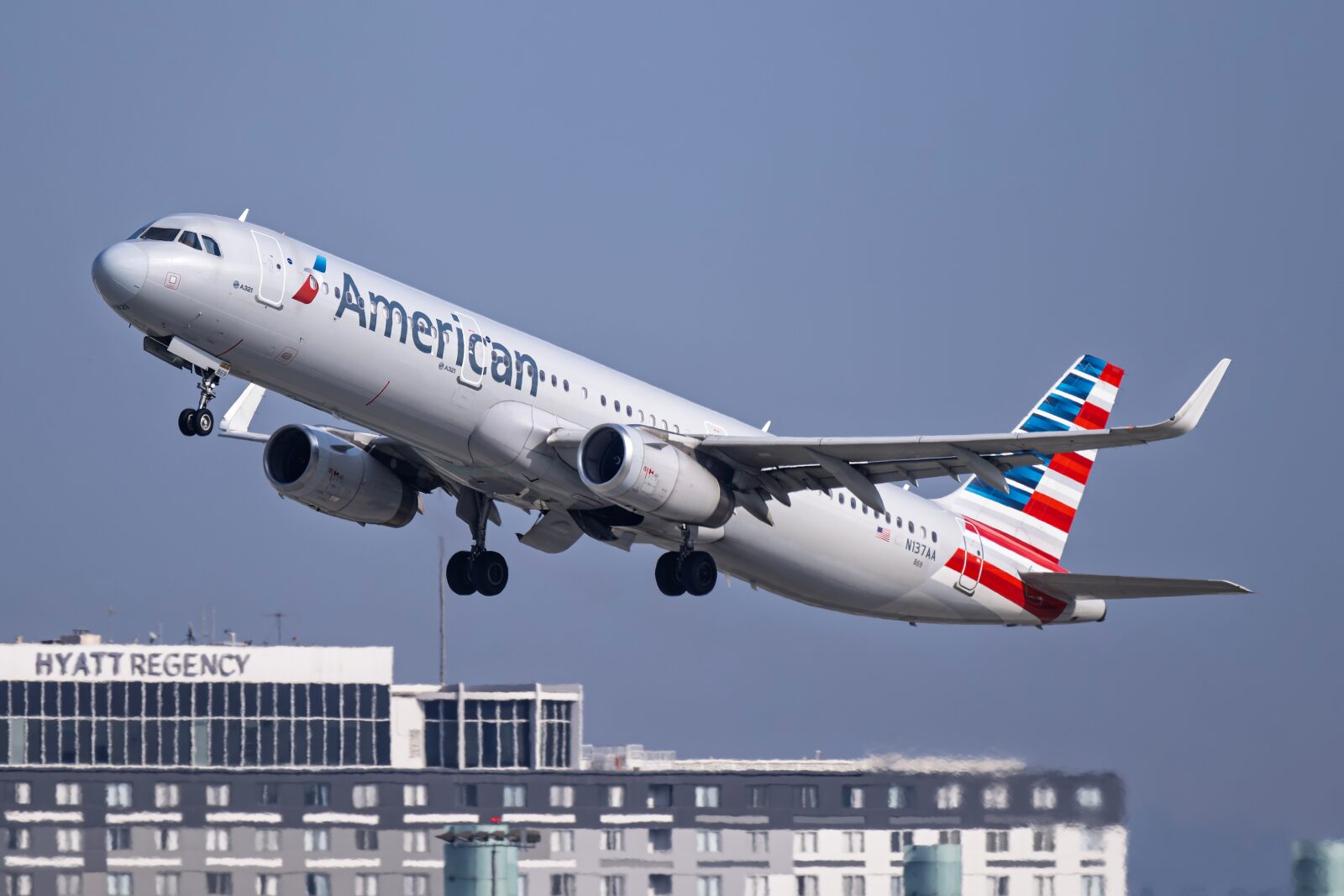
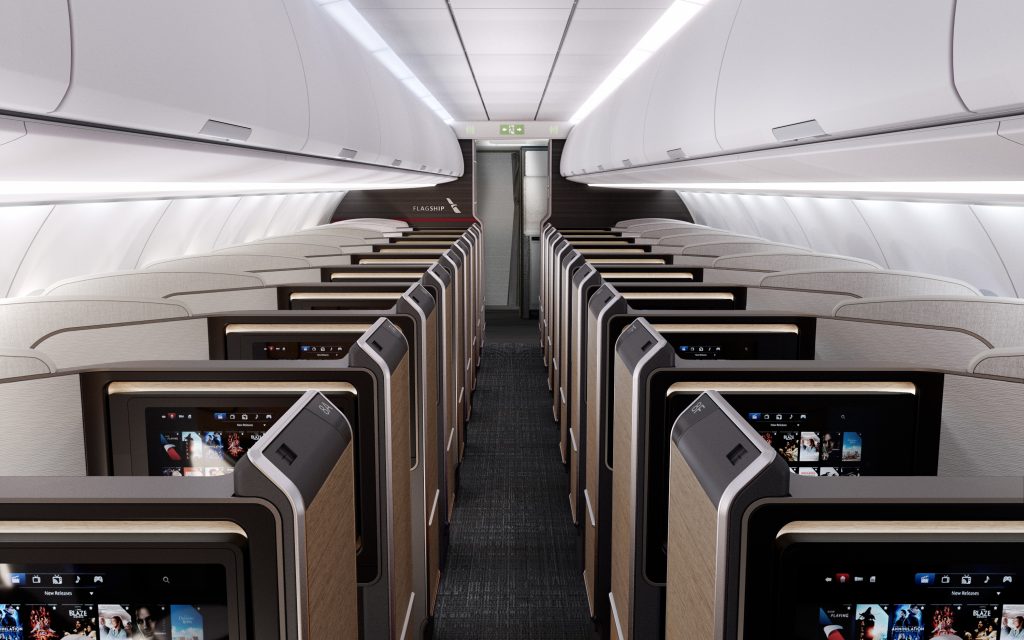
American Airlines is planning to operate an Airbus A321neo, which can usually carry 190 passengers, completely empty up to 40 times back and forth across the Atlantic Ocean on a 2,909 nautical mile journey that will take an estimated six hours to fly in either direction.
The reason for the gas-guzzling journey is so that American Airlines can train pilots ahead of the launch of the carrier’s new single-aisle transatlantic flights, which are set to get underway as early as March 2026.
American Airlines’ plans to fly empty planes across the Atlantic between Philadelphia and Edinburgh, United Kingdom, were revealed by aviation insider xJonNYC on X and Bluesky, who discovered the carrier planned to operate the flights every day between September 4 and September 26, 2025.
The airline is using the same brand-new Airbus A321neo for this mission as it clocks in the airmiles before returning to its day job as a domestically configured aircraft crisscrossing the United States.
Using the special flight number of AA9805, the aircraft is scheduled to depart Philadelphia at 8:40 pm and arrive in Edinburgh the following day at 8:30 am. The return flight then departs just an hour later at 9:30 am, operating as flight AA-9806 back to Philadelphia.
The outbound flight can be completed in around six hours, but due to jet winds, the return flight is currently taking nearly seven and a half hours.
American Airlines is currently serving Edinburgh from Philadelphia as a summer seasonal flight through to the end of September using one of its Boeing 787-9 Dreamliners, but rather than offering additional capacity at a discount, the airline has instead to fly the aircraft empty.
This is all in preparation for the entry into service of the A321XLR – the next generation of the A321 designed specifically for long-haul flights and able to fly for up to 11 hours with a maximum range of 4,700 nautical miles.
The XLR stands for ‘extra long range’, and this long-haul capability has been made possible by an additional fuel tank installed in the belly of the plane.
American Airlines has 50 of these planes on order, and late last month it was revealed that the “primary mission” of these aircraft would be operating transatlantic flights.
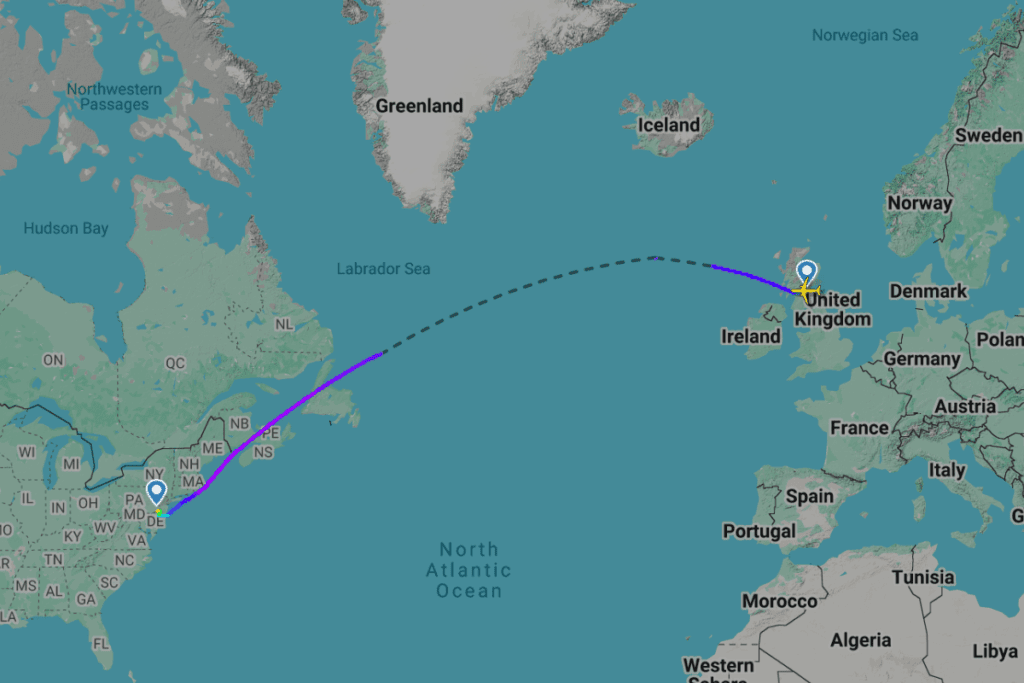
Although American Airlines has already taken delivery of its first A321XLR, the aircraft is currently sitting in storage because of delays with the new fully-flat Flagship Business Class seats, which will be installed at the front of the plane.
The aircraft is, however, expected to enter into service next March, and in preparation, the airline now has to start training pilots for these new aircraft.
Effectively, there isn’t any difference between flying an A321XLR and any other A320-series aircraft, but pilots operating these flights must obtain an ‘Atlantic European’ qualification, which includes long-range international elements, which requires some classroom and simulator training.
Given that American’s A320 series-trained pilots don’t currently routinely fly across the Atlantic, that will require quite a bit of training for the 40 pilots who will form the new base in the New York area for A321XLR transatlantic operations.
Interestingly, however, it’s not these 40 pilots who will be flying back and forth across the Atlantic over the coming month, but just a special subset of ‘check pilots’ and trainers who are responsible for training the base pilots for their Atlantic Qualification.
Although the pilot base will be in New York, the A321XLRs could be used for transatlantic flights across the East Coast, including from Philadelphia and even Charlotte.
These aircraft will allow American Airlines to operate flights to destinations that might not necessarily have enough demand for year-round service using a widebody aircraft, such as Philadelphia to Edinburgh.
They will also give American Airlines the opportunity to open up new routes to currently underserved markets.
Where could American’s A321XLR fly?
While we now know that American Airlines plans to primarily deploy its A321XLR fleet on transatlantic flights to Europe, the exact route network hasn’t yet been revealed.
These aircraft will, however, likely serve destinations with lower demand, so don’t expect the A321XLR to be flying between major hubs like New York JFK to London Heathrow or Paris Charles de Gaulle.
The A321XLR could, however, easily replace the Boeing 787-8 Dreamliner on routes between aircraft pairs, like:
- Miami to Milan (4285 nautical miles)
- Philadelphia to Naples (3906 nautical miles)
- Philadelphia to Milan (3553 nautical miles)
- Charlotte to Edinburgh (3299 nautical miles)


Back and forth *20 times, for a total of 40 flights.
If it’s a training flight, how can they “offer[] additional capacity at a discount”? I would think that they are required to fly without passengers. It’s not a real flight – no different than flying around in circles as far as passengers are concerned.
When a US flag carrier introduces a new aircraft to the fleet, the FAA must ensure that the airline and aircraft are capable of providing safe and reliable service in the aircraft. I have flown on numerous “test flights” where the jet is fueled up and we takeoff and fly for 8-9 hours to several airports to test the aircraft and airport combinations, ground services, diversions and, at the same time, qualify the various instructors and line check pilots prior to putting passengers on the aircraft. This is especially true of transoceanic flights and ETOPS certification.
Global Warming is a dire concern that must be taken seriously!
The pilot training will include a different type of communications. When several miles offshore the normal air/ground radio and frequencies are no longer useful. Airlines switch to a “short wave” type Radio with much greater range. Pilots communicate with air traffic controllers in New Foundland and Scotland, among others. Different communication procedures are also used.
That’s what you call a pairie flight.