



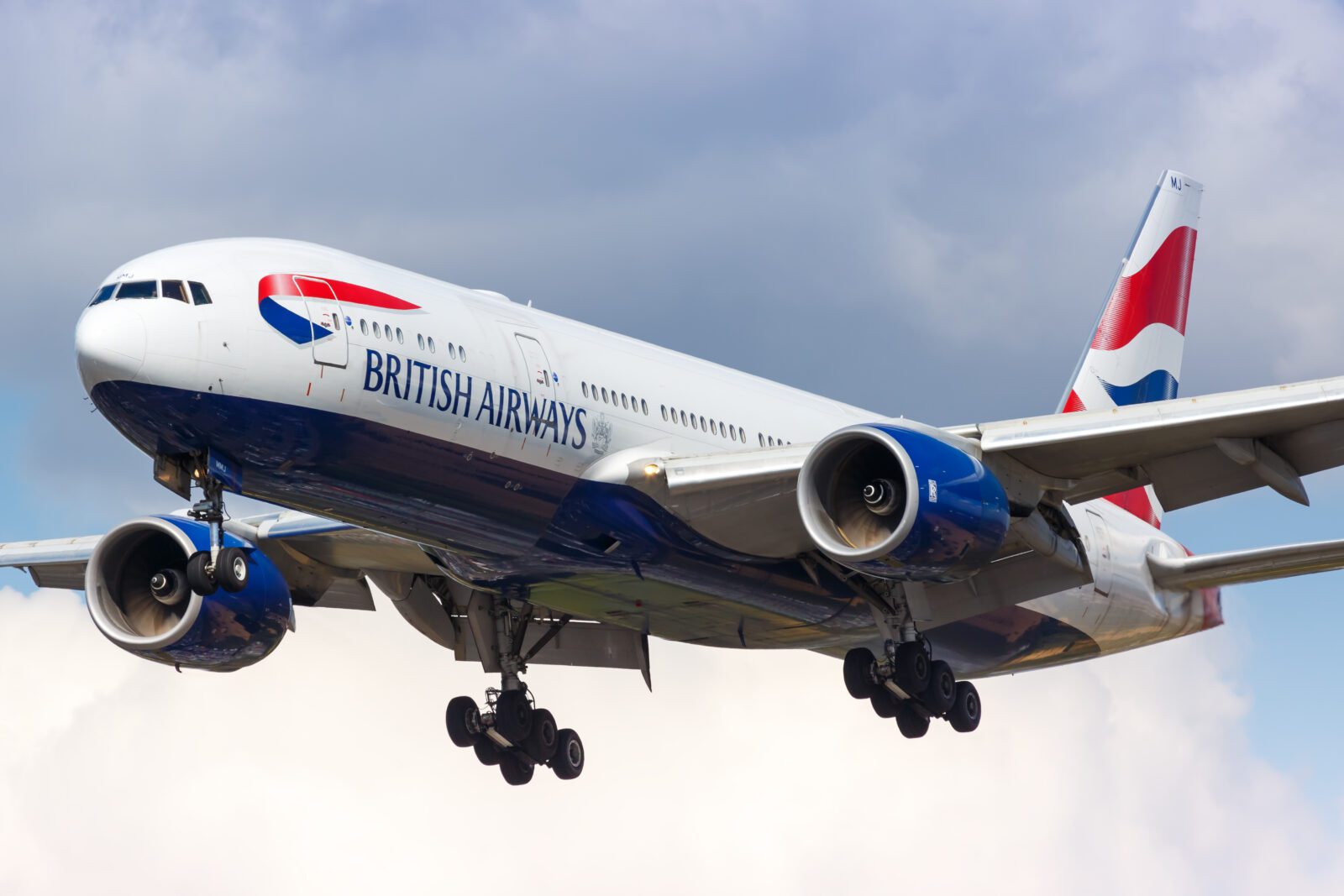
Anyone who has flown long-haul at some point will probably all say the same – the experience left them feeling under the weather, and it doesn’t matter how frequent a traveler you are. But it’s not just jetlag that’s responsible for leaving you feeling like you’re battling a flu, with your body aching and your sinuses in distress.
Nor is it only flyers trapped in cramped Economy Class seating who experience these debilitating symptoms. While First Class is marketed as a way to get you to your destination feeling as fresh as a daisy, you might not be able to avoid these same lousy feelings that everyone else on the plane is feeling.
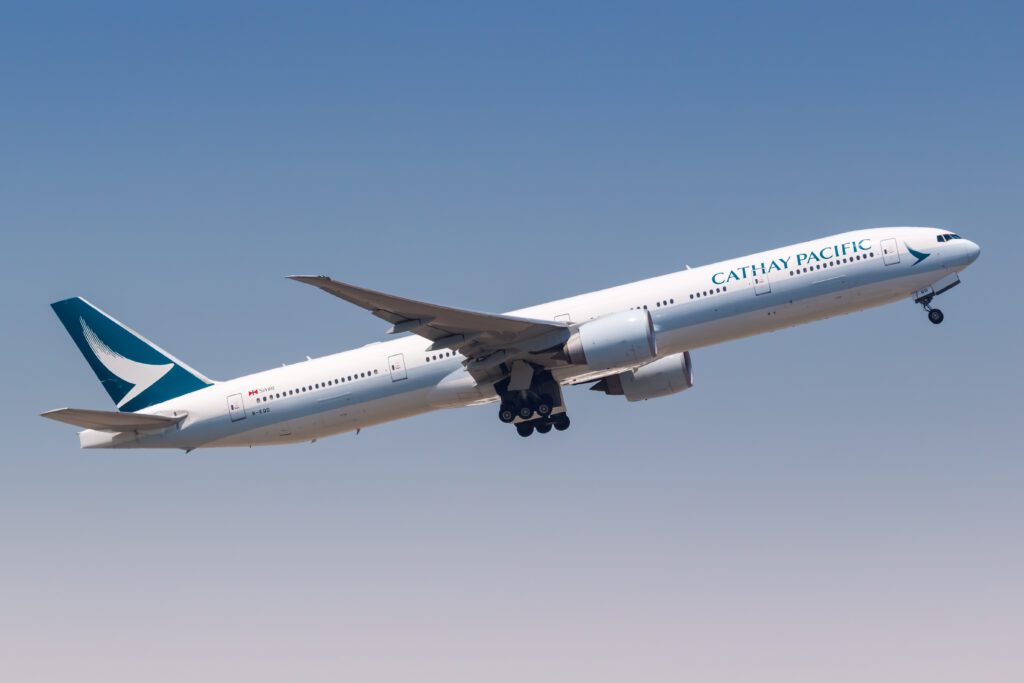
What people are now discovering, however, is that not all aircraft are made equal, and the type of airplane operating your flight could make a huge difference in how you feel when you finally step off the plane after a long flight.
“Man, my second long haul on a 777 this year and I always feel like absolute CRAP after those flights,” one person recently wrote on the popular social media site Reddit.
“The air is soooo dry and disgusting, and the noise is debilitating,” the person continued. “I have no idea how cabin crew can fly these planes multiple times a month.”
The passenger’s experience on the Boeing 777 is far from unique.

“I am always exhausted after a long-haul on a 777,” someone responded. “I now actively seek out routes that have other aircraft, even if they cost more.”
Another person wrote: “Totally agree, flew the 777 to Dallas and back last November and wasn’t right for a few days after arriving in the US.”
A third person also called out the Boeing 777, noting: “They are significantly worse cabin environments than the newer planes.”
So why is the Boeing 777 causing passengers to feel so lousy after a long-haul flight, especially compared to planes like the Boeing 787 Dreamliner and Airbus A350?
The answer isn’t just that many of these planes have been flying for many years, although it’s worth bearing in mind that in the case of some airlines like British Airways, they have a substantial number of 777-200 jets that are nearly 30 years old.
But a Boeing 777 that is three decades old isn’t any different from a Boeing 777 that was built last year. The aircraft was developed in the late 1980s and early 1990s, and the first plane entered commercial service with United Airlines back in 1995.
How Different Aircraft Compare
| Cabin altitude | Differential pressure | Maximum cruising altitude | |
|---|---|---|---|
| Boeing 777 | 6,000 – 8,000 feet | 9.1 psi | 43,000 feet |
| Boeing 787 Dreamliner | 6,000 feet | 9.4 psi | 43,000 feet |
| Airbus A350 | 6,000 – 6,500 feet | 9.4 psi | 43,100 feet |
| Airbus A380 | 7,000 – 8,000 feet | 8.4 psi | 43,100 feet |
Since then, cabin amenities have drastically improved, but the design of the actual plane hasn’t, so what is causing passengers to feel like they are battling a cold after flying on one remains the same.
There are two main reasons why the Boeing 777 is going to wreak havoc on your body:
- First, the altitude at the cabin is pressurized to
- Second, the way that air is supplied to the cabin
Cabin Pressurization
Because the Boeing 777’s fuselage is made of aluminum, the designers found that it could be pressurized to maintain a maximum altitude in the cabin of between 6,000 and 8,000 feet.
In contrast, the fuselage of the much newer Boeing 787 Dreamliner is made out of composite materials that allow the plane to be pressurized to an altitude of 6,000 feet, even at its maximum cruising altitude of 43,000 feet.
That 2,000 feet might not sound like much, but it really is, especially when your body is enduring the effects over a sustained period of many hours. The result is that flying on a Dreamliner is going to feel a lot less fatiguing than flying on a 777 – and that passengers notice even more because they are flying different aircraft types more regularly.
The air supply to the cabin
Contrary to popular opinion, the engineers at Boeing never deliberately made the cabin air as dry as possible to prevent the aluminum fuselage from developing rust, but it turns out to be an unintentional feature that reduces the risk of corrosion on the airframe.
The Boeing 777 feeds air into the cabin via the aircraft engines (the so-called ‘bleed air’ system). During this process, the air becomes very hot and dry, bringing the cabin humidity level down to an alarming 10% to 20%.
Newer aircraft, like the Boeing 787 Dreamliner and Airbus A350, are able to maintain higher humidity levels because of their composite structure fuselages.
What about the Airbus A380?
The Airbus A380 superjumbo is often described as the most comfortable aircraft to fly, even for passengers in Economy, even though the double-deck airline maintains a similar cabin pressurization to the Boeing 777.
One of the reasons for this is simply down to the plane’s sheer size, smooth ride, and quiet cabin environment, which has much less of an impact on passengers than the much noisier Boeing 777.
The larger size of the A380 has a dramatic effect on the perception of comfort felt by passengers, and this could also explain why many people believe the larger Boeing 777-300 is more comfortable than the 777-200.
Will next-generation Boeing 777s also make passengers feel rough?
Boeing is currently trying to get its next-generation Boeing 777 certified – a process that has been hit by delay after delay and pushed the program years over schedule.
Known in its development phase as the Boeing 777X, and now as the 777-8 and 777-9, the plane is crucial to the fleet renewal plans of major carriers like Emirates, Qatar Airways, Lufthansa, British Airways, and Cathay Pacific, as well as many other airlines.
The good news is that while the 777X will maintain an aluminum fuselage, a new pressurization system will reduce the cabin altitude to around 6,000 feet even when the plane is flying at its maximum cruise altitude of around 41,000 feet.
How to minimize the effects of older planes on your well-being
In the vast majority of cases, passengers don’t feel awful after flying on a Boeing 777 because they’ve picked up a bug whilst onboard, but are simply dehydrated and suffering from dry eyes and sinuses.
It’s no surprise then that travel experts have long urged airline passengers to drink lots of water, avoid alcohol, and steer clear of salty foods in a quest to stay as healthy and hydrated as possible.
Some travelers also swear by lubricating eye drops and a saline nasal spray to keep their sinuses from drying out, while earplugs can go a long way to insulate you from the engine noise reverberating around the cabin.


Funny how perspective changes things. In the early 1990s, the 777 was touted for how quiet it was, compared to older aircraft at the time.
Even 727s were called Whisperjets at one point!