



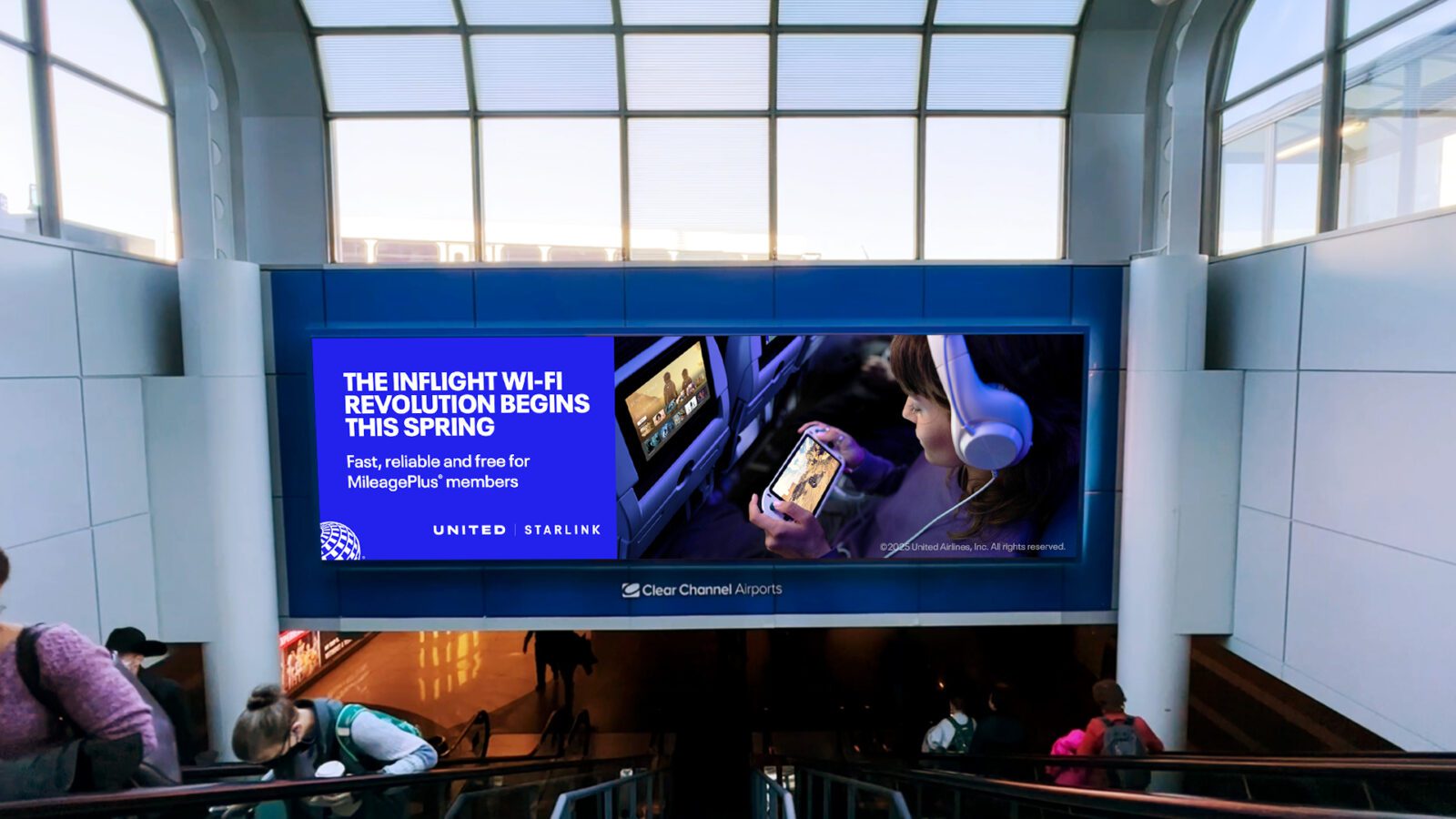
United Airlines is speeding ahead with plans to install super-fast Starlink Wi-Fi across its mainline fleet, with plans to equip more than one aircraft per day with the satellite internet service throughout 2026.
According to the Chicago-based carrier, expects to have 450 mainline aircraft fitted with Starlink by the end of this year and will now have almost its entire fleet equipped by next year.
United Airlines became the largest-ever airline customer of Starlink when it announced the record-breaking deal in September 2024. In total, more than 1,000 United Airlines and United Express regional jets will have free Starlink internet installed.
The rollout started with United focusing on its regional fleet in 2025, and the carrier soon discovered that the core installation could be completed in as little as eight hours – around ten times faster than rival Wi-Fi systems.
The whole retrofit process does, however, take a little longer. Up to four days, even for smaller regional jets. The reason is that engineers first have to rip out legacy systems and carry out tests before closing up the aircraft.
Even so, the downtime is around half that of installing rival systems.
Although installing Starlink on larger widebody planes is expected to take slightly longer, experience from international carriers like Qatar Airways shows that the retrofit process is still pretty fast.
In fact, Qatar Airways managed to install Starlink on more than half of its Boeing 777 fleet in just four months, and the airline has also had considerable success in installing Starlink on its Airbus A350 fleet.
Given Elon Musk’s recent spat with European low-cost airline Ryanair over the weight and drag of Starlink, United Airlines says the upgrade to Starlink will reduce fuel burn as the new hardware weighs as little as 85 pounds.
In comparison, United says the existing internet hardware that it is replacing can weigh as much as 300 pounds.
According to Starlink, the slimline profile of the Starlink antenna on top of the aircraft fuselage only leads to an increase in fuel burn of around 0.3% through additional drag.
Starlink s fast becoming the near de facto in-flight Wi-Fi service as airlines race to equip their fleets with fast and free internet.
The service uses a so-called ‘constellation’ of low-earth orbit satellites to provide high-speed, low-latency internet access around the world. Unlike rival in-flight Wi-Fi services, Starlink nearly always insists that airlines provide the service to customers for free across multiple devices.
The only close rival to Starlink is Amazon Leo, which will use very similar technology. The only problem with Amazon Leo, however, is that it only started firing its satellites into space last year and doesn’t have nearly enough in orbit yet to switch the system on.
Despite that pretty fundamental setback, Amazon Leo has already signed up JetBlue as a customer, with an anticipated go-live date of some point in 2027.
American Airlines is also said to be in talks with Amazon Leo, although discussions are rumored to be in the early stages and could still fall through.