



The White House has been forced to row back on President Trump’s latest threat to ‘decertify’ all airplanes made in Canada. The swift U-turn emerged as it became clear that the administration’s retaliatory action over a perceived snub of Gulfstream private jets would lead to thousands of planes being grounded across the United States.
The row emerged in a Truth Social post on Thursday in which Trump expressed anger with Canadian aviation safety authorities over delays to certifying some of the latest private jet models produced by Savannah-based Gulfstream.
In response to these delays, Trump said he was decertifying private jets made by the Canadian aircraft manufacturer Bombardier (known as the ‘Global’ series and not ‘Global Express’), as well as any other aircraft made in Canada.
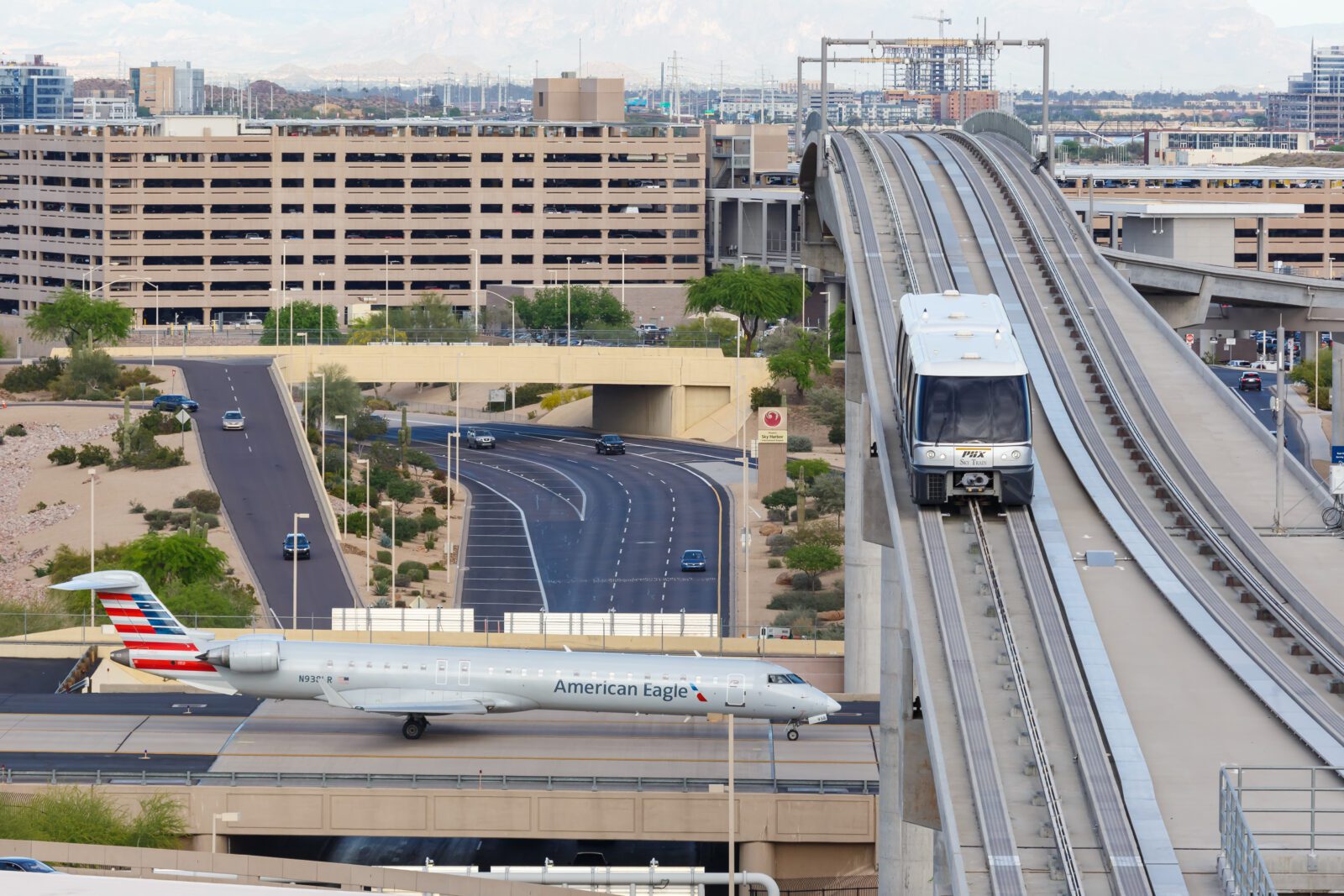
Bombardier is the manufacturer of the popular CRJ regional jet aircraft, which is used across the United States to provide regional connectivity on behalf of American Airlines, Delta, and United Airlines.
Its defense division also supplies the US Air Force with military-configured ‘Global’ jets, which are also known as E-11A aircraft. These aircraft are used to provide a critical communications platform for military forces around the world.
Within hours, however, the White House was forced to make a partial U-turn, explaining that the ‘decertification’ of Canadian-made aircraft would not apply to planes that are already in service.
It remains unclear, however, whether that U-turn also applies to Bombardier Global aircraft that are already in service.
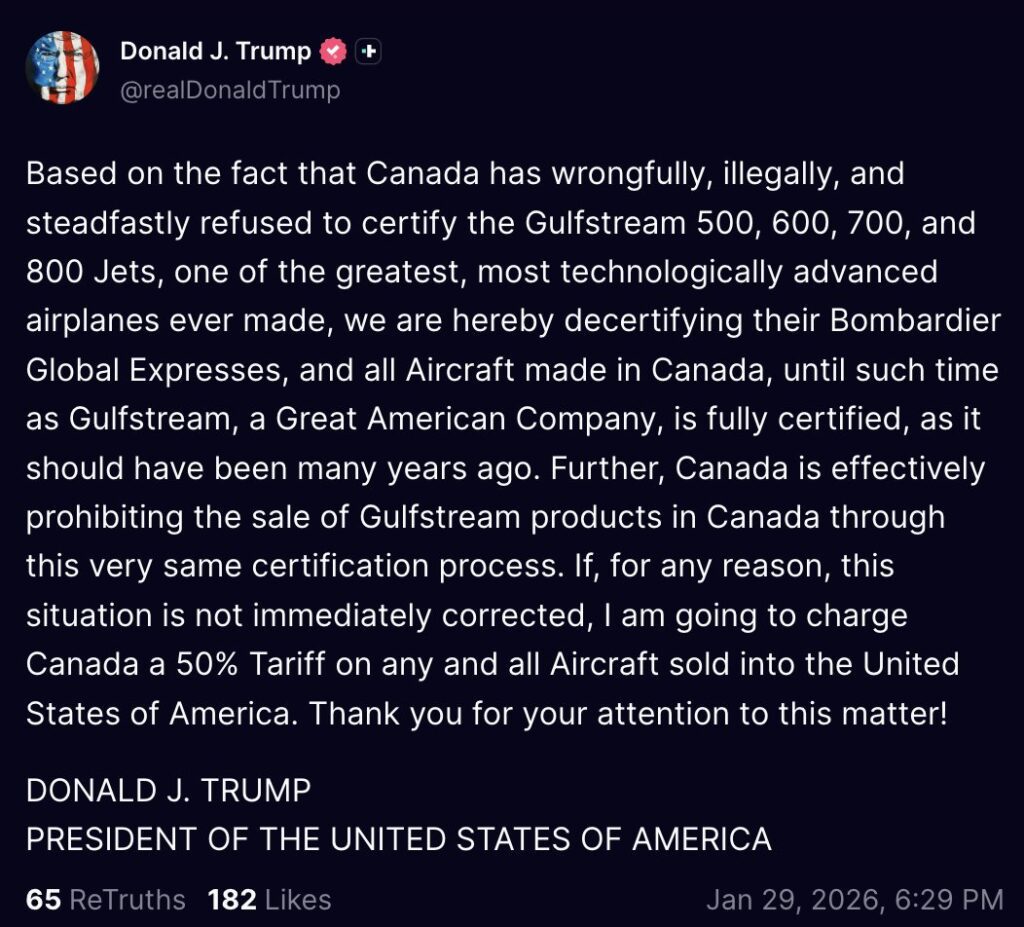
President Trump’s full post explained:
“Based on the fact that Canada has wrongfully, illegally, and steadfastly refused to certify the Gulfstream 500, 600, 700, and 800 Jets, one of the greatest, most technologically advanced airplanes ever made, we are hereby decertifying their Bombardier Global Expresses, and all Aircraft made in Canada, until such time as Gulfstream, a Great American Company, is fully certified, as it should have been many years ago. Further, Canada is effectively prohibiting the sale of Gulfstream products in Canada through this very same certification process. If, for any reason, this situation is not immediately corrected, I am going to charge Canada a 50% Tariff on any and all Aircraft sold into the United States of America. Thank you for your attention to this matter!
DONALD J. TRUMP
PRESIDENT OF THE UNITED STATES OF AMERICA”
As you can see, Trump wanted to decertify all Canadian-made airplanes and also charge a 50% tariff on any aircraft sold into the United States.
Although Trump claimed Canada would be charged the tariff, it is actually paid by the customer. In this case, this would include the Department of Defense, which wants to buy 11 customized Bombardier Global 6500 aircraft for its High Accuracy Detection and Exploitation System (HADES).
In response to Trump’s threat, Bombardier responded, saying in a statement:
“We have taken note of the post from the President of the United States to social media and are in contact with the Canadian government.”
“Bombardier is an international company that employs more than 3,000 people in the U.S. across 9 major facilities, and creates thousands of U.S. jobs through 2,800 suppliers.”
The statement continued: “Our aircraft, facilities, and technicians are fully certified to FAA standards and renowned around the world. We are actively investing in expanding our U.S. operations, including a recent announcement in Fort Wayne, Indiana.”
Canadian officials used to be closely aligned with the US Federal Aviation Administration (FAA) in certifying new aircraft, but in the case of the Gulfstream Global series, Transport Canada has yet to follow the FAA and Europe’s EASA regulator in approving the planes.
One of the reasons for this delay is that Canadian authorities want to carry out their own reviews, rather than just relying on FAA documentation. This change followed certification controversies, in particular, the Boeing 737MAX debacle.
It would be down to the FAA to decertify any aircraft, but it remains unclear how the agency would go about doing this on the back of a trade dispute, rather than for genuine safety concerns.
Along with Bombardier planes, Canada is also home to the Airbus A220 aircraft. The primary factory for these planes is in Mirabel, but Airbus has also opened a production line in Alabama, which makes A220s for US-based customers.