



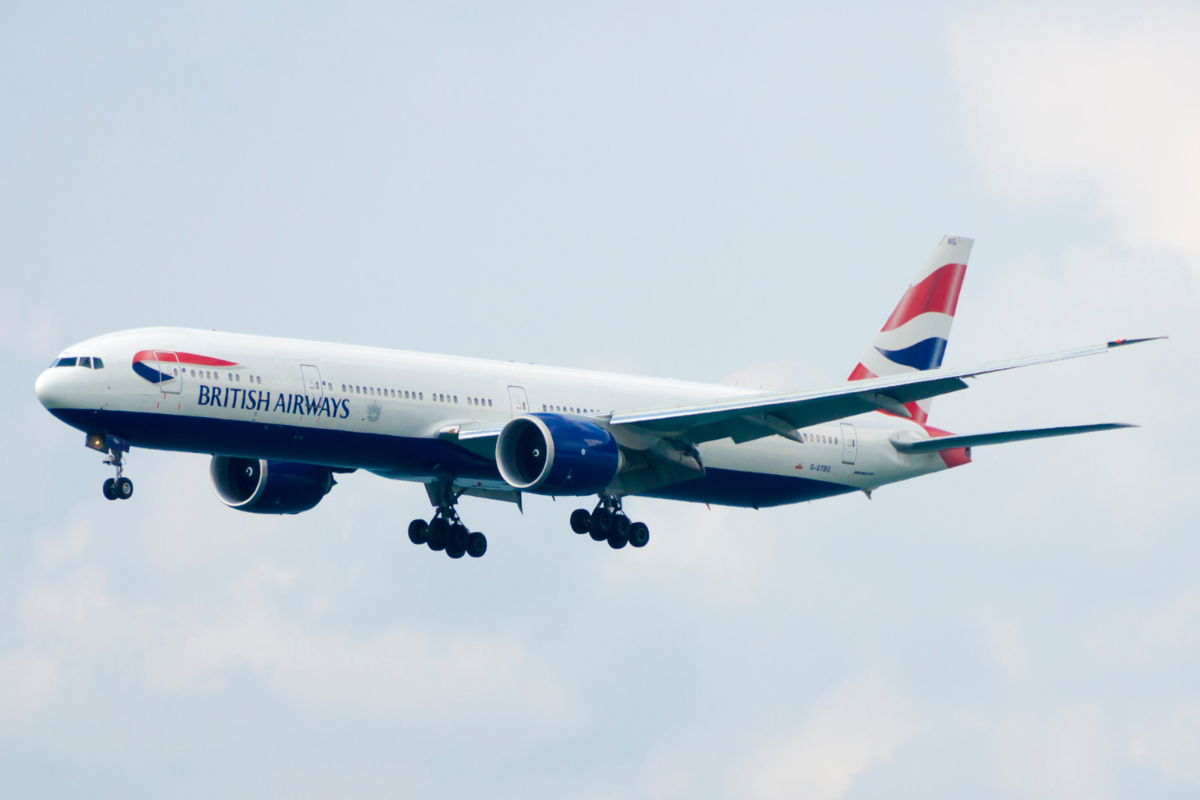
A British Airways passenger has revealed the clever way he managed to win compensation for a cancelled flight after the airline initially claimed that a tropical storm that had shuttered an airport was an ‘extraordinary circumstance’ that voided its liability.
In the aftermath of Brexit, when the UK left the European Union, the British government decided to adopt the bloc’s famous EU261 passenger rights regulations, which are now known as UK261.
I won £520 from British Airways after they cancelled my flight due to a storm (Extraordinary Circumstances) and the reason why will surprise you.
by u/Obvious_Text_7774 in BritishAirways
Although there are a few important differences between EU261 and UK261, the British version of the regulations allows passengers to claim up to £520 in compensation when their long-haul flight is delayed by four hours or longer.
Both sets of regulations, however, have an important get-out clause for airlines to avoid paying compensation – the ‘extraordinary circumstance’ argument.
While lawmakers never bothered to define what an extraordinary circumstance actually is, courts have generally ruled that severe weather counts as an extraordinary circumstance outside of the airline’s control and, therefore, compensation doesn’t have to be paid.
In this case, the passenger was due to fly from Grand Cayman in the Caribbean to London Heathrow with a short stopover in Nassau, Bahamas, where the plane picks up more passengers.
Unfortunately, there was a storm in Nassau that forced British Airways to cancel the flight, and the passenger was delayed overnight.
The passenger claimed compensation under UK261 from British Airways, but, perhaps unsurprisingly, British Airways quickly rejected the claim, saying that an extraordinary circumstance applied to this case.
This initial knockback did not, however, dissuade the passenger who appealed the decision to an independent arbitrator.
What they argued was that while Nassau was indeed closed due to stormy weather, flights from Grand Cayman were operating as scheduled, and there were multiple flights to the United States operating, where they could have then picked up a British Airways flight to London.
The passenger asked British Airways why he hadn’t been booked onto a flight to Miami or New York JFK, but got stonewalled.
The arbitrator ruled in the passenger’s favor, saying that European case law on this matter confirms that airlines have to exhaust all options to reroute passengers. While British Airways doesn’t operate any of its own flights between Grand Cayman and the United States, case law makes it clear that airlines have to rebook passengers on alternative carriers wherever possible.
Because British Airways wasn’t able to prove that it had really exhausted all rerouting options, it was still required to pay out compensation.
Unfortunately, the rerouting section of passenger rights regulations in both the UK and the EU is an area where many airlines fall short. Oftentimes, carriers will do everything possible not to reroute passengers on another airline because of the heavy costs incurred.
What’s interesting, though, is that in 2024, British Airways claimed it was able to rebook delayed passengers on alternative flights on ‘nearly every major carrier’ after it upgraded its rebooking system as part of a £350 million investment in its dilapidated IT infrastructure.
Before the tech upgrade, BA’s computer systems only allowed passengers to choose alternative flights operated by American Airlines, Iberia, Finnair, and Japan Airlines, while rerouting on any other carrier required long waits on the phone to get a customer service agent to make a booking on their behalf.
It doesn’t appear, however, that the self-proclaimed ‘game changer’ tech worked in this case.
Given that even this IT upgrade doesn’t always work out as described, passengers are advised to do their own research and find alternative flights on other carriers that they can then present to the airline and ask to be booked on.
If an airline refuses or their booking system just won’t allow it, then compensation could well be payable even if the original delay was due to an extraordinary circumstance.
Unfortunately, British Airways does have a habit of rejecting UK261 claims even when they appear to be legitimate. In 89% of rejected compensation claims that were appealed to an independent arbitrator, British Airways was forced to pay out compensation.
In comparison, the uphold rate in favor of consumers for complaints against Virgin Atlantic was 51%, for Ryanair it was 28%, and EasyJet had an uphold rate of just 16%.


If anyone was acting under the delusion that BA operate honestly the 89% overturn rate and over £4million BA were forced to repay in 2025 alone speak to the reality.
All this while claiming “investment” and recording profits so high that they engaged in share buybacks to inflate bonuses…