



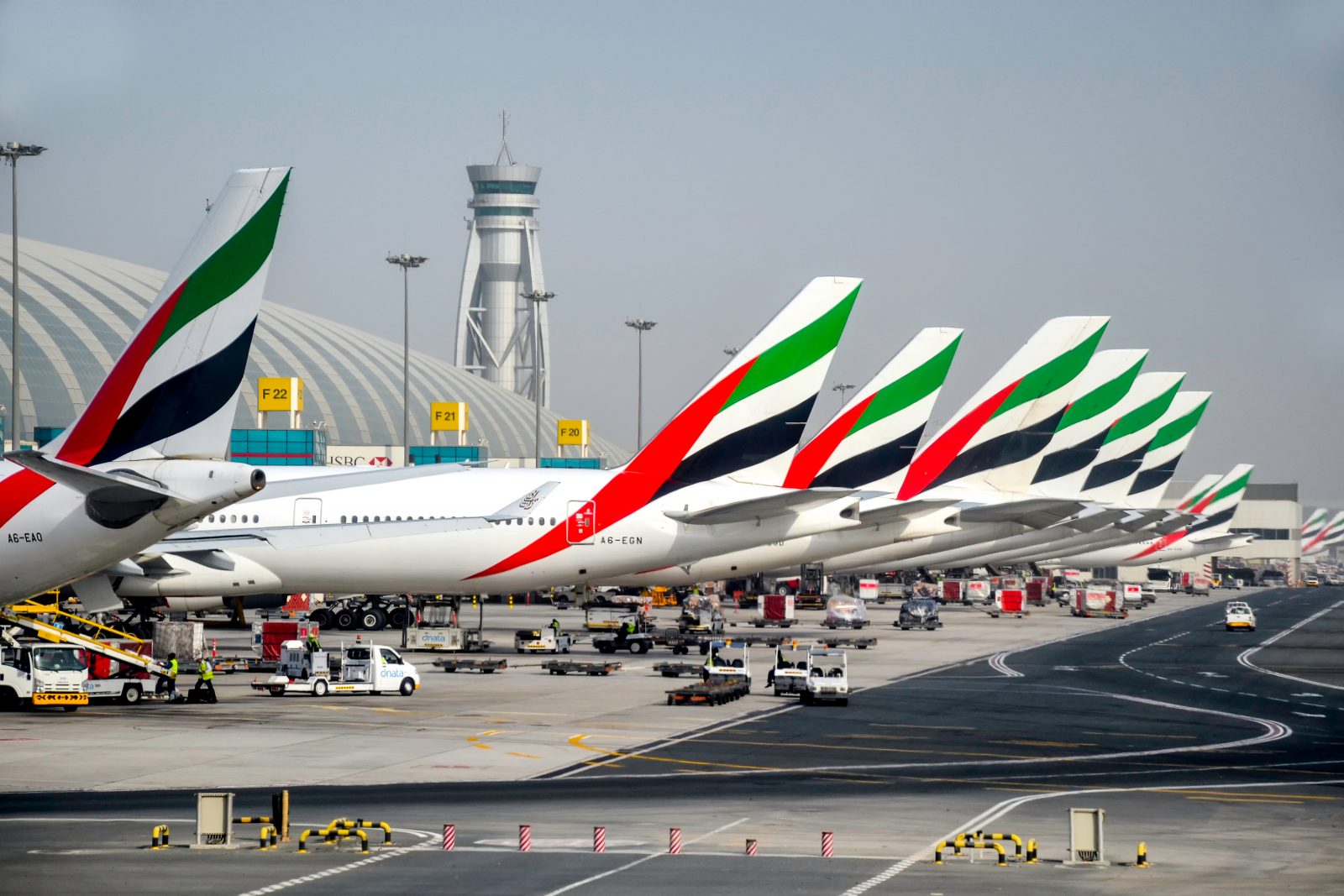
Passengers stranded in the Middle East due to the closure of airspace in Bahrain, Kuwait, Qatar, and the United Arab Emirates (UAE) are quickly discovering that their choice of airline can have a huge impact on the level of help and assistance they are legally entitled to.
It remains unclear when some of the busiest international airports in the world, like Dubai International Airport and Doha Hamad, will be able to reopen, and passengers heading through mega hubs in Abu Dhabi, Doha, and Dubai are now realizing they could be stuck in the Middle East for days to come.
But what help these stranded passengers are entitled to during their protracted delays will vary massively from one airline to the airline… and what might be surprising is that some of the ‘best’ airlines in the world offer the protection in this type of situation.
Why? Well, it all comes down to passenger rights regulations and specifically rules that cover European and British-registered airlines.
Because, unlike nearly every other country in the world, British and European airlines are legally mandated to provide a minimum level of assistance to passengers, no matter the reason for the delay or flight cancellation.
The rules differ ever so slightly depending on whether you are flying with a European or British airline.
Under Europe’s famed EC-261 passenger rights regulations, passengers delayed by four or more hours on a long-haul flight, such as Dubai to Frankfurt or Paris, are entitled to meals and refreshments, hotel accommodation, and transportation to and from the place of overnight accommodation.
When the United Kingdom left the European Union, it decided to keep these passenger rights regulations with some small changes.
For long-haul flights over 3,500 km, a delay of four or more hours entitles delayed passengers to a reasonable amount of food and drink, a means to communicate with loved ones, hotel accommodation for overnight delays, and transport to and from the accommodation.
Importantly, the UK Civil Aviation Authority states that an airline “must provide you with these items until it can fly you to your destination, no matter how long the delay lasts or what has caused it.”
These rules only apply to EU or UK-registered airlines departing from a non-EU or UK airline and arriving in the EU or UK.
In other words, airlines like Emirates and Qatar Airways do not have to provide any of this assistance, and there is no law even closely equivalent in the UAE or Qatar that covers these airlines.
Here are some real-world examples:
- A passenger is starting their journey in Dubai and is booked to fly with Emirates to Munich = they have no legal right to claim assistance like hotel accommodation.
- A passenger is starting their journey in Dubai and is booked with British Airways to London = they have a legal right to food, drink, hotel accommodation, transport, and a means to communicate.
- A passenger is flying with Lufthansa on a single booking from Dubai to New York with a layover in Frankfurt = As the itinerary includes a layover in the EU, they are entitled to passenger assistance under EC261.
This last example is an interesting situation of how booking flights with a layover in the EU or the UK can afford connecting passengers with additional rights than they might enjoy if they booked a non-stop flight or a connecting flight outside of Europe.
Passengers should attempt to identify themselves to their airline to claim these rights, but given the level of disruption, it’s understood that airlines are likely to be overwhelmed and will not be able to directly provide this assistance.
Wherever possible, passengers are encouraged to buy their own refreshments and hotel accomodation but the keep all receipts so that they can claim back ‘reasonable’ expenses at a later date.
Regulators caution that airlines are unlikely to cover bills for ‘luxury’ hotels or alcohol, although what is considered ‘reasonable’ will depend on the individual circumstances.
It’s worth noting that airlines not covered by these regulations will often try to do the right thing, but they are not legally obliged to do so. And as for passengers traveling to or through the Middle East from either the EU or UK, these rules apply to all airlines, regardless of their nationality.