



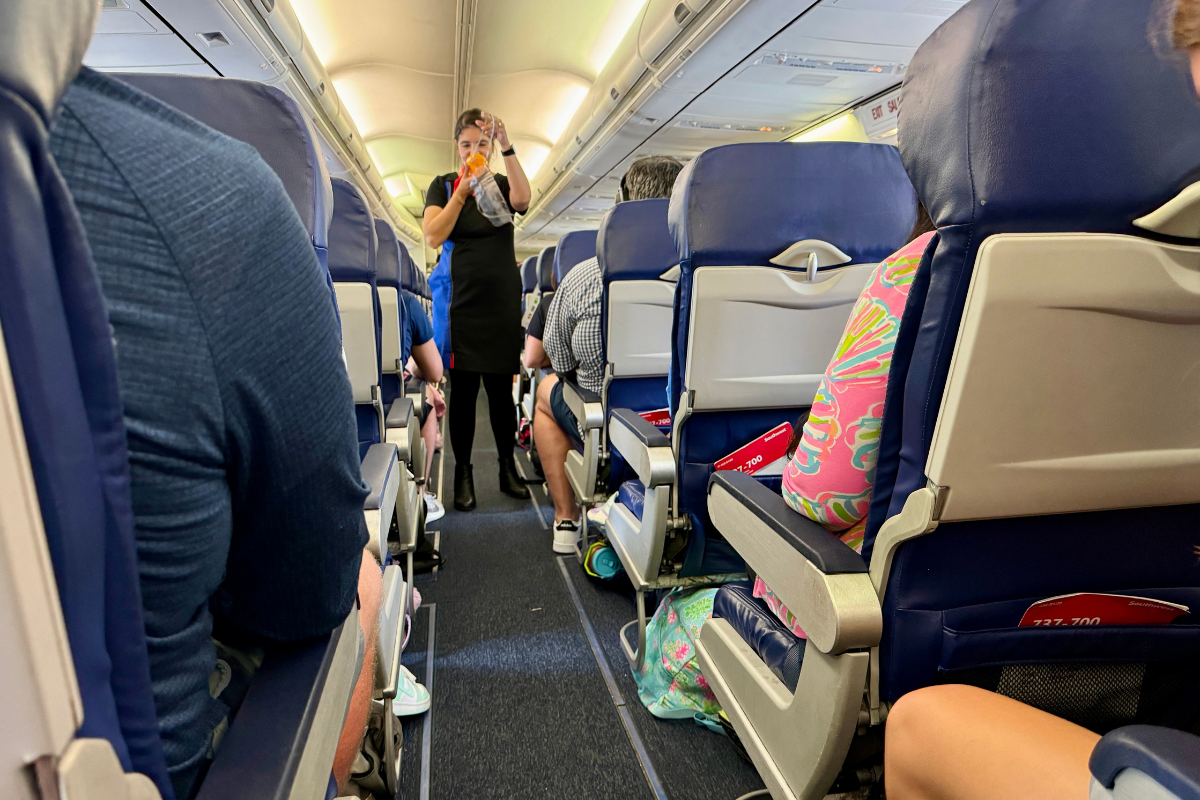
Southwest Airlines employees are said to be up in arms after the Dallas-based carrier banned anyone apart from flight attendants and pilots from using a jumpseat on any of its flights.
Free or deeply discounted flights are one of the best perks of working for an airline, but non-revving, as it is known in the airline industry, is based on a strict space-available basis.
If a flight is fully booked, non-rev airline employees have to hang around the gate until the very last moment in the hope that a regular passenger doesn’t show up in time.
Non-revving is not for the faint-hearted and requires nerves of steel, a lot of patience, and several backup plans, especially during busy travel periods like Spring Break.
If all the regular passengers show up, then non-revs are cast aside and left to their own devices to figure out a way to get to their destination.
There is, though, one last opportunity to get on board: Using a spare jumpseat by one of the cabin doors.
Depending on the length of flights, using a jumpseat as a non-rev can be either a minor inconvenience or an incredibly uncomfortable marathon slog, but when there’s no other option available, a jumpseat is gladly taken to get home.
There are normally more jumpseats on a plane than there are working flight attendants, and while policies vary from one airline to the airline, they’ll generally be assigned to desperate non-revs.
At Southwest, however, the TWU 556 union, which represents flight attendants, has just secured a change in the carrier’s non-rev policy that bans anyone apart from aircrew from using a cabin jumpseat for non-revving.
“After years of sustained advocacy, we have successfully secured that the cabin jumpseat will be dedicated for Crew Members only — both Pilots and Flight Attendants,” the union announced in a memo on Monday.
“Not only does this change enhance safety, it also ensures those occupying the jumpseat have an understanding of the operational demands and work taking place in the galley space,” the memo added.
In a letter to the airline advocating for the change, the union explained: “Having non-Crew individuals sit in the cabin jumpseat can disrupt in-flight duties. Only other Flight Attendants understand the needs of working crews, and only Flight Attendants are properly trained and qualified in evacuation procedures each year.”
“During an evacuation, having an individual on the jumpseat who is not fully trained and qualified to evacuate an aircraft is not the industry standard and does not provide the highest level of safety.”
Importantly, given that nearly a third of all flight attendants at Southwest commute by air, banning other employees who have checked in ahead of them from using a jumpseat will free up seats for crew members.
As noted by aviation insider JonNYC on X, there is a rumor that Southwest has agreed to this change after years of pressure from the union as a negotiating tactic in a current dispute about the use of overhead bins.
After Southwest switched to assigned seating last month, the airline has been struggling with hand luggage space issues, especially up front, where most of its frequent flyers sit.
The airline wants to move a dedicated ‘crew only’ from the front of the plane to the back, but has faced resistance from the flight attendant union, which fears that flight attendants will no longer be able to monitor the security of their baggage.
Matt’s take – Jumpseat privileges vary massively from one airline to the next
Using cabin jumpseats for non-rev passengers has long been a contentious issue, but it’s one of the only ways to accommodate staff travelers on an otherwise fully booked service.
While some airlines will go out of their way to accommodate non-rev passengers, others are far less generous. In the Middle East, for example, using spare jumpseats is completely unheard of, while other airlines may restrict jumpseats only to airline staff members, rather than friends and family.


Running out of things to jump on the “harass Southwest” bandwagon about? Why would ANYONE care about this outside of the 0.0001% of passengers that are both employed by Southwest and flying for free? Hit the bottom of the barrel did we?
This blog specalizes in flight attendant issues. This is very much in my wheelhouse.
This makes sense. In the interests of security and safety a policy has been implemented. I would assume that these flight attendants might voluntarily assist the working flight crew at times. Maybe I will get my drink and food faster. Perhaps at the same time. Nice work Southwest! I was becoming concerned.
So——how much evacuation training is provided to the passengers who sit by the emergency exits? Safety concerns my ass
So if this is about “safety “ then what about the exit rows??? What asinine excuse will Southwest come up with to justify having an unqualified passenger accepting responsibility to fulfill the duties when an emergency requiring the exit room evaluation??? Will the exit row ban non crew passengers from sitting there too??? This whole policy change is a bunch of BS and the only ones applauding are the whining crew who think they are better than other employees!! Shame on you Southwest!!