



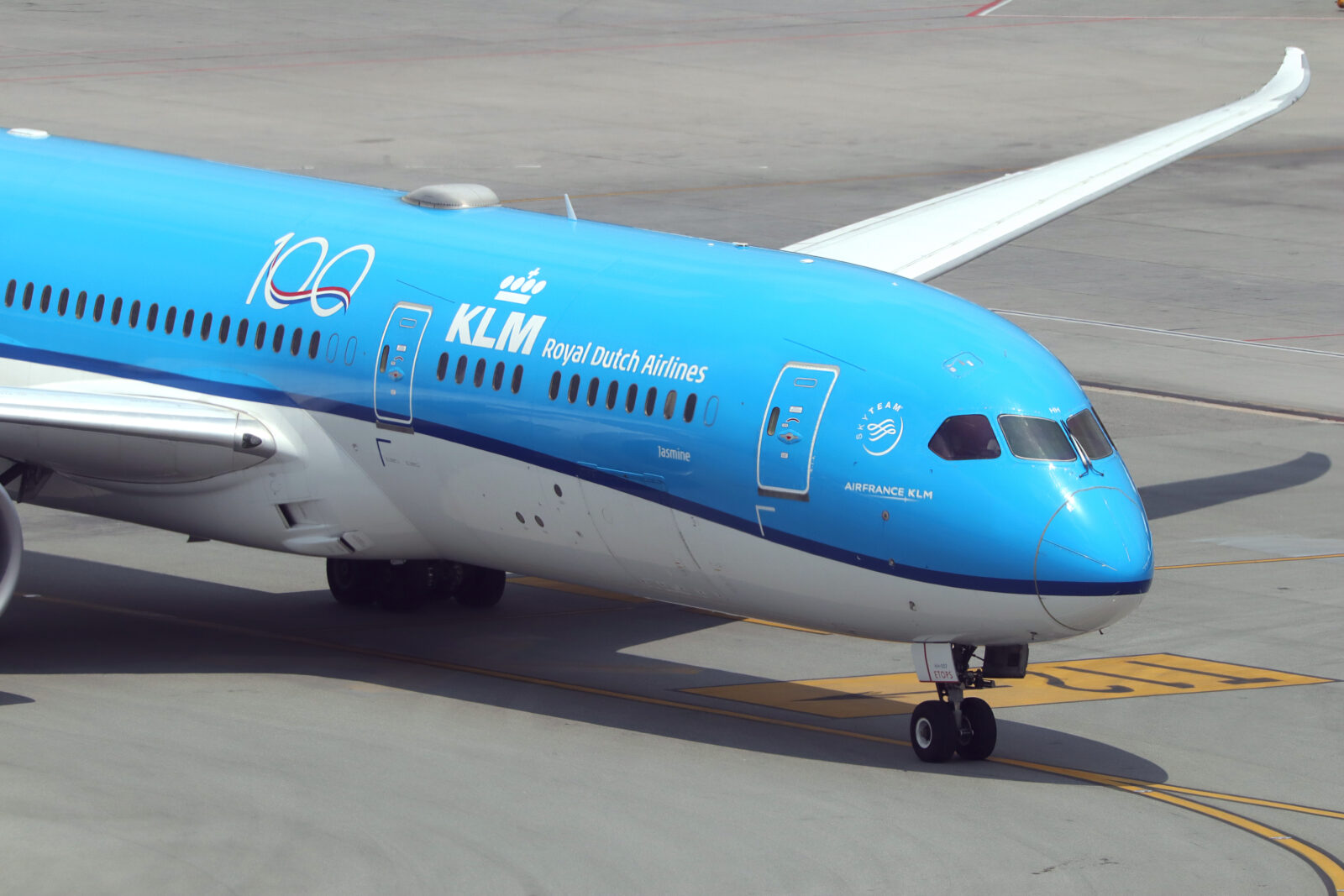
On Thursday, KLM Royal Dutch Airlines finally evacuated a Boeing 787 Dreamliner that had been stuck on the tarmac at Dubai International Airport (DXB) since February 28, when the Iran War started.
The nine-and-a-half-year old Dreamliner (registration: PH-BHH) took off at around 3 pm on March 12 and immediately flew away from the Persian Gulf and the potential threat of Iranian missiles and drones towards Saudi Arabia.
Unlike Emirates and Flydubai, which are both based at Dubai International Airport, KLM decided that it was still unsafe to have any passengers on board the plane, saying in a statement that it would have been ‘irresponsible’ to have done so.
Operating under a special flight number of KL-9878 to indicate that this was a so-called positioning sector without passengers on board, the plane flew across Saudi Arabia and Egypt before entering European airspace.
The aircraft had flown to Dubai in the early hours of February 28, where it landed at around 10:30 am. The aircraft was supposed to fly back to Amsterdam full of passengers just over an hour and a half later, but shortly after landing, airspace across the region was shuttered.
Within days of the Iran War starting, Emirates Airline had announced the resumption of flights, initially with a limited number of special repatriation flights using ‘safe air corridors’, but for the past week, it has been operating a reduced but otherwise normal flight schedule.
According to data compiled by Flight Radar 24, the airline operated around 61% of its pre-war schedule to and from Dubai on March 12, amounting to a total of 324 flights.
Flydubai operated around 38% of its pre-war schedule, while Etihad Airways in neighboring Abu Dhabi operated just 13% of its regular flight schedule. Even more conservative is Qatar Airways, which operated a mere 7% of its pre-war schedule on Thursday.
Despite what appears to be repeated attempts by Iran to target Dubai International Airport, flights have been allowed to continue operating since March 3, albeit with limited airspace closures during active missile and drone threats.
Before giving the green light for its Boeing 787-9 to be repatriated to the Netherlands, KLM said it “carefully assessed how this flight could be operated safely.”
The statement added: “Due to the security situation, additional measures were taken to ensure the safety of the flight. The airline would have preferred to carry passengers, but this was not deemed responsible at this time.”
What is perhaps particularly frustrating from KLM is that it suspended flights to Dubai, as well as several other destinations in the Middle East, in late January over fears that the US and Israel were about to launch strikes on Iran.
Within days, however, KLM had resumed flights to Dubai, although the airline had slightly adjusted flight timings to supposedly make it easier to evacuate aircraft should the security situation suddenly deteriorate.
KLM has now suspended flights to Dubai until March 28 at the earliest. A slew of other airlines have also scrapped flights to the UAE for most of the rest of the month, including the likes of British Airways, Lufthansa, and SWISS.


They could at least have offered evacuation for people stranded in Dubai and surrounding areas. so everyone could decide what seems less risky to them.
Boing 787 8