



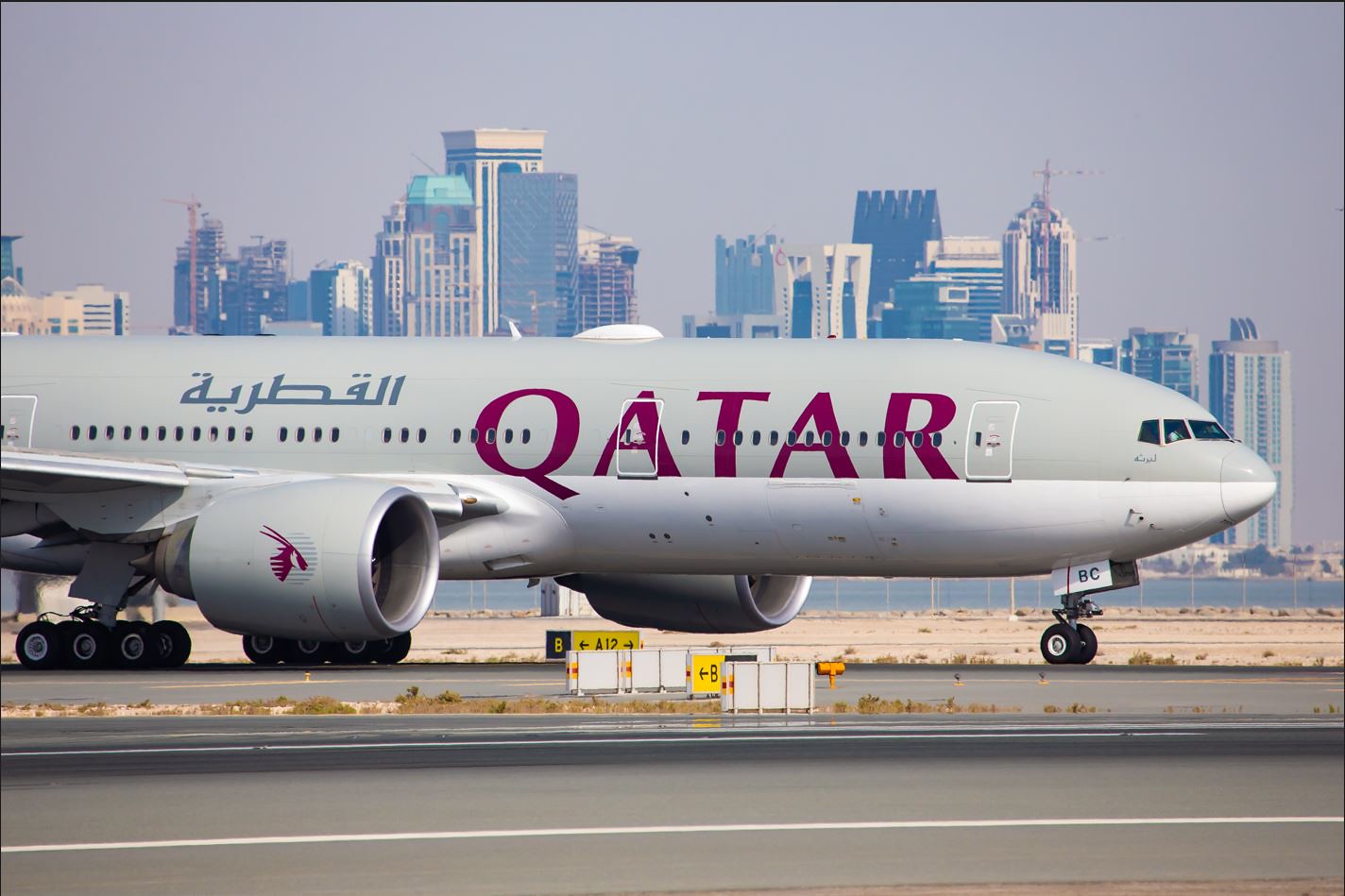
The tiny but mightily wealthy State of Qatar in the Persian Gulf says that airlines still face serious risks from Iranian drone and missile attacks in the region, including the risk that a commercial airplane could be misidentified by air defense systems and accidentally shot down out of the sky.
Qatar Airways is attempting to restart regularly scheduled flights out of its hub at Doha Hamad International Airport (DOH), but a planned ramp-up of operations was quickly scaled back after Iran struck its main gas-producing facility, Ras Laffan, causing significant damage last week.
In recent days, Iran’s ability to launch drone and missile attacks on its Gulf neighbors appears to have been severely diminished, but the head of the Qatar Civil Aviation Authority says that recent strikes had a “direct and tangible” impact on the region’s aviation environment.
In a meeting with Qatar’s state-run news agency, Mohammed bin Faleh Al Hajri warned of “sharply increased risks posed by drones, missiles and debris from air defense systems, as well as operational hazards such as aircraft misidentification or flying in restricted or high-risk airspace zones.”
For now, Qatar Airways continues to operate a limited number of flights to and from Doha, with each arrival and departure requiring prior approval from the country’s military.
Qatar’s assessment of the risk posed by Iranian projectiles is in line with its neighbors in Bahrain and Kuwait, who have kept their airspace completely closed to commercial aircraft since the start of the Iran War on February 28.
The assessment does, however, appear to differ from that taken by authorities in Dubai, who continue to rebuild flights.
According to the flight tracking app, Flighty, 391 flights are expected to depart Dubai International Airport (DXB), with 407 arrivals forecast on March 24. Flagship carrier Emirates has now rebuilt around 65% of its pre-war schedule.
Civilian aviation has been a target of Iran throughout the war. Dubai International Airport has been attacked on at least three seperate occasions:
- March 1: A drone or debris crashed through the roof of Terminal 3, causing damage to the concourse and injuring at least four people.
- March 7: A drone exploded on the outskirts of the airport, close to Terminal 3 and several aircraft.
- March 16: A fuel tank was struck by a drone, causing a massive fire and interrupting flights for a number of hours.
In one of those attacks, it has now been reported that an Emirates A380 superjumbo was damaged, along with a Saudia Airlines Airbus A321.
Airports in Bahrain, Kuwait, and Israel have also come under attack. The most recent alleged attack against Tel Aviv Ben Gurion Airport occurred on Tuesday.
What the United Arab Emirates (UAE) does have going for it, however, is its sheer size compared to regional neighbors like Bahrain, Kuwait, and Qatar. This means that, when needed, it can direct airplanes into holding patterns away from enemy projectiles and interceptors, significantly reducing any risk.
Nonetheless, since the start of the war, six civilians have been killed, and 161 people have been injured in the UAE. Two members of the armed forces have also been killed, and on Tuesday, a civilian contractor with the UAE military was killed in an Iranian drone strike in Bahrain.