



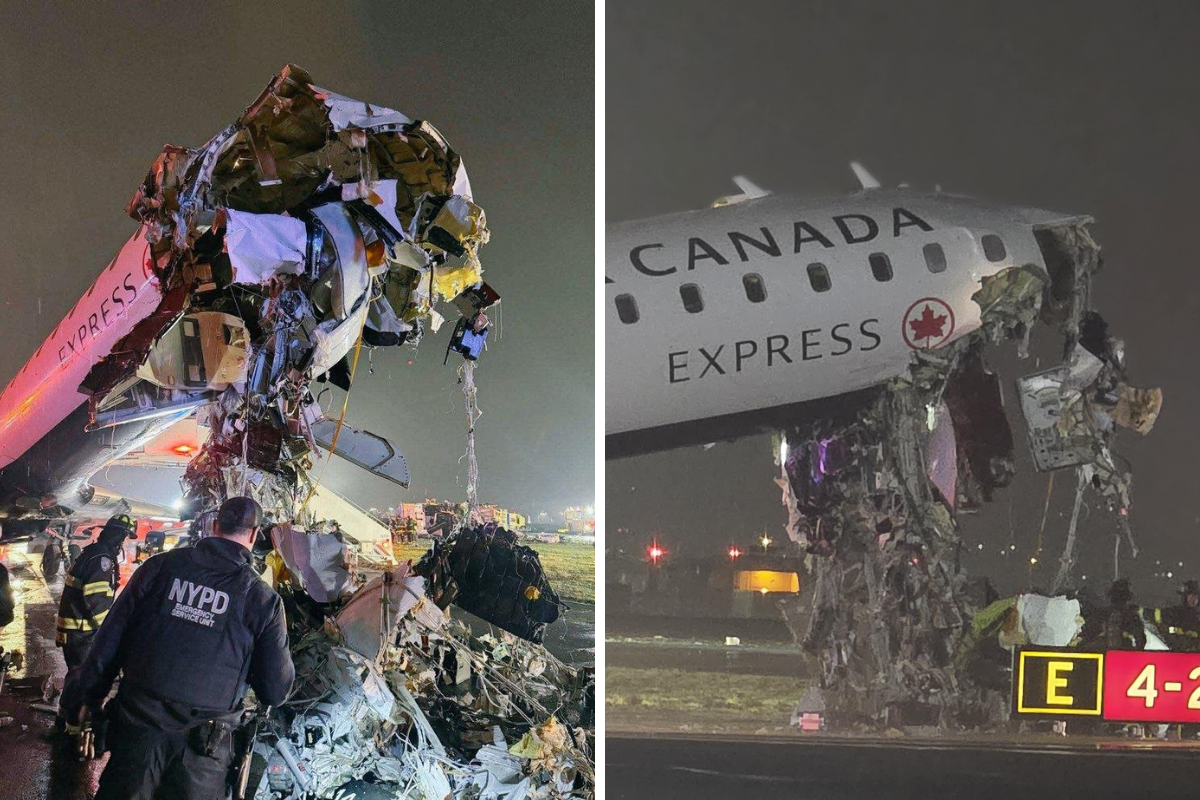
In the aftermath of the horrific fatal crash involving an Air Canada Express regional jet with an airport fire truck at LaGuardia International Airport late on Sunday night, the media have been ruthlessly quick to dissect the little amount of information available and come to a conclusion as to what caused the tragic accident and who was to blame.
While it’s understandable that everyone is desperate to get to the bottom of what caused this awful incident, here’s the simple truth: None of the information currently available is enough for anyone, let alone the media, to start making confident statements about the cause.
We live in a world where so much information is so readily available. In the case of Air Canada flight AC-8646, a wealth of information was leaked within minutes of the accident, and the National Transportation Safety Board (NTSB) is incredibly transparent in releasing key details as and when they discover them.
Nonetheless, an investigation into a crash of this magnitude is not something that can be solved within a day of the incident. While a preliminary report is set to be published within 30 days, this will likely be a timeline of events and will not assign blame to any party.
A full report could take around a year or longer, and, as is often the case, it will likely uncover many different risk mitigation layers that ultimately failed, allowing this accident to happen.
Let’s break down some of the top theories that have already been widely touted online:
The air traffic controller was to blame:
Air traffic control recordings obtained from the LaGuardia control tower reveal that in the aftermath of the crash, the controller stated: “I messed up.” This has been taken by some media outlets to be an admission of guilt; that the controller is solely to blame for this accident.
What we hear in this recording, though, is a human being reacting in real-time to a traumatic experience that they were involved in. Put it this way: How many times have you blamed yourself for something that wasn’t your fault?
Taking this one comment out of context has already shifted the blame to the air traffic controller without any evidence.
The FAA was to blame:
There were also widely circulated reports that only one air traffic controller was on duty in the tower at the time of the accident – meaning that one person was controlling all arriving and departing flights, as well as airport ground movements, and a seperate emergency that the fire truck was responding to.
While the NTSB is yet to firm up the exact staffing mix in the control tower at the time of the accident, NTSB chairwoman Jennifer Homendy said on Tuesday that the controller was on duty alongside a supervisor in the control tower at the time of the accident.
The driver of the fire truck was to blame:
Special runway lights that indicate whether it is safe to enter an active runway were illuminated red just moments before the fire truck crossed onto the tarmac. The suggestion, therefore, is that the driver ignored this crucial safety mechanism, putting the truck on a collision course with the landing aircraft.
What we don’t know, however, is the situational awareness of the driver in the truck at that time. Nor do we know their field of vision, or what else was taking place in the cab that led them to drive onto the runway.
The airport was to blame:
It has also transpired that the fire truck was not fitted with a transponder that would show its position on ground movement screens in the control tower. In other words, it was difficult to ascertain the vehicle’s exact location and, therefore, make sure it didn’t put itself in harm’s way.
While more and more ground vehicles are fitted with transponders for this exact reason, emergency vehicles don’t always have this kit fitted. Even if a transponder had been fitted, we don’t know whether this would have prevented this accident.
What’s the key takeaway? You’ve probably read or heard a number of different theories for what caused Sunday night’s crash at LaGuardia. They are just theories and nothing more.
It’s far too early to say how this accident unfolded, and assigning blame to one person is not only far too simplistic but also incredibly wrong.