



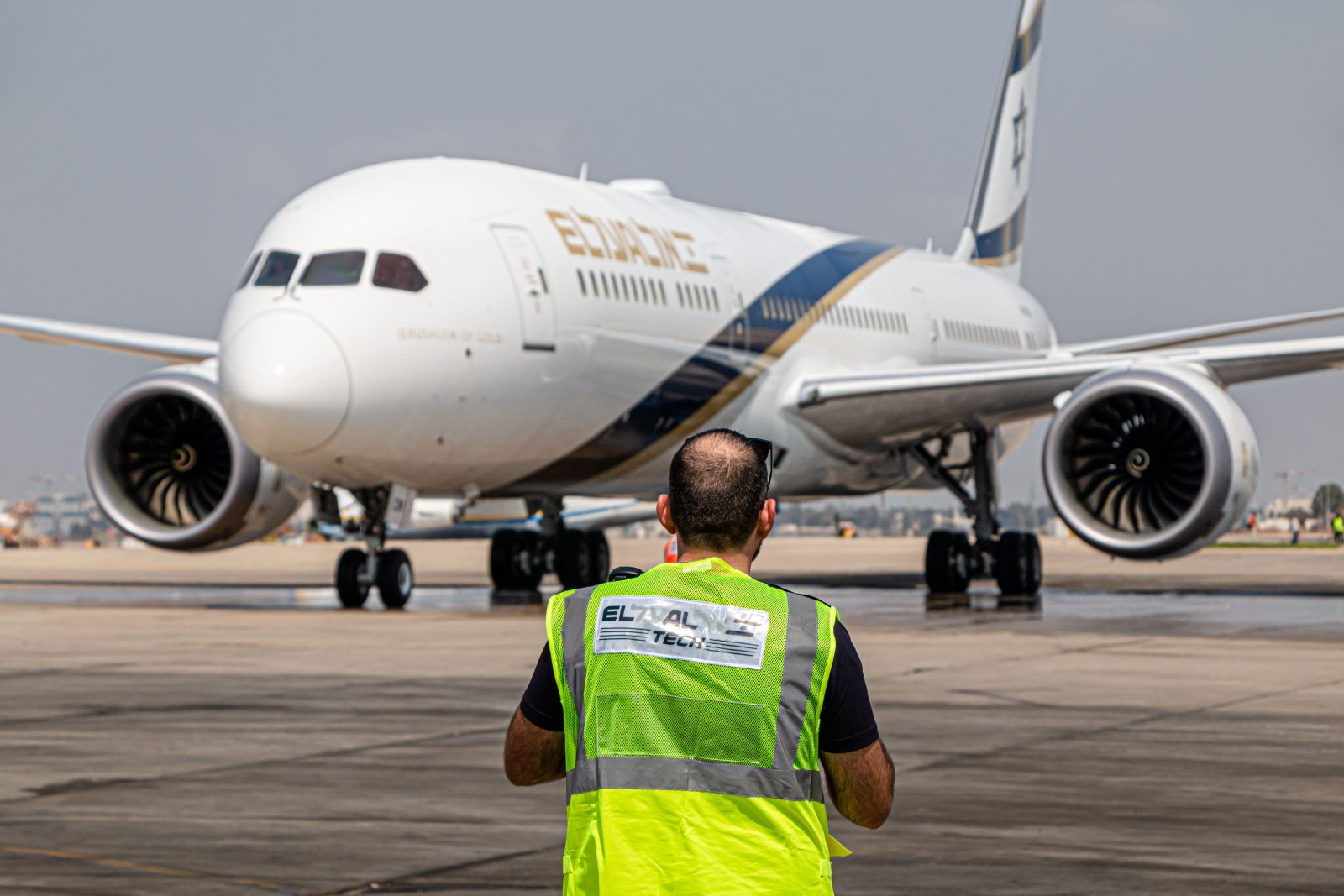
Israel has imposed a new cap on how many passengers are allowed to board each flight departing the country’s main Tel Aviv Ben Gurion International Airport, following an updated security assessment of the threat posed by Iranian ballistic missiles and kamikaze drones.
The new rules mean that only 50 passengers per flight are allowed to board any service from Tel Aviv, no matter the size of the aircraft.
The updated cap reduces by 50% the number of passengers that airlines had been allowed to transport per flight following the reopening of Israeli airspace earlier this month.
Israel has taken a very cautious approach to reopening its airspace to civilian airplanes due to the continuing threat posed by Iranian projectiles, and several attempts to ramp up operations have been rolled back in light of new security assessments.
The latest rules are effectively paralyzing the restart of commercial flights, with only one departing and one arriving flight permitted each hour.
On March 18, Israeli authorities confirmed that three private planes parked at Ben Gurion International Airport had been “severely” damaged after they were struck by debris from an Iranian missile.
No further details of the attack were released by the authorities. The attack happened shortly after an Iranian drone struck a massive fuel tank at Dubai International Airport, forcing the closure of the airport for nearly seven hours.
In a statement, Israeli flag carrier El Al Airlines confirmed that the Ministry of Transportation had ordered a significant reduction in air traffic, “which includes a major decrease in flight frequency and limits on the number of passengers permitted on each outbound flight from Israel.”
El Al is attempting to operate flights to key international gateways, including New York (JFK and EWR), Los Angeles, Miami, London, Paris, Rome, and Athens.
In addition, the airline has laid on five special recovery flights from Bangkok, where a significant number of Israeli citizens remain stranded.
At the outset of the Iran War, El Al evacuated dozens of its planes out of Israel to countries across Europe that were out of range of Iranian drones and missiles. Since being permitted to restart flights, around 100,000 Israelis have returned to the country on repatriation flights.
On Wednesday, Delta Air Lines announced that it was extending its suspension of services between the United States and Israel until September 5 at the earliest. In addition, a planned new route between Boston and Tel Aviv, which was slated to start in October, has been delayed indefinitely.