



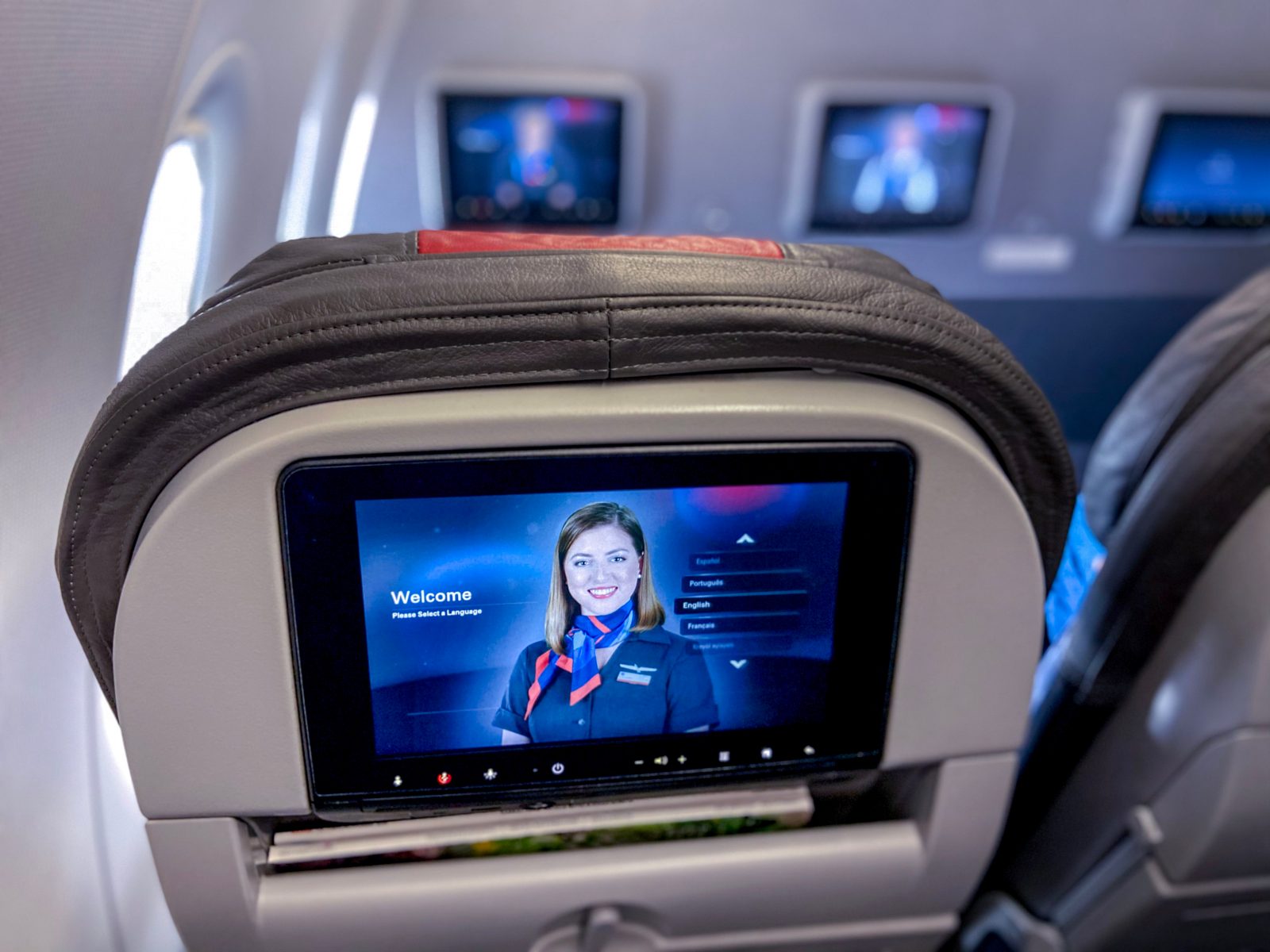
Eight years after American Airlines started the process of ripping out seatback screens from its narrowbody planes, the Texas-based carrier has reportedly put the idea of reversing course under ‘serious consideration’ as it explores ways to make itself more premium and better compete with Delta and United Airlines.
According to CNBC, a decision could be made as soon as next month as the airline rushes to stem profit losses at the hands of rivals that can charge customers more for a better product.
American Airlines embarked on its era of screenless narrowbody planes in 2017 when it took delivery of its first Boeing 737MAX-8 airplane with a new-look interior, which featured smaller lavatories, less legroom in coach, and seats throughout a plane without an in-flight entertainment screen.
Despite widespread criticism of the new look, the following year, American Airlines rolled out the concept on older planes as part of its so-called ‘Project Oasis’ retrofit project.
At the time, American Airlines believed that offering the best domestic network, alongside lower fares and improved on-time performance, was what consumers were looking for.
In the years since, American’s profit margins have been eaten away, while Delta and United steal high-spending passengers looking for a premium experience.
Until now, however, American Airlines has refused to concede that Project Oasis was a costly mistake that had to be reversed. Even as United Airlines started to roll out seatback screens on its narrowbody fleet in 2021, American rejected the idea of pivoting its strategy.
Seatback screens are not the only investment that American’s management is reconsidering, though. We already knew that the carrier was in talks with Amazon’s high-speed Leo satellite internet service, and now it has emerged that American Airlines is also in discussions with rival Wi-Fi service Starlink.
Starlink is already being rapidly deployed across United’s fleet, with the service being regarded as a game-changer for the industry.
A potential deal for the Leo service could be part of a wider Amazon package, including access to Amazon Prime video and music on American planes, as well as a link-up with the AAdvantage program, allowing frequent flyers to spend miles on Amazon purchases, according to CNBC.
The problem, though, is that Amazon Leo is far behind Starlink. So far behind, in fact, that it still needs to launch hundreds more satellites into low Earth orbit before the system can be turned on.
Leo is not expected to go live until 2027 at the earliest, at which point, United is expected to have completed its rollout of Starlink across its entire fleet.
Last month, chief executive Robert Isom faced down calls for his resignation over his handling of the airline’s strategy and lackluster financial results. In an internal memo, Isom promised to return American to its former glory as the “world’s premium global airline.”
Isom did not, however, signal any major strategy shift, saying that the unpopular ‘Oasis’ interior refits would continue as planned.
Should American Airlines decide to cut its losses and reverse course, reinstalling seatback screens across its huge fleet of narrowbody planes could cost hundreds of millions of dollars and take years to complete.
At this point, however, Isom and the board of directors may have little choice.