



Travelers are being warned that Iranian attacks on airports across the Middle East continue to be a real threat, even as airlines across the region ramp up their schedules with deeply discounted fares to lure passengers into flying through the region.
On Saturday, Kuwaiti authorities confirmed that Kuwait International Airport was once again targeted by Iranian kamikaze drones, resulting in “significant” damage to the airport’s radar system.
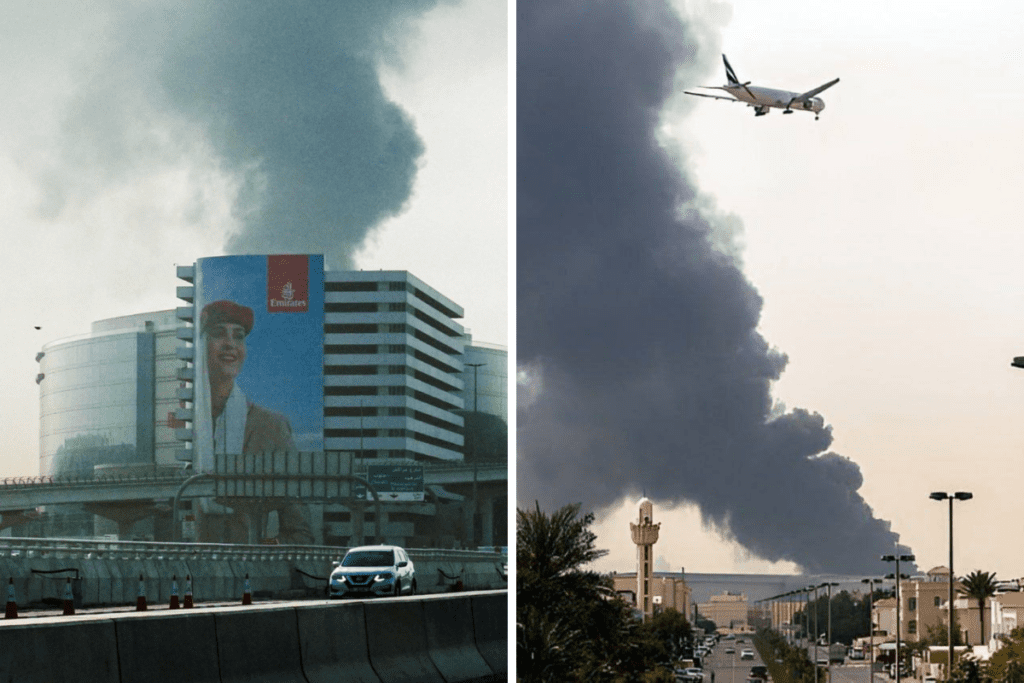
The attack occurred just days after an Iranian drone struck a fuel tank at the airport, resulting in a large fire. Thankfully, all civilian flights in Kuwait have been grounded since the start of the Iran War on February 28, and no casualties were reported in either attack.
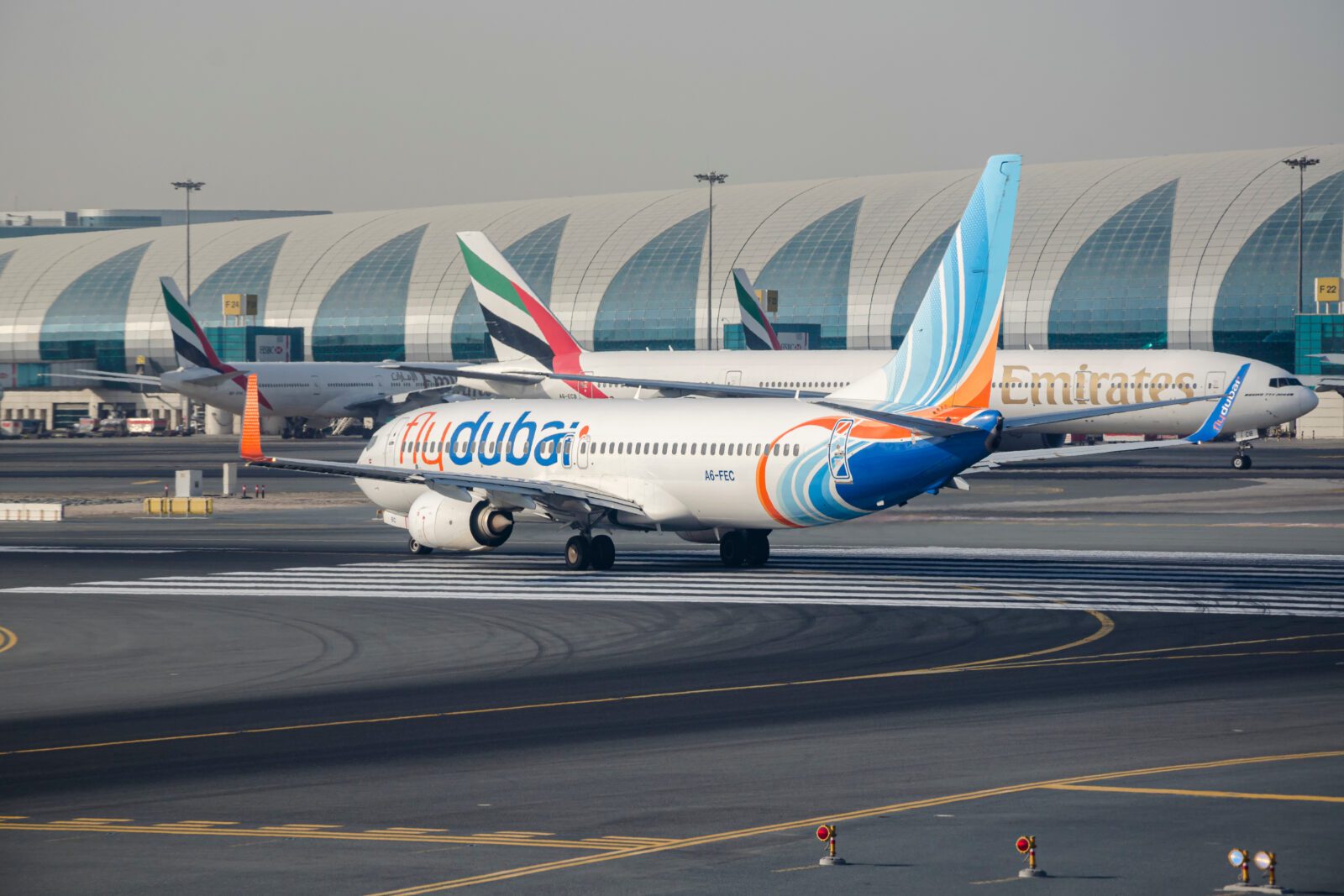
In Dubai, regional mega airline Emirates has now rebuilt around 70% of its pre-war schedule despite ongoing ballistic missile and one-way attack drone threats that temporarily shut down the airspace for short periods
The Australian government continues to urge its citizens not to travel to Dubai, even as part of a short transit layover at Dubai International Airport, warning travelers that the regional conflict is “likely to escalate further” and that they could be stranded with little or no notice.
On Friday, Australian officials also posted a more specific threat to the Le Meridien hotel on the outskirts of Dubai International Airport.
The warning read: “We have reason to believe there are heightened risks around hotels in Dubai, including an ongoing threat in the vicinity of Le Meridien hotel on Airport Road, Dubai.”
“We continue to advise you to leave the United Arab Emirates (UAE), don’t wait until it’s too late,” the warning continued. “Commercial flights are available to depart, subject to airspace being open. If you can secure a flight out of the UAE and it’s safe to travel to the airport, leave now while commercial flights are available.”
Dubai International Airport has been subjected to several apparent attacks by Iran:
- May 1: Just hours after the conflict began, an Iranian kamikaze drone allegedly struck the roof of Terminal 3, damaging the concourse and injuring at least four people. Thankfully, most passengers and staff had already been evacuated from the airport before the attack.
- May 7: A kamikaze drone fell close to Terminal 3, exploding close to several parked airplanes. Four people were injured in this attack, and flights were grounded for several hours.
- May 16: A drone struck one of the massive fuel tanks at Dubai International Airport, causing a large fire and disrupting flights for around eight hours.
It has since been reported that an Emirates Airbus A380 superjumbo and an Airbus A321 belonging to Saudia Airlines were damaged in one of these attacks. Local officials have yet to confirm these reports.
How local authorities are handling the resumption of normal commercial flights remains a mixed bag across the region:
- Bahrain: The international airport in Manama remains shuttered until further notice. Gulf Air has set up a temporary hub in Dammam, Saudi Arabia, which is just across the Causeway
- Israel: Only one arriving and one departing flight is allowed per hour at Tel Aviv Ben Gurion Airport. Only 50 passengers per aircraft are permitted on departing flights.
- Kuwait: The country’s main airport remains closed to commercial flights. The airport has come under attack from Iranian drones on several occasions.
- Qatar: Doha Hamad International Airport is open, and Qatar Airways is operating scheduled services, but only at around 20% of pre-war levels.
- United Arab Emirates: Air traffic recovery continues to be led by Emirates, although Etihad Airways in neighboring Abu Dhabi has now restored around half of its pre-war schedule.
Before the war, around one in five of all passengers who traveled between Europe and Asia-Pacific used Persian Gulf carriers with connections in the Middle East. The continuing uncertainty and reduction in capacity have caused big price hikes on non-stop flights.
Passengers now have difficult decisions to make: Dig deep for a non-stop flight or book a cheaper fare with a Persian Gulf airline, but with the risk that services could be disrupted at short notice.
Etihad Airways has already launched a sale to drive bookings, and other airlines in the region are expected to follow suit.