



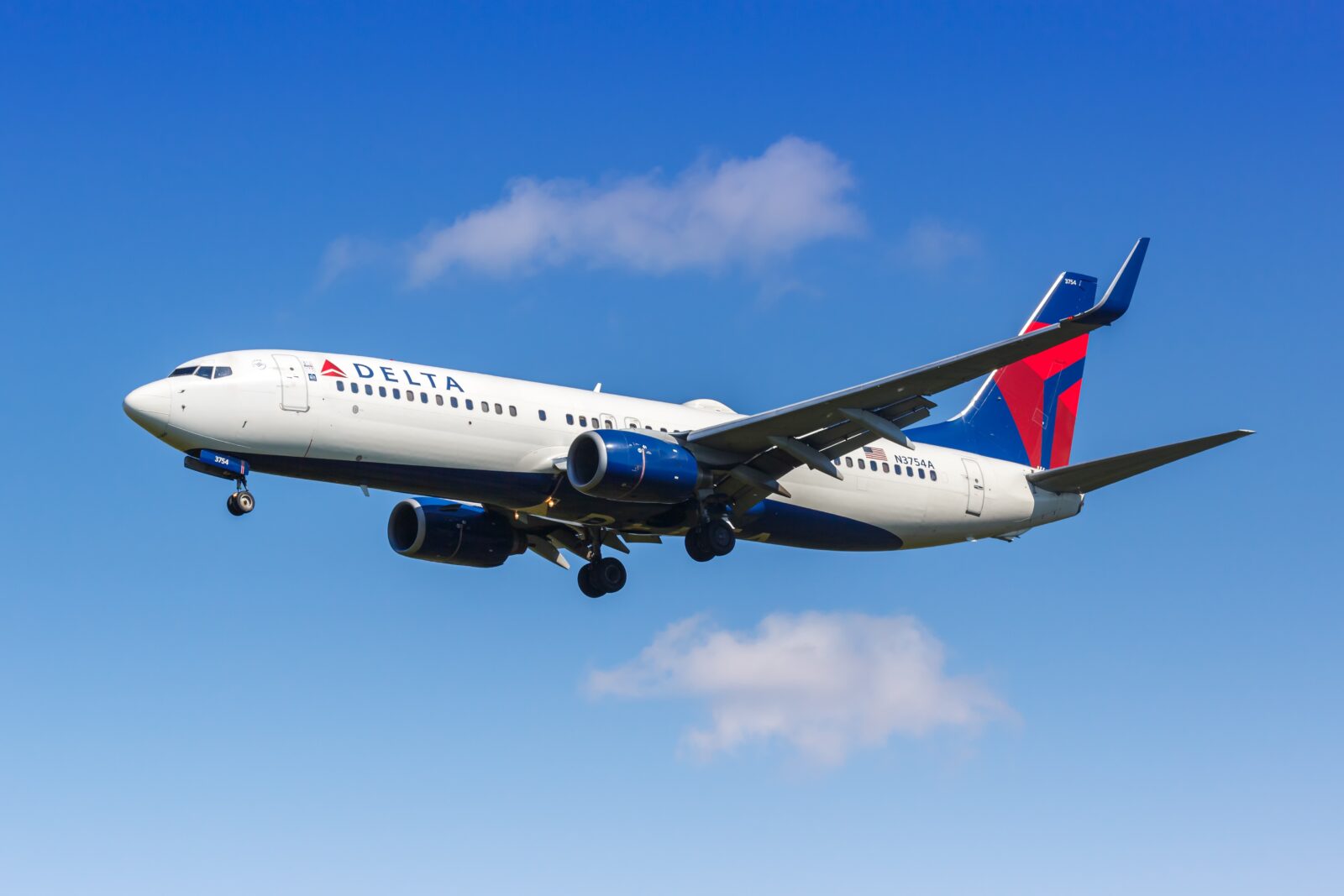
Delta Air Lines has snubbed Elon Musk’s Starlink satellite internet service as it announced a major new deal with rival Amazon Leo that will see the high-speed, low-latency in-flight Wi-Fi service initially installed on 500 of the Atlanta-based airline’s aircraft.
There is, however, one big problem: Amazon Leo isn’t yet operational, and it won’t be until it can launch thousands more low-earth-orbit satellites into space.
Amidst ongoing launch delays, Amazon Leo doesn’t expect to have a working ‘constellation’ of satellites until next year at the earliest, while Delta announced on Tuesday that it will start having the Wi-Fi service installed on its aircraft in 2028.
Until now, the only airline to have committed to using Amazon Leo is JetBlue, which plans to start offering the service in 2027, should the constellation be ready at that point.
Unlike the growing list of airlines that have committed to fleet-wide rollouts of Starlink on their aircraft, Delta only currently has plans to deploy Amazon Leo on around 40% of its aircraft.
What is Amazon Leo?
First announced in 2019, Amazon Leo is Jeff Bezos’ rival low-earth-orbit satellite internet service that will compete with Starlink. Originally known as Project Kuiper, the company was renamed to Amazon Leo last year as a nod to how the system works.
Traditional satellite internet services are provided by geostationary satellites that orbit approximately 22,369 miles (36,000 km) above the Earth.
In contrast, Amazon Leo satellites will orbit at just 367 to 391 miles above the Earth. Thousands of these satellites connect to one another via high-speed optical links that create a mesh network of high-speed, low-latency internet.
Amazon says it has developed a ‘best in class’ antenna for commercial aircraft that can support download speeds up to 1 Gbps on a single device, allowing an entire planeload of passengers to stream, game, and do other data-intensive tasks while flying at 38,000 feet.
Delta said it chose Amazon Leo as an extension to its extensive partnership with Amazon’s cloud computing business, Amazon Web Services.
On Tuesday, Delta chief executive Ed Bastian hinted that its also chose Amazon Leo because it was offering a cheaper price for the service.
“This agreement gives us the fastest and most cost-effective technology available to better connect the world today, and it deepens our work with a global leader that shares our ambition to build what’s next — creating even stronger human connections for our people and our customers for years to come,” Bastian commented.
Delta has been offering free in-flight Wi-Fi since 2023 in partnership with T-Mobile. Over the last few years, the airline has progressively rolled out the service to more than 1,150 aircraft. Transpacific flights, however, won’t have free in-flight Wi-Fi until later this year.
While Delta touts its partnership with T-Mobile as offering ‘streaming quality’ Wi-Fi, there is no doubt that the airline’s current in-flight internet technology doesn’t come close to matching the kind of speed and consistency of Starlink.
That puts Delta at a disadvantage to United Airlines, which has been racing to roll out Starlink across its fleet. It also places Delta behind Alaska Airlines and Southwest, which have both selected Starlink as their in-flight Wi-Fi provider.
Meanwhile, American Airlines continues to debate whether it should do business with Starlink or Amazon Leo – industry sources claim a decision is expected within weeks.