



A senior engineer at a major U.S. aviation company was stopped by Customs and Border Protection (CBP) officers at the Dallas Fort Worth International Airport, where it was discovered he was trying to take documents containing proprietary and confidential information belonging to his employer to China.
57-year-old Junjie Zhang, also known as Jeff Zhang, of Tulsa, Oklahoma, has pleaded guilty to one count of making a false statement after he lied to the CBP officers, claiming that his personal electronic devices containing the data didn’t have any work-related material on them.
Investigators started to look into Zhang back in 2018 when he went on a sanctioned work trip to China. During this trip, his employer noticed him displaying suspicious behavior, and the FBI was called in to investigate the allegations.
Although publicly released court documents have redacted the name of Zhang’s former employer, Wichita is sometimes known as the “Air Capital of the World” due to its links to well-established U.S. aircraft manufacturers and systems suppliers.
Some of the biggest aviation companies based in the city include Cessna, Textron Aviation, Learjet, and parts manufacturer Spirit AeroSystems. European aerospace giant Airbus also has a major presence in the city.
When Zhang had a flight booked from Dallas Fort Worth to China in September 2019, he was pulled aside by CBP officers just as he was about to board the plane for a secondary search.
In his carry-on bag, the officers discovered a thumb drive and a laptop computer that contained proprietary information belonging to his employer, including blueprints and graphs.
Zhang initially denied having any work-related documents on his laptop and then claimed he had permission to have these documents. His employer, however, confirmed that Zhang did not have authorization to store these documents on his personal devices.
Prosecutors estimate that the intellectual property on Zhang’s personal devices was worth around $100,000.
What Zhang planned to do with this information remains a mystery. After a lengthy court case, Zhang has reached a plea deal in which he has only admitted to lying to customs officers.
The maximum sentence is eight years in a federal prison, but prosecutors are recommending a sentence at the “low end” of the sentencing guidelines. Zhang is due to be sentenced on July 23, 2026.
There is, of course, speculation that Zhang could have been attempting to supply the intellectual property to rival aerospace firms based in China, although these allegations were never pursued by prosecutors.
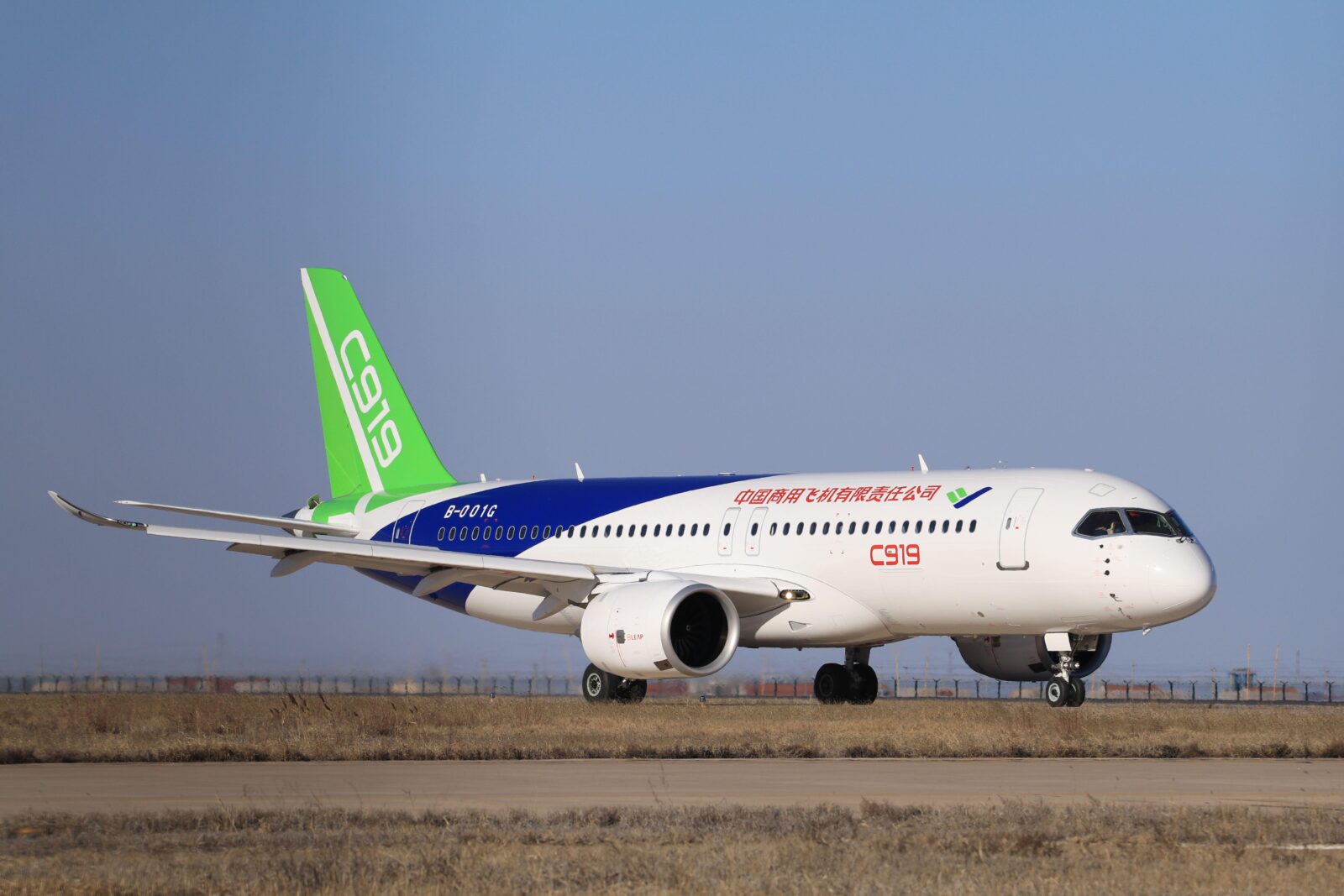
Zhang’s attempted trip to China came at a pivotal time for the development of the Chinese-made COMAC C919 single-aisle aircraft, which is a direct competitor to the Boeing 737 and Airbus A320 series lines.