



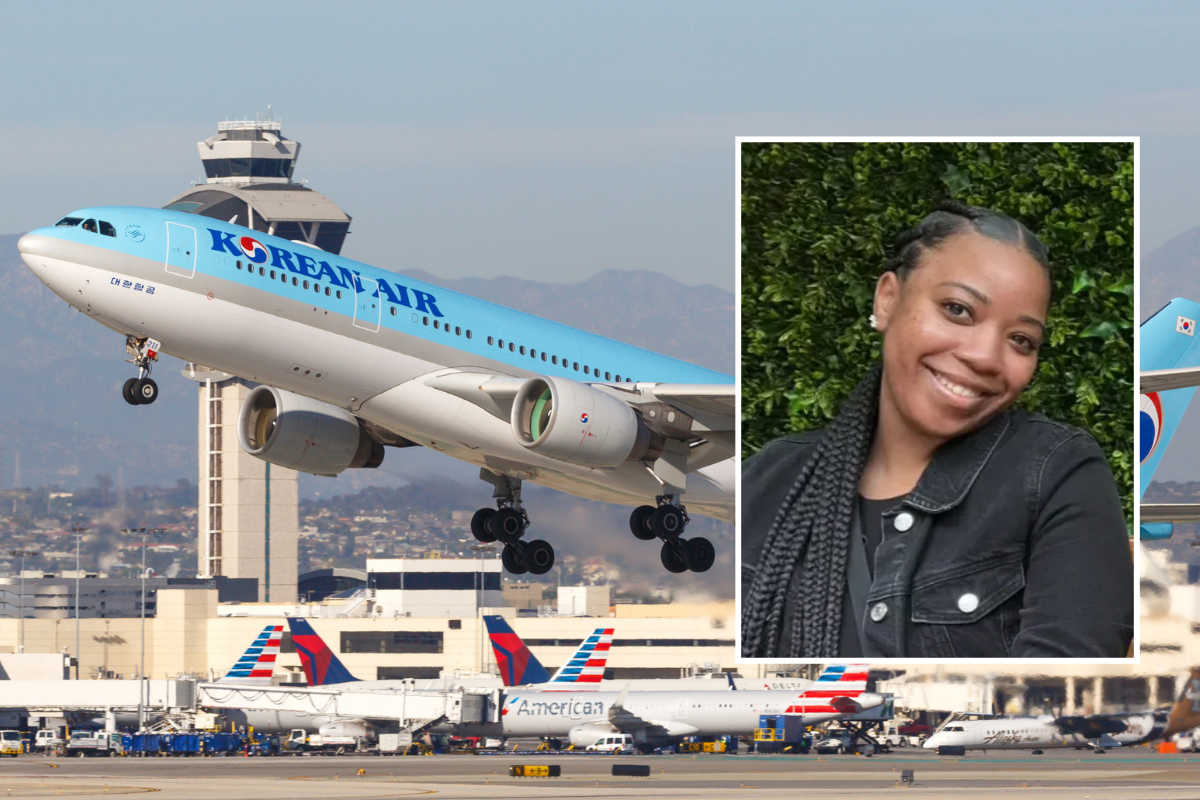
A beloved member of the Silver Spring community in Maryland who worked as a
Safety Specialist at the U.S. Department of Defense tragically died in the final hours of an ultra-long-haul flight from Washington Dulles to Seoul, South Korea, when flight attendants failed to attach an oxygen mask to the O₂ Bottle, a new lawsuit claims.
33-year-old Porscha Tynisha Brown suffered an acute cardiac episode aboard Korean Air flight KE94 on March 29, 2024, but her family believes she could still be alive today if the flight attendants had followed the correct procedures for dealing with a life-threatening medical emergency.
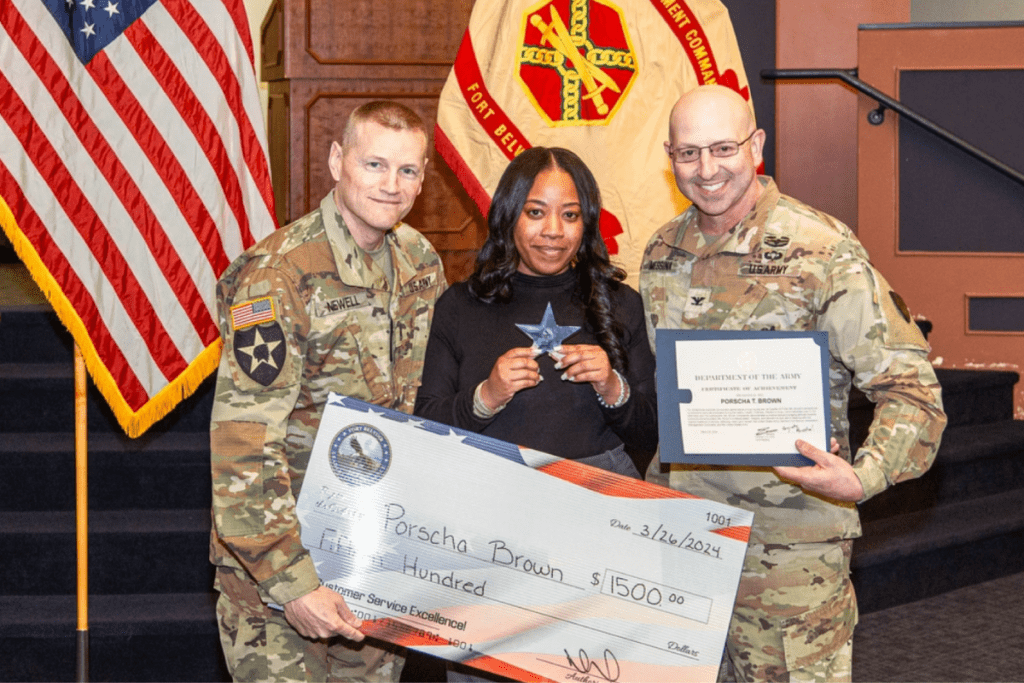
The tragic event unfolded 12 hours into the 15-hour flight as Porscha embarked on a trip of a lifetime with two of her closest friends, according to a recently filed lawsuit in a Virginia district court.
Shortly after the second meal service, one of Porscha’s friends checked in on her, and, at this point, everything seemed fine. Porscha said she was feeling good, but within minutes, the situation would dramatically change.
A short time after their conversation, Porscha left her friend and headed to the restroom at the back of the plane. A few minutes went by when Porscha’s friends heard a public address announcement asking for any medically trained passengers to assist with a medical incident.
Porscha’s friends headed to the back of the aircraft, where they found her sitting on the floor in the aisle, clutching her chest and complaining about not being able to breathe.
Flight attendants fetched an oxygen bottle and mask to provide Porscha with supplemental oxygen and placed the mask over her mouth and nose. Porscha’s breathing was still labored even with the supplemental oxygen, and a short time later, she lost consciousness.
The flight attendants grabbed an automated external defibrillator (AED) and placed it by Porscha’s side, where two Good Samaritan passengers were attempting to provide medical assistance.
Crucially, however, the lawsuit claims the flight attendants did not set up the AED, and the passengers were left to try to work out how to use the unfamiliar machine on Porscha.
The passengers managed to set up the AED, and after it read Porscha’s heart rhythm, the machine advised that a shock should be delivered. The Good Samaritan passengers did not, however, realize that in order to deliver the life-saving shock, a button needed to be pressed.
The machine repeated the command to deliver a shock several times, but, according to the lawsuit, no shock was ever delivered, as the flight attendants “stood by and did nothing.”
Some of the flight attendants stood at the side, alternating “between panicking, observing, and taking notes,” the complaint continues.
Only after Porscha lost consciousness did the flight attendants fetch the onboard medical kit, at which point, the Good Samaritans attempted to administer
epinephrine intravenously – Epinephrine is the active ingredient in EpiPens, used to treat life-threatening allergic reactions.
The pilots made an emergency diversion to Osaka, Japan, so that Porscha could be rushed to the hospital, and it was at this point that it was discovered that the flight attendants had never plugged the oxygen mask into the O₂ bottle.
“Consequently, during the frantic attempts by passengers to save Ms. Brown’s life, Ms. Brown never received supplemental oxygen from the oxygen tank provided by Korean Air flight personnel,” the complaint alleges.
“Ms. Brown was deplaned and transported to Rinku General Medical Center in Osaka, where she was pronounced dead on arrival. Ms. Brown’s Japanese death certificate lists her cause of death as “acute cardiac failure.”
Porscha’s next of kin are suing Korean Air using the provisions of Article 17 of the Montreal Convention, which makes airlines liable for injuries or death sustained by passengers during the course of an international flight.
Passengers are generally able to claim up to 151,880 Special Drawing Rights under Article 17 of the Montreal Convention.
Special Drawing Rights represent a basket of different currencies, and the conversion fluctuates just like normal currencies. 151,880 SDRs is currently worth around US $215,802.
However, if a passenger’s injury or death is due to the negligence or wrongful act of the airline, then this cap doesn’t apply. Porscha’s family believes their claim should be uncapped due to the alleged negligent actions of the flight attendants.