



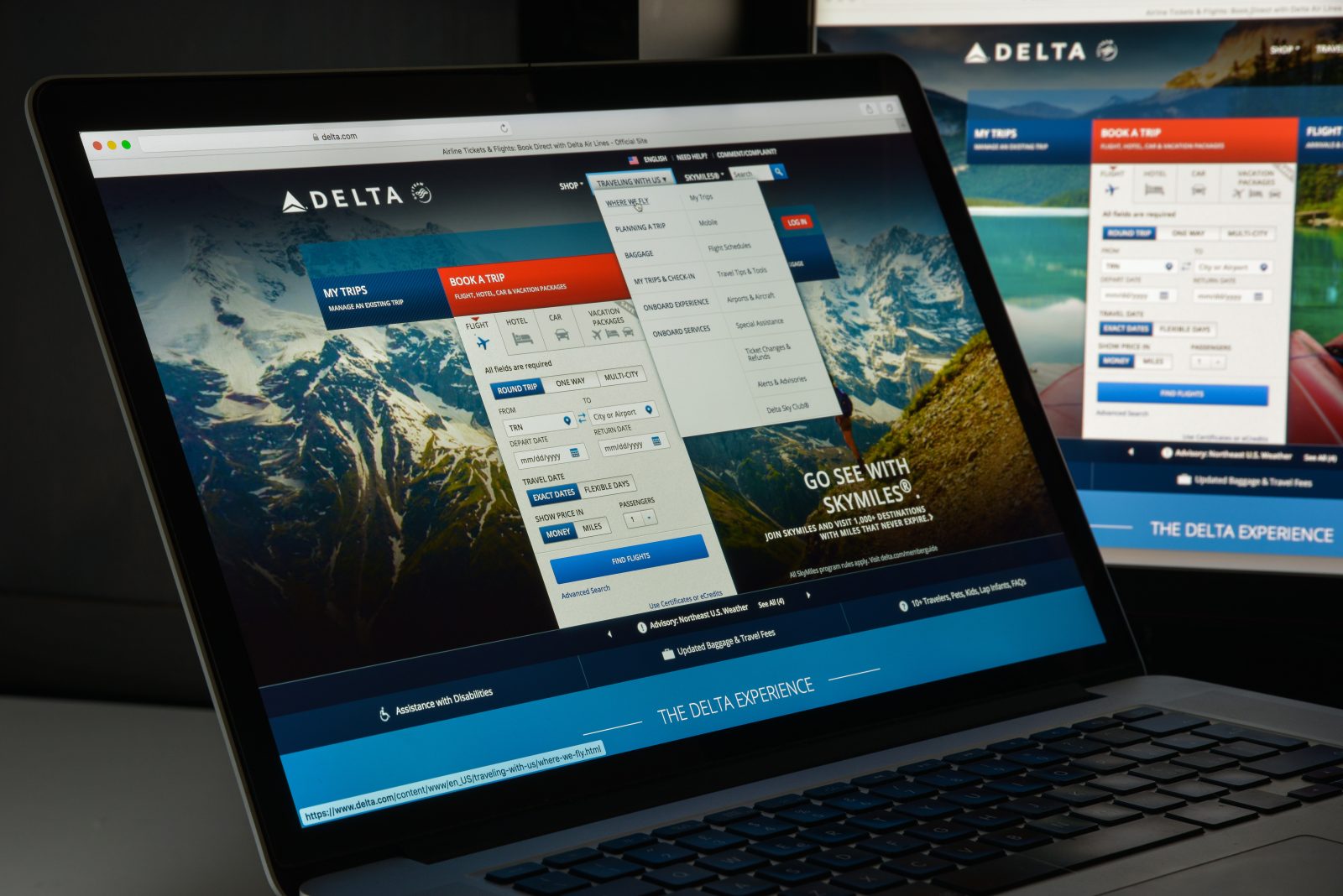
Delta Air Lines has been forced to reassure worried passengers that a new AI-powered ticketing system isn’t about to snoop on them and sell personalized fares, targeting high-earners with much more expensive tickets for the same seat that lower-income customers.
News of Delta’s artificial intelligence experiment was first announced last year, but earlier this month, the internet went wild about the AI ticketing system after the airline shared more details about its plans for the fare-raising technology.
At present, the Atlanta-based airline is using the artificial intelligence system to price around 3% of domestic fares, although airline President Glen Hauenstein says he wants to increase that to 20% by the end of 2025.
Like any kind of AI system, Delta’s new fare technology requires a lot of testing to train the model, and that’s one reason why the airline is being pretty slow in rolling out the system across all flights.
The use of AI to determine airline fares, however, has raised several questions, most notably regarding privacy concerns.
There have been rumors and misinformation that the AI will somehow be able to use personal information to set individual fares, which could see passengers with a lot of disposable income charged an artificially inflated price.
That’s simply not true, however, Delta contends, saying that the AI system is based on market forces and nothing else.
In a statement, the airline explained: “There is no fare product Delta is testing that is based on individual information, and we will always comply with regulations around pricing and disclosures.”
“Market forces drive the dynamic pricing model that’s been used in the global industry for decades,” the statement continued.
What does it mean by market forces and dynamic pricing?
What is Dynamic Pricing
Dynamic airline pricing is the practice of constantly adjusting prices based on a wide range of factors, such as demand, availability, timing, and market conditions.
This isn’t anything new. As Delta points out, this is something that airlines have done for years; it’s just an imperfect science that requires a lot of human effort to constantly adjust.
Delta hopes AI will make the process faster, and more accurate, leaving not one cent on the table.
Anyone who has bought an airline ticket will know that prices between flights vary massively, based on a huge list of factors, including the time and day of departure, big events that are taking place, and the amount of competition an airline faces on any given route.
Airlines have tried to hone their existing fare systems, using various automated rules, as well as substantial human intervention, to set prices across different fare groups or ‘buckets’ as they are also known.
While airlines have become pretty astute at this process, it’s a time-consuming process that can sometimes leave money on the table.
The idea behind the AI system is to consider all these factors and dynamically change the fare, adjusting at a moment’s notice as conditions change, with little to no human intervention.
Even the smallest price change could drive revenues if multiplied across a network the size of Delta’s, so the benefits of this system are pretty obvious.