



Flight Attendant Sues Her Own Airline For $75 Million Over Toronto Crash That Catapulted Airplane Onto Its Roof

- Vanessa Miles, a flight attendant for Delta's wholly owned regional subsidiary Endeavour Air, is suing the airline for $75 million, accusing the carrier of putting inexperienced and inadequately trained pilots behind the controls of a plane that crashed at Toronto Pearson Airport in February.
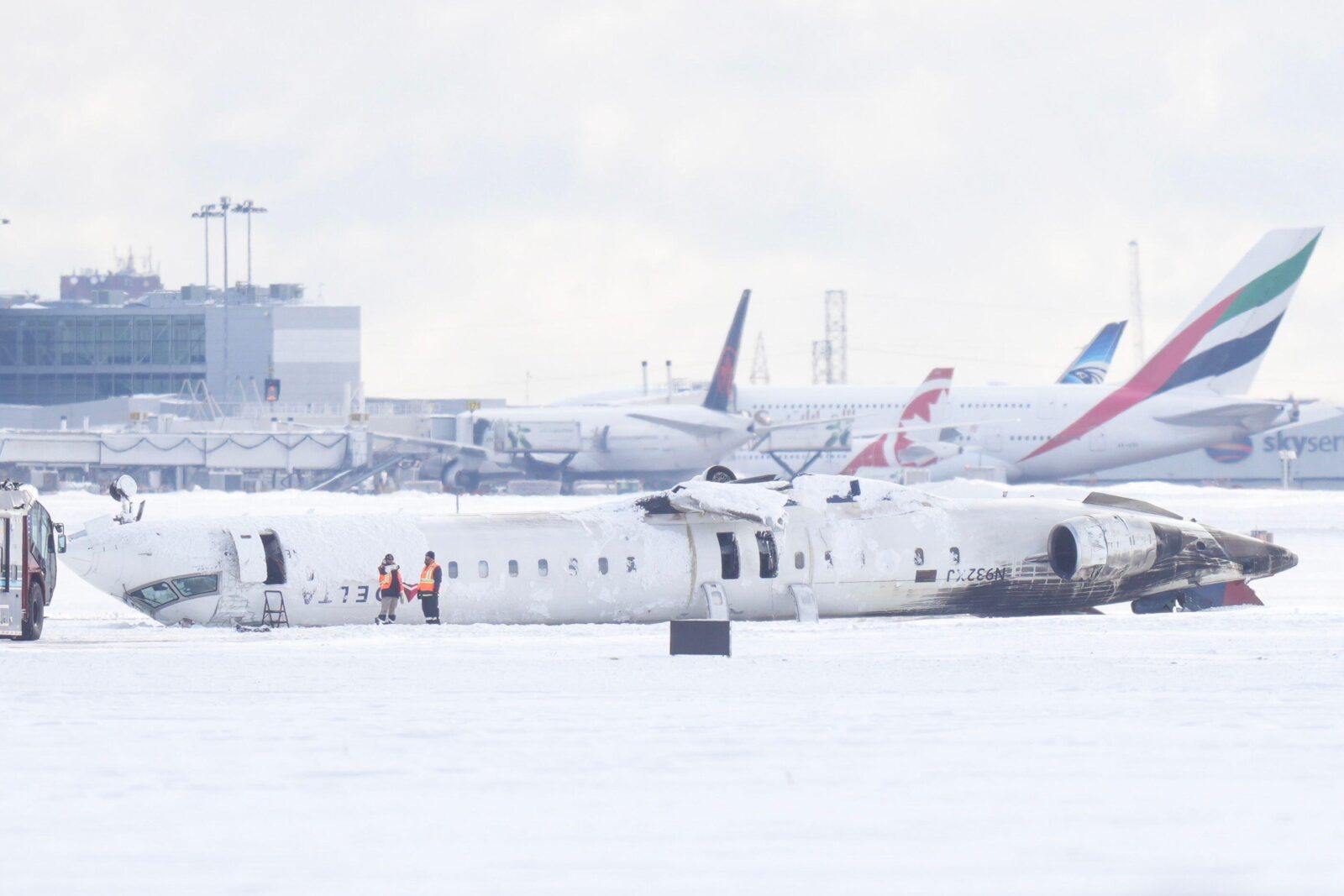
A flight attendant who was onboard the Delta Air Lines plane that crash-landed, flipped over multiple times, and partially burst into flames while landing at Toronto Pearson International Airport on February 17 has accused the carrier of allowing an inexperienced pilot to fly the aircraft.
The crash involved a Bombardier CRJ regional jet, which was operated under the Delta Connection brand by the Atlanta-based carrier’s wholly owned subsidiary, Endeavour Air.
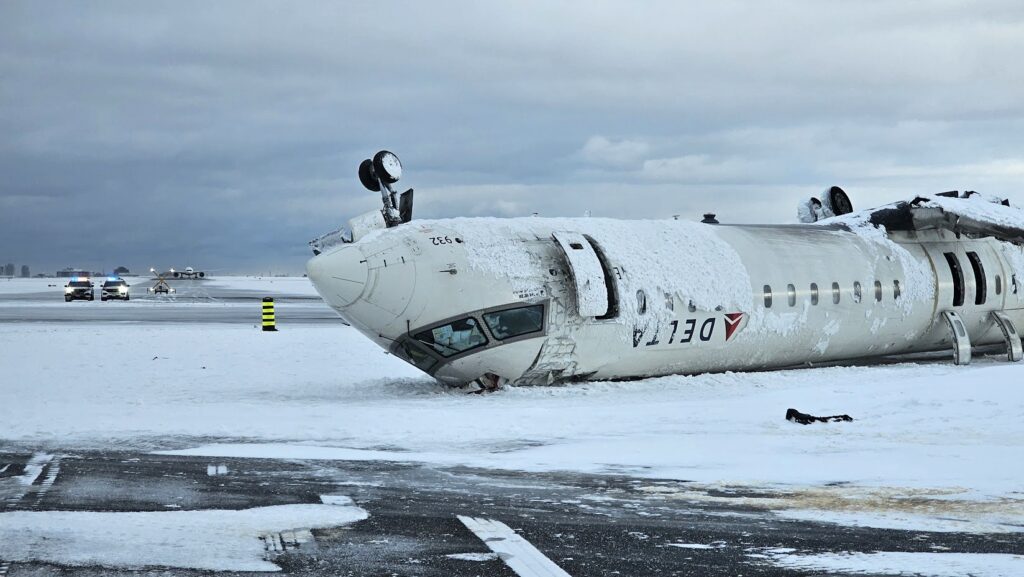
Miraculously, of the 80 passengers and crew who were on board Delta flight DL4819 from Minneapolis, only four sustained serious injuries, with the vast majority walking away from the inverted wreckage that had its right wing and tail torn off as it slid down the runway.
Vanessa Miles was an Endeavour Air flight attendant who was ‘deadheading’ aboard flight 4819 – this means that she wasn’t part of the operating crew and that she was sitting in a regular passenger seat because she was flying to Toronto to start work on another plane.
In a new lawsuit filed in a Michigan district court, Vanessa accuses her own employer of cutting corners on safety by rushing pilots through training and “knowingly putting passengers at risk with inexperienced flight crew.”
The Transportation Safety Board of Canada (TSB) is still investigating the cause of the accident, although the agency released its preliminary report on the crash in March.
The preliminary report highlighted 11 areas of the investigation that will be examined in much more detail. These include landing techniques, pilot training, and certification of the landing gear.
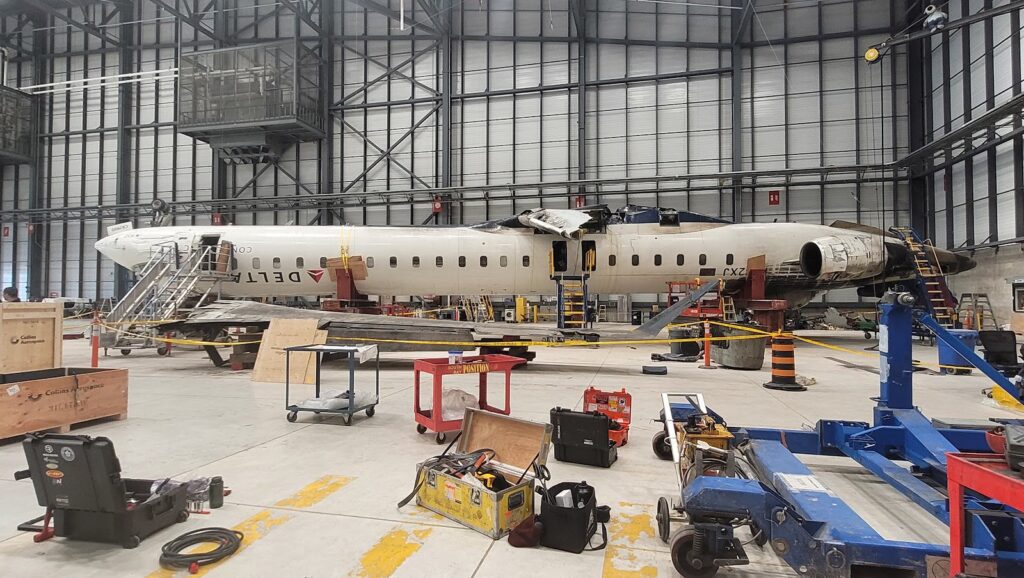
As flight 4819 came into land on a cold and icy day at Toronto Pearson Airport, the plane “experienced a violent and catastrophic drop during the landing procedure, struck the ground with excessive force, rolled multiple times, and ultimately came to rest upside down on its roof.”
Vanessa was temporarily knocked unconscious from the force of the crash, hanging upside down in the inverted aircraft as the cabin started to fill with smoke and jet fuel rained down on the occupants.
Once she regained consciousness, Vanessa says she unbuckled her seatbelt and fell to the ceiling of the cabin before attempting to escape the burning wreckage.
Vanessa jumped around seven feet to the tarmac below, sustaining further injuries in the process, before waiting for around an hour in freezing cold temperatures, before she was rushed to a local hospital.
“This accident was caused, at least in part, by Defendants knowingly assigning an inexperienced and inadequately trained pilot to operate the flight, demonstrating a reckless disregard for passenger safety in pursuit of operational,” the lawsuit against Delta alleges.
Pointing to the preliminary accident report as evidence of negligence on the part of the pilots, the lawsuit alleges a slew of errors by the flight crew, including:
- Failing to maintain a safe rate of descent
- Improperly reducing engine thrust, which made the unsafe rate of descent worse
- Failing to respond to a so-called ‘sink rate’ alert
- Failing to take proper corrective action during the final descent
- Failing to take into account the weather conditions
“Defendants knowingly, willfully, and repeatedly place profits over safety, resulting in this catastrophic incident and Plaintiff’s severe injuries,” the complaint continues.
As well as sustaining a fractured shoulder, Vanessa was also left with a “traumatic brain injury,” knee and back injuries, and “psychological trauma.”
As flight 4819 was an international service between the United States and Canada, Vanessa is partly using the Montreal Convention to sue Delta under Article 17 which imposes a strict liability on airlines for injuries sustained by passengers during the course of a flight, which is not due to their own negligence.
Damages under Article 17 can be capped at 151,880 Special Drawing Rights, which is currently worth approximately $219,033, although compensation can be awarded over and above this cap if the airline is proven to have been negligent.
Vanessa is also suing Delta for gross negligence and is asking a jury to award her $75 million in damages. She joins a growing list of passengers from flight 4819 to sue Delta over the incident.
Rather unusually, Delta voluntarily released details about the pilots of flight 4819 after allegations that the crew were ‘DEI hires’ started to go viral on social media.
Delta explained that the Captain was a highly experienced pilot who had flown for Endeavour Air and a predecessor airline since October 2007. The First Officer had worked for the carrier since January 2024 and completed her training in April 2024.
A spokesperson refuted claims that either of the pilots had failed training events and said that the First Officer, who was flying the aircraft at the time of the crash, had flight experience that “exceeded the minimum requirements set by U.S. Federal regulations.”


Who told you the airplane “flipped over multiple times”?
I agree with K. Locks…there was NO EVIDENCE that the aircraft flipped multiple times. The video clearly shows that. While there was smoke in the cabin (DUH), the wreckage was not on fire in the true sense that there were flames. Thank gawd the wing separated and burned way behind the fuselage. There was fuel dripping, for sure.