



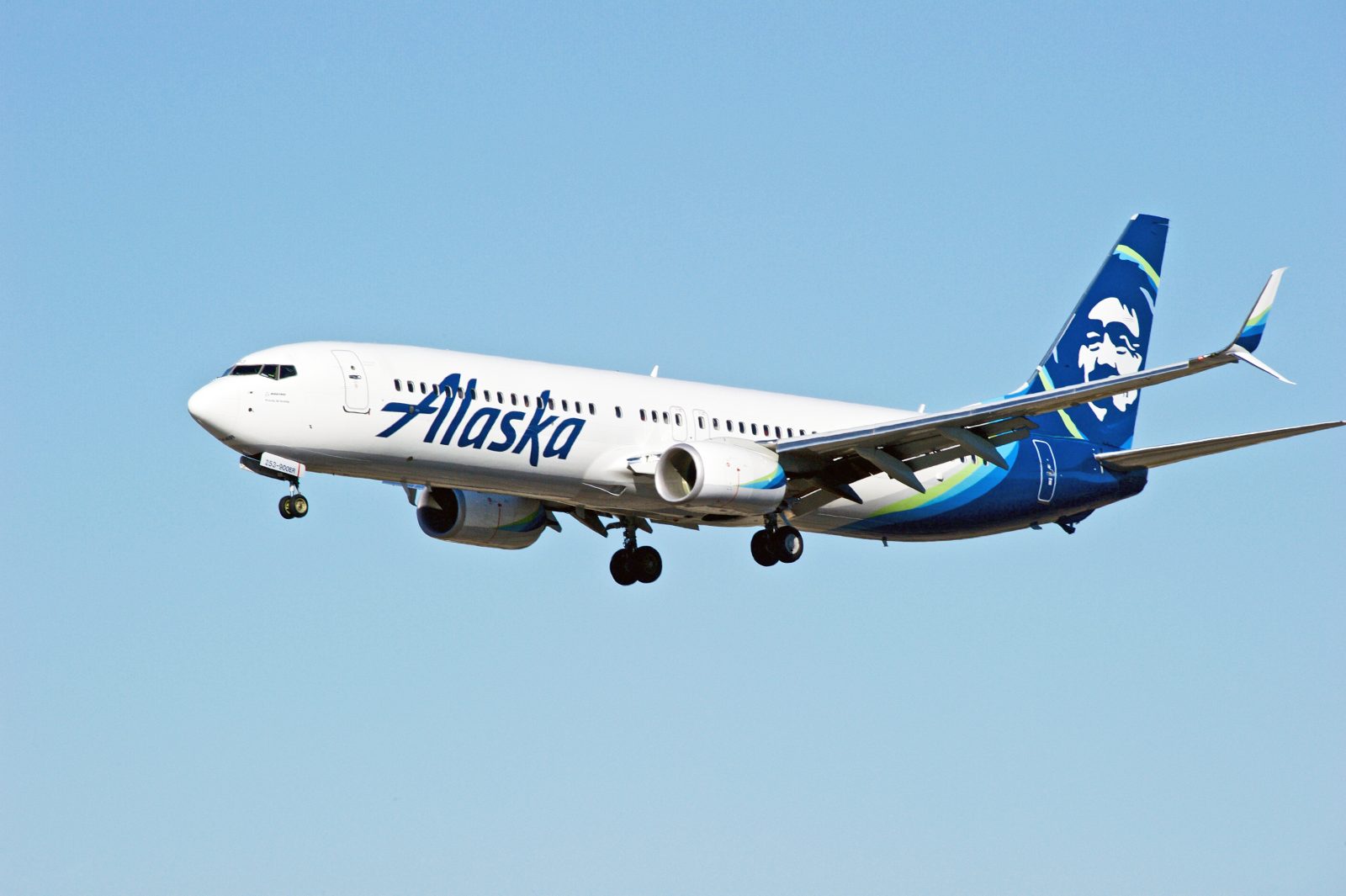
Alaska Airlines is breaking the mold when it comes to frequent flyer programs by allowing travelers to earn status points in three different ways – either by how many miles you fly, how much money you spend, or how many flight ‘segments’ you complete.
The innovative new approach to earning points and status points is part of a massive overhaul of Alaska Airlines’ frequent flyer program that has seen it rebranded from Mileage Plan to Atmos Rewards.

As part of the shakeup, Atmos Rewards will also become the frequent flyer program of Hawaiian Airlines, which was acquired by Alaska last year.
In the last few years, there’s been a big shift in the airline industry to move from traditional distance-based frequent flyer programs to revenue-based models, which reward the highest spending customers rather than those who fly the most miles.
Alaska’s Mileage Plan has, however, been the last remaining distance-based program amongst major US carriers, so it was widely feared that the new combined program with Hawaiian Airlines would result in an inevitable switch to a revenue-based model.
Atmos Rewards, however, has surprised everyone by not only retaining the current distance-based model but also introducing two parallel ways to earn points.
Depending on your travel behavior, a revenue-based model could be more lucrative than the old distance-based model, while consumers who travel short flights but very frequently will likely benefit more from the new segment-based model.
“We listened to what our members value most and built a program that’s grounded in generosity, personalization and practicality,” commented Andrew Harrison, chief commercial officer for the Alaska Airlines Group.
“We’re putting our members in the pilot’s seat, giving them control over how they earn and redeem, while honoring the legacy and values of both Alaska and Hawaiian.”
As part of the rebranding, Alaska Airlines is also introducing new tier-level names that are a little bit easier to understand.
- Atmos Silver = MVP status
- Atmos Gold = MVP Gold status
- Atmos Platinum = MVP Gold 75K status
- Atmos Titanium = MVP Gold 100K status
Atmos Silver is the equivalent of Oneworld Ruby, Atmos Gold is the equivalent of Oneworld Sapphire, and both Atmos Platinum and Titanium are the equivalent to Oneworld Emerald.
There will be no change to achieve Atmos Silver or Atmos Gold, although there are hikes in the number of Atmos status points required to achieve Platinum or Titanium.
| Status Points | Change | |
|---|---|---|
| Atmos Silver | 20,000 Status Points | No Change |
| Atmos Gold | 40,000 Status Points | No Change |
| Atmos Platinum | 80,000 Status Points | +5,000 Status Points |
| Atmos Titanium | 135,000 Status Points | +35,000 Status Points |
In order to earn status points, you can choose to earn either by distance flown, price paid, or segments flown.
| Distance Traveled | One point for every mile flown |
| Price Paid | Five points for every $1 spent |
| Segments Flown | 500 points for every segment flown |
Alaska Airlines suggests that earning via its revenue-based model might be best for travelers who often pay cash to travel in premium cabins, while its segment-based model could appeal to passengers who fly often on short hops.
While the qualification limit to reach Atmos Titanium has increased quite substantially, Alaska is adding a new benefit by becoming the only US airline to offer its top-tier elite frequent flyers day-of-departure complimentary upgrades into global Business Class.
This is for both the status holder and one companion. The benefit doesn’t require an upgrade certificate or points.
Mileage Plan has ceased to exist with immediate effect, with Mileage Plan miles tuning into Atmos Points and Mileage Plan elite-qualifying miles turning into Atmos Status Points.
The value of points has not changed, and they don’t expire.
Members of Hawaiian Airlines’ frequent flyer program will have to wait until October 1 for the transition to the new Atmos Rewards program.
What’s In A Name?
The new Atmos Rewards program hasn’t come as a surprise to many industry observers, given the fact that a slip-up on the Hawaiian Airlines website a few weeks ago revealed the new name ahead of the official announcement.
As is probably quite obvious, Atmos is a play on the word atmosphere, and the new color scheme merges the blue of Alaska Airlines and the pink that is synonymous with Hawaiian Airlines.
Critics say there was no need to change the existing Mileage Plan branding, although given that this said nothing of either the Alaska Airlines or the Hawaiian Airlines brand, I can’t see what the issue is… especially given the fact that it was so similar to United’s MileagePlus program name.


My only issue with the name is that when I hear it I first think of Dolby’s technology with the same name – maybe that’s a me thing though.