



Southwest Becomes First US Airline To Use Anti-Terror Cockpit Barricade On New Boeing 737MAX Jets


Southwest Airlines has become the first US-based carrier to start using a secondary cockpit barrier on newly built airplanes after it took delivery of a Boeing 737MAX jet with the anti-terror barricade installed fresh from the factory.
These barricades are being installed on all newly built airplanes being delivered to US commercial airlines, but, unlike its rivals, Southwest is the only carrier to immediately start using the barriers.
What is a Secondary Cockpit Barrier?
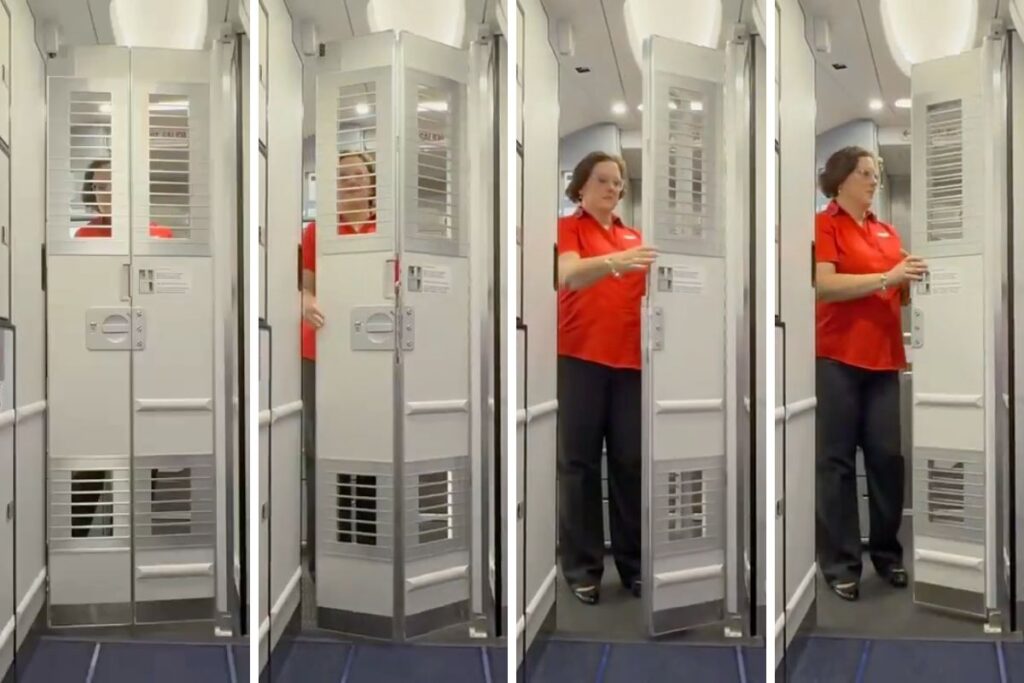
The barricade is technically known as an ‘Installed Physical Secondary Barrier’ or IPSB for short, and it sits between the forward galley and the primary bulletproof cockpit door.
The IPSB is deployed whenever the primary cockpit door has to be opened in-flight, such as when the pilots need to use the lavatory.
At present, US airlines typically use beverage carts to block access to the cockpit whenever the primary door is opened, but the IPSB is a more secure system to ensure the integrity of the cockpit during these periods.
The IPSB isn’t bombproof or bulletproof, and it’s not designed to stop a sustained attack. Instead, it is a lightweight device that would prevent an intruder from accessing the flight deck for the few seconds that the primary door is open.
Why Have IPSBs Been Mandated?
IPSBs have been around for many years, although very few airlines ever bothered to invest in these devices. After years of campaigning, however, Congress eventually signed a bill into law that would require US airlines to install these anti-terror barricades on all newly built airplanes.
The campaign to mandate IPSBs can be traced back to the aftermath of the 9/11 terror atrocities, but it wasn’t until 2018 that the law was approved as part of that year’s FAA Authorization Act.
Even then, the necessary rulemaking to make IPSBs a reality was kicked into the long grass. In 2023, however, the FAA finally got around to ordering airlines to start installing IPSBs on all new aircraft within two years.
Why is Southwest the Only US Airline Deploying IPSBs?
In preparation for this year’s deadline, US carriers have been ordering new aircraft to be delivered with IPSBs installed, but in July, the airline industry won a controversial extension for when IPSBs actually need to start being deployed.
Airlines argued that an FAA delay in certifying IPSBs that were already being installed on new airplanes meant that they hadn’t been given enough time to prepare training materials and instruction manuals.
The industry successfully convinced the FAA that, without a deadline extension, airlines would be forced to ground hundreds of new airplanes until tens of thousands of pilots and flight attendants had been trained in the use of IPSBs.
The FAA has given airlines until July 2026 to complete crew training, at which point IPSBs must be deployed on all new aircraft.
Southwest Airlines, however, isn’t going to be making use of this exemption and will deploy IPSBs with immediate effect.
How Many Aircraft Will Have IPSBs installed?
Southwest Airlines plans to take delivery of 25 new aircraft with IPSBs by the end of 2026 – representing just 3% of Southwest’s total fleet. In other words, expect IPSBs to be the exception rather than the norm.
From now until the end of the year, US airlines plan to collectively take delivery of 33 new aircraft per month with IPSBs installed, although many of these aircraft barricades won’t be put to use until July 2026. Until then, the IPSBs will sit idle.
There are currently no plans to install IPSBs on airplanes that have already been delivered.
Southwest’s Barricade is Just One Design
Until now, it’s been difficult for passengers to imagine what an IPSB looks like, but it’s important to note that there are several different approved designs.
The Southwest version is a bi-fold design that sits between the forward galley and cockpit door, although some versions are located further forward, creating a tight ‘air lock’ between the cockpit door and forward lavatory.
Aviation Unions Remain Unhappy Over FAA Extension
Aviation unions were united in their anger at the airline industry, asking for an extension to the deadline on the deployment of IPSBs, claiming that it will undermine aviation security.
The airline industry, through its lobby group Airlines For America, initially wanted a 24-month delay to the deployment of IPSBs, although the FAA ultimately decided that only a maximum 12-month extension was warranted.
Nonetheless, Capt. Jason Ambrosi, president of the Air Line Pilots Association (ALPA), slammed the decision, saying: “The FAA’s decision to grant airlines yet another delay on the secondary barrier rule is deeply disappointing and undermines our nation’s aviation security.”
“While we acknowledge this ruling falls short of the unacceptable delay requested by Airlines for America, this extension still compromises the safety and security of our skies.”


So, rather than fix the Max Air’s known Aerodynamic design flaws, (which may not be possible, since they are already built unbalanced) They decided to obfuscate the safety concerns by installing flimsy anti terror partitions. Now ain’t that America!
Off topic, irrelevant & reductionist.
If you think it’s flimsy take a try at work t when you see it in use.
It’s only meant to delay any attempt at the main cockpit door such that it can be locked.
This secondary barrier is a total waste of time and money. Never again will passengers allow a flight deck takeover. Quit fighting the last war.
By the way, these are the same unions that are afraid of responsible long term trusted travelers carrying a 2” Swiss Army knife or a leather man forcing me to check a bag on every trip.
.