



Air Canada Flight Attendants ‘Worked For Free’ As They Evacuated 117 Passengers In Denver Emergency

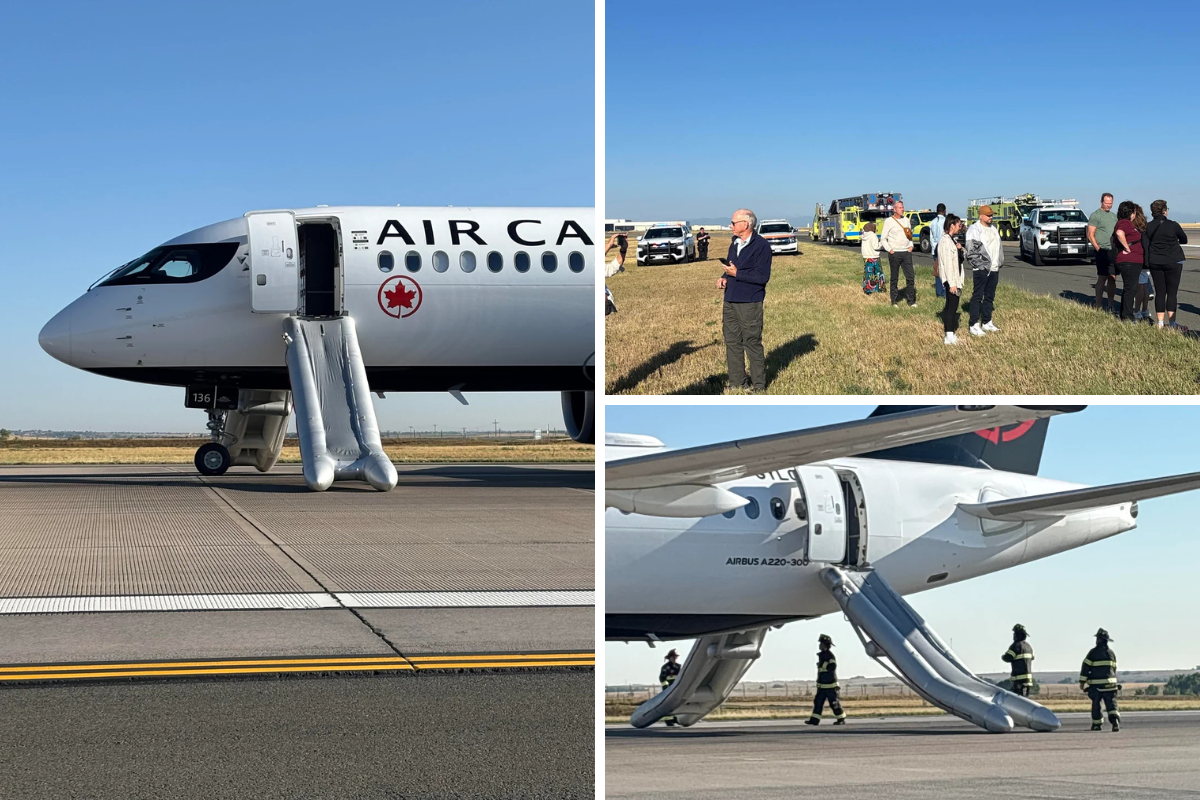
Flight attendants on an Air Canada flight from Denver International Airport to Toronto managed to evacuate 117 passengers in less than 90 seconds from a plane that made an emergency landing on Sunday morning… and without pay, if you were to believe the official flight attendant union.
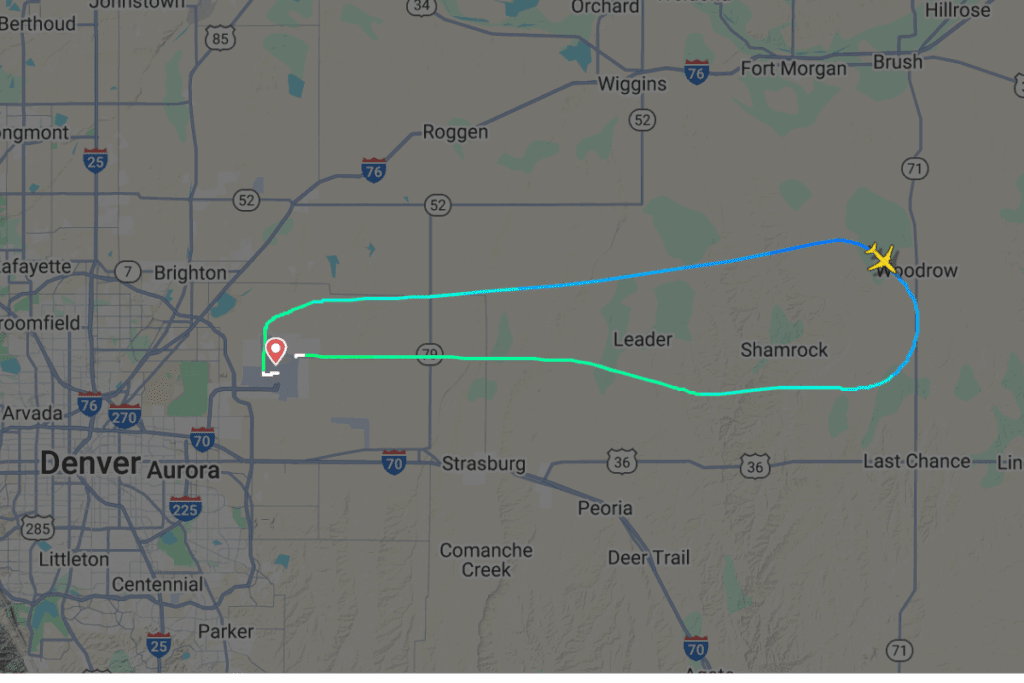
The terrifying emergency started just moments after Air Canada flight AC-1038 took off from runway 34L at Denver Airport at around 8 am on Sunday morning.
Flight Details
- Flight Number: AC-1038
- Route: Denver International Airport – Toronto Pearson
- Aircraft: Airbus A220-300
- Registration: C-GYLQ
- Delivered: June 12, 2025
The brand new Airbus A220 jet climbed to a maximum altitude of just 18,400 feet before the pilots suddenly performed a U-turn and headed straight back to Denver for an emergency landing.
Eyewitnesses onboard the plane say that passengers and flight attendants at the back of the aircraft could smell smoke in the cabin, prompting the emergency diversion and subsequent evacuation onto the runway.
Passengers fled the aircraft via emergency slides at both the front and rear of the plane, as well as via the wings. Remarkably, very few passengers took their hand luggage during the evacuation, and only one passenger sustained a minor injury in the rush to get off the plane.
The incident, just one day before Labor Day in the United States, is a stark reminder of what Air Canada’s flight attendants were fighting for during a recent strike that crippled the Canadian flag carrier for several days in August.
Under the flight attendants’ existing contract, crew members are only paid when they are actually flying – from the time that the aircraft pushes back from the gate to the moment that it arrives at its destination.
The CUPE union called on Air Canada to end the practice of unpaid work for flight attendants, but the airline was initially only willing to offer ‘boarding pay’ at half the usual hourly flying rate.
With a mandate of more than 99% of flight attendants voting in favor of strike action, the union fought back, arguing that Air Canada’s proposal meant that crew members would still spend hours working unpaid, including in potential emergency situations.
(According to an August 12 press release that stated Air Canada was “refusing to compensate flight attendants for time spent responding to medical emergencies, fires, evacuations, and other safety and security-related issues on the ground.”)
In the end, the union reached a mediated agreement with Air Canada in which the airline increased its ‘boarding pay’ offer to 70% of the normal hourly flying rate within four years of the contract coming into force.
The proposal does, however, mean that emergencies on the ground would still go unpaid.
Flight attendants started voting on the proposed contract on August 27, and the ballot is expected to close on September 6. The vote is expected to be close, and flight attendants could still reject immediate pay rises in their fight for full ground pay.
In a statement, a spokesperson for Air Canada explained: “On Sunday, Air Canada flight 1038 from Denver to Toronto, operated by an Airbus A220, returned to Denver shortly after takeoff due to a reported acrid smell in a galley area.”
“The aircraft landed safely, and the 117 passengers and 5 crew evacuated the aircraft using emergency slides as a precaution. One passenger sustained a minor injury during the evacuation process. Passengers were provided with alternate travel arrangements as soon as possible that same day.”
Although the aircraft has remained on the ground in Denver since the incident on Sunday, Air Canada says the plane will be able to return to service as soon as new emergency slides have been installed.
On December 23, 2024, an Airbus A220-300 operated by SWISS International Air Lines, which was flying from Bucharest to Zurich, made an emergency landing in Graz, Austria, when the cabin filled with smoke.
A 23-year-old flight attendant who was working on flight LX1885 fell unconscious before the plane landed in Graz and had to be airlifted to the hospital, where he remained on life support for more than a week before he tragically died.
Accident investigators currently believe that a previously undiscovered issue with one of the two Pratt & Whitney engines fitted to the plane was the cause of the smoke that quickly filled the plane.


Please cite your source saying they won’t be paid for this flight. The existing contract even specifies the flight time pay:
6.03.01 Where there is a departure (aircraft wheels roll) and the aircraft returns to the gate
and subsequently the crew elects to book crew rest due to a flight delay, the crew
will be credited with the greater of the scheduled or actual flight time credit for the
flight leg or the minimum duty period guarantee of four (4) hours.
And wouldn’t it fall under this as well?
5.09 GROUND DUTY – SERVICE TO PASSENGERS – Where an employee is required by the
Company to provide service to passengers on the ground whether
scheduled or non-scheduled and whether the flight operates or not s/he shall be paid
one-half (1/2) of the hourly rate of pay for his/her classification applicable to the duty period
involved. The employee shall receive the greater of the:
(a)Combined ground time credits and flight time; or
(b)Duty period guarantee/trip hour guarantee.
Compensation under this Article shall be calculated to the nearest minute but no entitlement
will exist for less than thirty (30) minutes.
My source: the CUPE website.
“Worked for free” You sure about that?
He isn’t. His source is probably some Facebook forum.
It’s frustrating that journalists continue to uncritically publish this clearly-false narrative from FAs about “unpaid work”.
Of course they’re paid for the work. They’re paid in the form of an unreasonably-high hourly rate for flight time, which also compensates them for the associated non-flight duties. It’s done that way mostly for historical reasons, but that doesn’t make it any less true.
And it’s not entirely for historical reasons. The system continues in part because some employees want it that way. The more senior you are, the more control over your schedule, the more you can play schedule games to maximize flight pay while minimizing ground work.
I’m sure the airline would be open to a rate that’s applied to all duty time rather than flight time — but at a much more reasonable (i.e. lower) hourly rate. Of course that’s not what the FAs want. They want the same unreasonable rate for far more hours. Why not? Everyone would like to make 3x as much.
But the argument they make is fundamentally dishonest. Instead of uncritically parroting the propaganda, the media should be helping to educate people who aren’t in the industry, and don’t understand the trade-offs.
The vast majority of pilots are paid exactly the same way — overpaid for flight time, to compensate for — yet for some reason you almost never see this argument from pilots.