



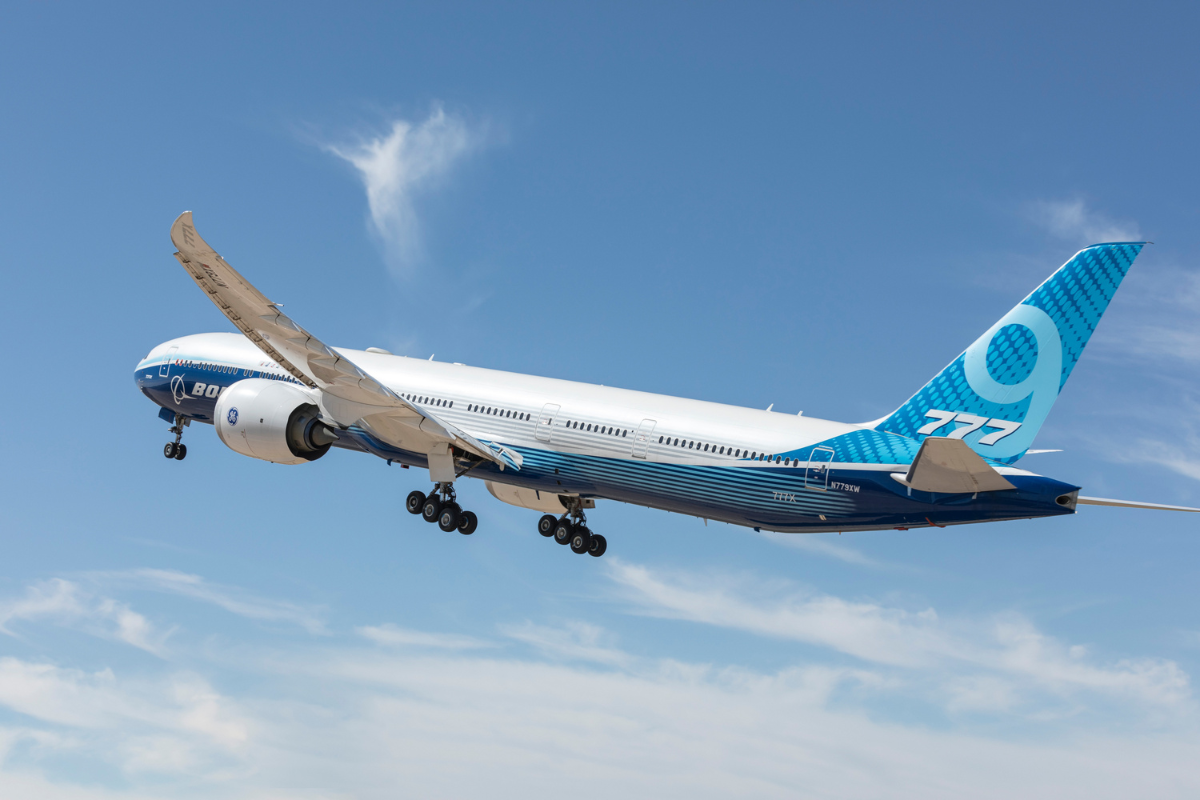
The chief executive of embattled aircraft manufacturer Boeing has admitted that the certification campaign for its next-generation 777X widebody jet might not be completed next year as hoped and that the first deliveries of the highly anticipated airplane might be pushed back a further year to 2027.
Speaking at an industry conference on Thursday, Kelly Ortberg said there were still “mountains of work” left to get the plane cleared by regulators and that the certification timeline could easily slip.
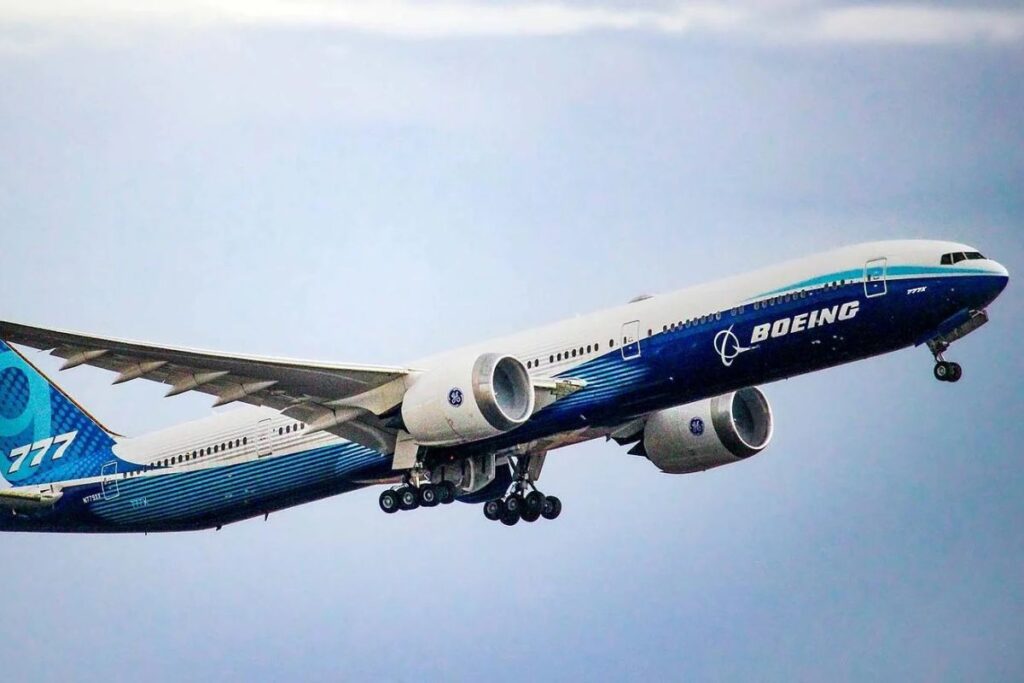
The Boeing 777X was originally slated to start being delivered to airlines in 2020, and the mammoth six-year delay has held back capacity growth at a number of major international carriers that have had their fleet renewal and network expansion plans thrown into turmoil.
Boeing’s troubled 777X certification timeline
- 2013: Boeing launches 777X program
- September 2019: Certification campaign gets underway, but is quickly suspended when an extreme pressurization test goes horribly wrong.
- January 2020: Test flights allowed to begin for the first time.
- December 2020: Issues with the flight control system force the suspension of test flights
- July 2024: Test flights finally resume after years of intense regulatory oversight.
- August 2024: Structural damage is found on a test aircraft, and the fleet is quickly grounded.
- January 2025: Test flights once again resume. As of August 2025, the fleet of five test aircraft has logged more than 1,500 flights.
- 2026: The aircraft will hopefully secure FAA certification, although this could be pushed back to 2027.
Boeing started its certification campaign in 2019 with the hopes of quickly securing regulatory approval for the 777X to start being delivered to airlines the following year.
The campaign, however, went horribly wrong before test flights had even begun when an aircraft door blew off during an ‘extreme pressurization test’ that was being conducted in a hangar and overseen by inspectors from the Federal Aviation Administration (FAA).
Test flights were eventually allowed to get underway in early 2020, but were quickly abandoned when a slew of other technical issues were identified, including with the aircraft’s flight control system.
A multi-year delay to further test flights followed as Boeing faced increased regulatory scrutiny over its Boeing 737MAX, as well as the Boeing 787 Dreamliner, which had faced whistleblower complaints about shoddy manufacturing processes.
Certification flights resumed in July 2024 and were then grounded just a month later after damage was discovered in a part, known as the primary pylon structural component, which connects the mammoth GE9X Turbofan engines to the wings.
Those issues have now been resolved, and certification test flights have been taking place since January. As of late August, the test flight team has logged more than 1,500 flights and 4,100 hours of flight time in their quest to get the airplane certified.
There are now five planes that form the test flight fleet, with the aircraft being sent to various locations for extreme testing under extreme conditions like heat, snow, and stormy environments.
The 777X is Boeing’s next-generation iteration of its hugely popular 777 widebody jet. The aircraft comes in two sizes: the 777-8, which can seat 384 passengers in a two-class configuration, and the 777-9, which can hold as many as 426 passengers.
The list price for the airliner ranges from $410 million to $442 million.
One of the key external differences between the older Boeing 777 and the new 777X is its huge wingspan. Coming in at 71.8 meters, the wings of the Boeing 777X are the longest of any commercial jet, and that posed some serious issues for the aircraft’s designers.
At some airports, the wings are so big that the plane wouldn’t fit in parking bays, so Boeing developed unique folding wing tips that reduce the wingspan to 64.8 meters.
Despite the myriad problems that had dogged the certification of the 777X, Boeing has still secured 618 orders for the aircraft, including 256 from Emirates alone, and 124 from Qatar Airways.
Other key customers include ANA All Nippon Airways, British Airways, Cathay Pacific, Etihad Airways, Lufthansa, and Singapore Airlines.
What does the Boeing 777X mean for passengers?
Boeing is promising a much-improved passenger experience on the new 777-8 and 777-9, especially when compared to the first generation of 777s that are definitely beginning to show their age.
Perhaps most importantly, Boeing has designed a new gaseous filtration system that will offer higher humidity levels and a lower cabin altitude of 6,000 feet, which is the same as the Boeing 787 Dreamliner. This should mean passengers step off a long-haul flight feeling more refreshed compared to older aircraft.
In addition:
- Overhead bins will fit twice as many bags as first-generation Boeing 777s.
- New turbulence sensors and dampeners will make for a smoother ride.
- Internal cabin noise from the engines will be 40% quieter than older 777s.
- Windows will be 30% larger, and airlines will have the option to install window dimmers just like the 787 Dreamliner.