



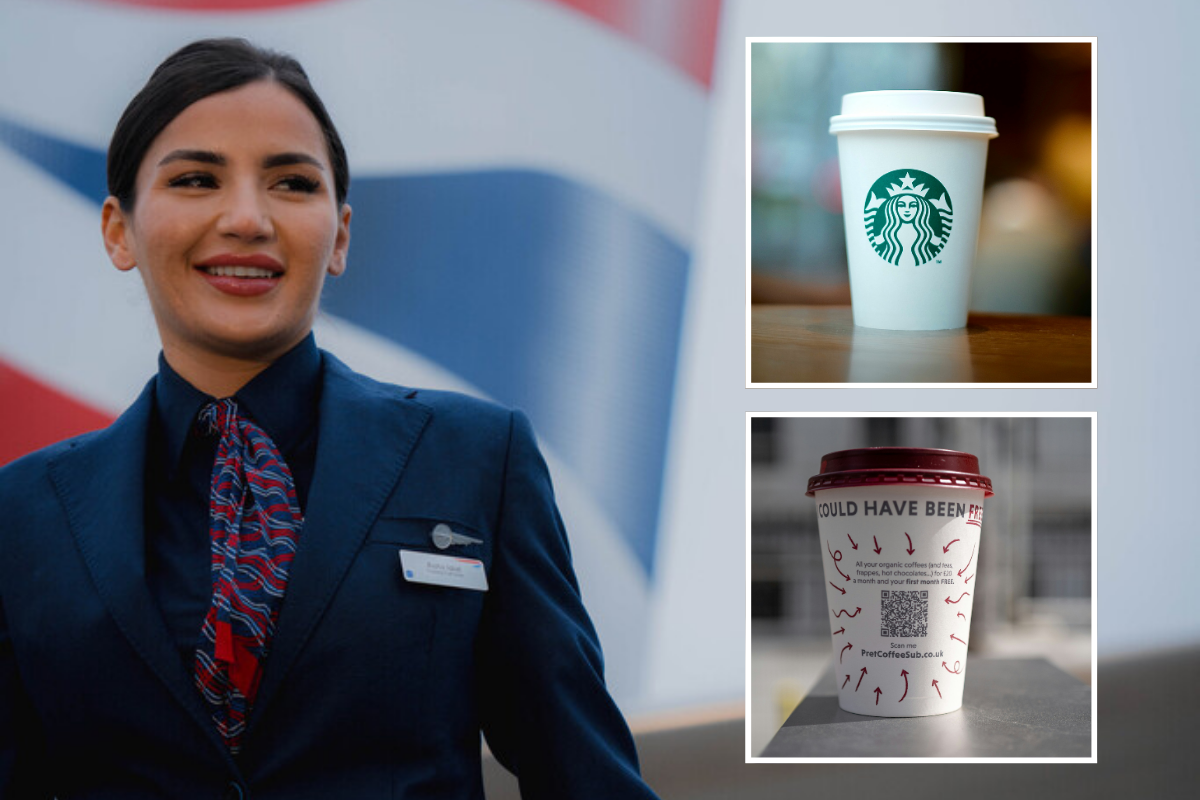
British Airways has been forced into an embarrassing climbdown over new uniform and appearance guidelines that banned pilots and cabin crew from drinking coffee in public and required them to only consume water “discreetly.”
Just days after publishing the controversial new guidelines, British Airways has backed down on its tough stance after unions that represent aircrew at the airline reacted with fury to the rules.
In a leaked internal memo, British Airways admitted that the guidelines had “given the impression” that eating and drinking were now banned, but the airline claimed that this was never the case.
The guidelines ordered pilots and flight attendants only to consume food or any other drink apart from water in designated crew restrooms or cafeterias, hidden away from public view.
The climbdown only occurred after unions were forced to point out that aircrew do not get to see the inside of a designated break area once they have reported for duty days that can stretch on for more than 12 hours.
British Airways still doesn’t want cabin crew to eat or drink while walking through terminal buildings, but it appears that sitting down in an airport cafe or a gate area to eat or drink is now acceptable.
This isn’t, though, the only reversal that British Airways has been forced into following the publication of the derided guidelines.
The airline had also wanted to ban cabin crew from wearing their uniform when they commute to work on one of its flights or ‘deadhead’ to another destination.
What is commuting and deadheading?
Commuting: Many pilots and cabin crew don’t live in the same city or even country where they are based, and instead ‘commute’ to work as a passenger on their own airline’s flights or other carriers that have reciprocal agreements for free or discounted tickets.
Deadheading: Sometimes, airlines have to get a set of crew to a destination to pick up a flight. Deadheading is the term used for crew who are on-duty but traveling as passengers as part of their assigned schedule.
Although no flight attendant wants to wear their uniform while commuting or deadheading, sometimes it’s just practical to do so. For example, if there is very little time to change before reporting for work, or you’re running from the end of your duty to catch your flight home.
Regulators require commuting and deadheading cabin crew to ensure that they are mistaken for working flight attendants by removing identifiable pieces of uniform. British Airways argued that this breached their brand guidelines, so the only solution was to ban commuting and deadheading crew from wearing their uniforms at all.
British Airways now says it is temporarily lifting the ban while it tries to think of a better solution.
Matt’s Take – British Airways is its own worst enemy
I can’t help but feel that some of the managers at British Airways are deliberately trying to sabotage the airline. It’s as if policy decisions are made with the aim of alienating both passengers and employees, and for very little, if any, give back.
These latest guidelines were intended to address the perception that appearance standards have taken a tumble in recent years – an issue that has been faced across the industry since the COVID-19 pandemic.
Even Gulf carriers like Emirates aren’t immune to accusations that onboard service isn’t what it once was, and it could take some time to rebuild the culture at some of these airlines following such a massive influx of new staff who know no different.
Appearance standards are undoubtedly important to the perception that passengers have of a brand, but they must move with the times. While rival carriers like Virgin Atlantic allow crew to show off their tattoos, British Airways shows no sign of easing its tough rules on body art.