



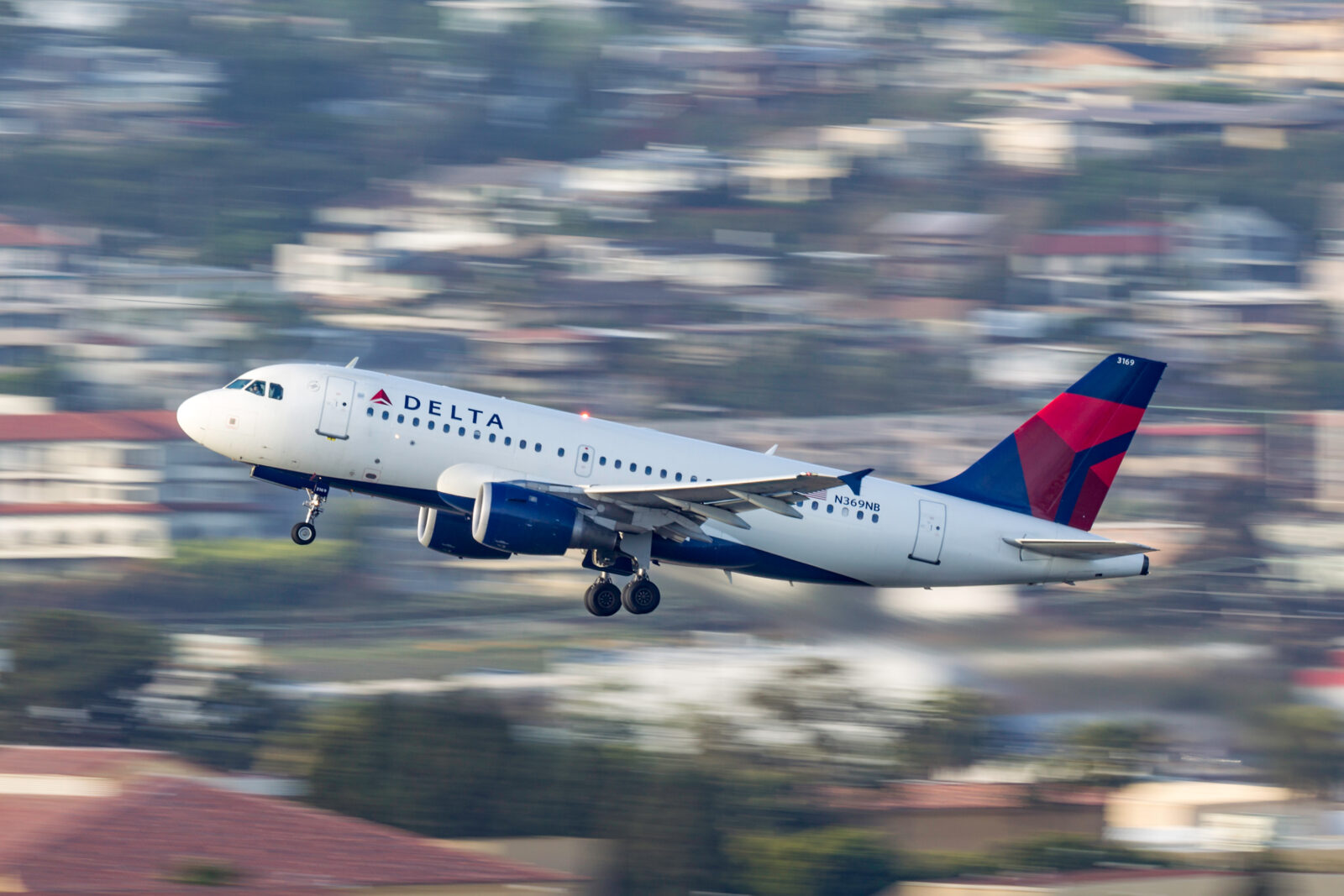
Delta Air Lines has confirmed that it is replacing hundreds of power units on Airbus A320 series aircraft that have been linked with a shocking rise in so-called fume events that have sickened crew members and passengers.
The Atlanta-based airline started the replacement program in 2022, but has only now publicly confirmed the upgrade program following an investigation by the Wall Street Journal.
Delta operates 310 single-aisle Airbus A320 series aircraft, and the airline has refitted 90% of its older planes with Auxiliary Power Units, or APU for short.
The APU is a small additional engine that is located in the tail of an aircraft. It provides the plane with power while it is on the ground and is used to start the main engines.
Campaigners and attorneys acting on behalf of victims of what are sometimes referred to as ‘toxic fume’ events claim the APU on Airbus A320 aircraft has a known design flaw that increases the risk of cabin air becoming contaminated with dangerous pollutants such as engine oil.
Like many airplanes, the Airbus A320 family of aircraft uses a so-called Bleed Air system to feed a fresh supply of air into the passenger cabin.
The system draws in compressed air from the engine and, after being cooled through the air conditioning system, it is pumped straight into the cabin. Because the air is fed through the engines, it can become contaminated with engine oils and lubricants that vaporize on a hot engine.
This can occur through the two main engines, as well as when the APU is being used on the ground to supply power to the plane.
In fact, the APU on Airbus A320 series might be even more prone to a fume event because the inlet to the APU is on the rear belly of the aircraft and close to two major sources of oil leakage.
Older APUs are also more susceptible to a fume event, so replacing these units with newer APUs will mitigate this risk, but not the risk of oil leaking into the inlet.
While airlines and aircraft manufacturers acknowledge that fume events can be disconcerting, they insist that the vast majority of people who are caught up in one of these incidents will only experience short-term, non-serious issues such as headaches and runny eyes.
There are, however, numerous cases of victims suffering “permanent and serious injury,” following a fume event.
In 2015, a Spirit Airlines Captain mysteriously died less than two months after being exposed to a fume event onboard an Airbus A320 that left him feeling confused and disoriented.
Before the incident, the Captain had enjoyed “impeccable health,” but after returning to work, he became “increasingly dithering and unreliable.” On one occasion, he parked an aircraft at the gate in such a way that other pilots thought he might be intoxicated.
Then, tragedy struck. Police were called to reports that the pilot was trying to kidnap a woman in the street. He collapsed and died as the police attempted to handcuff him. A coroner’s report found that the pilot may have died as a result of “excited delirium” and that recent exposure to organophosphates may have contributed to his death.
Organophosphates are found in vaoprized engine oil.
Despite recent media attention, the issue of toxic fume events has been a major source of concern amongst aviation workers for many years. In 2019, for example, American Airlines reported 1,644 ‘Smoke, Odor or Fume’ events.