



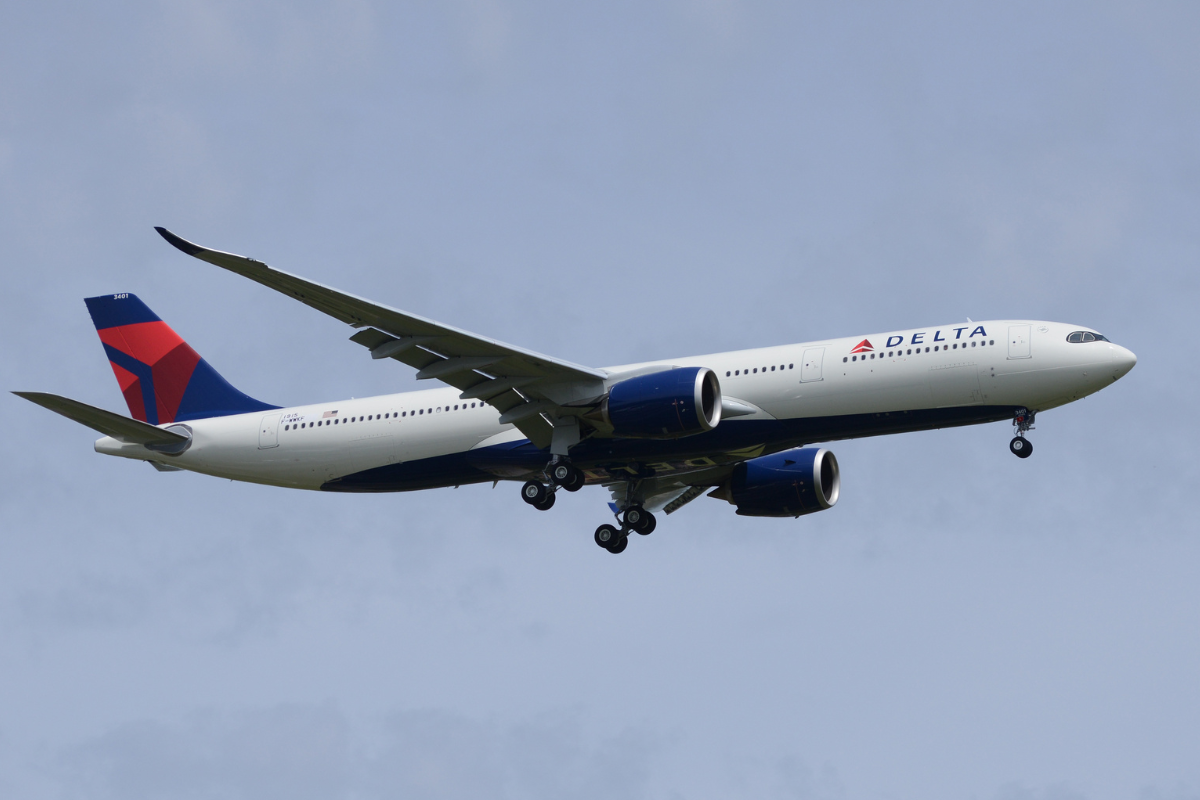
A Delta Air Lines Airbus A330 was forced to make an emergency diversion earlier this week after one of the galley ovens caught fire shortly after takeoff. Thankfully, the fire was quickly contained, although the plane ended up being grounded for nearly two days.
The incident occurred aboard Delta flight DL-55 from Lagos, Nigeria, to Atlanta, on September 23 as the aircraft was still climbing to its cruising altitude for the eleven and a half hour transatlantic flight to the United States.
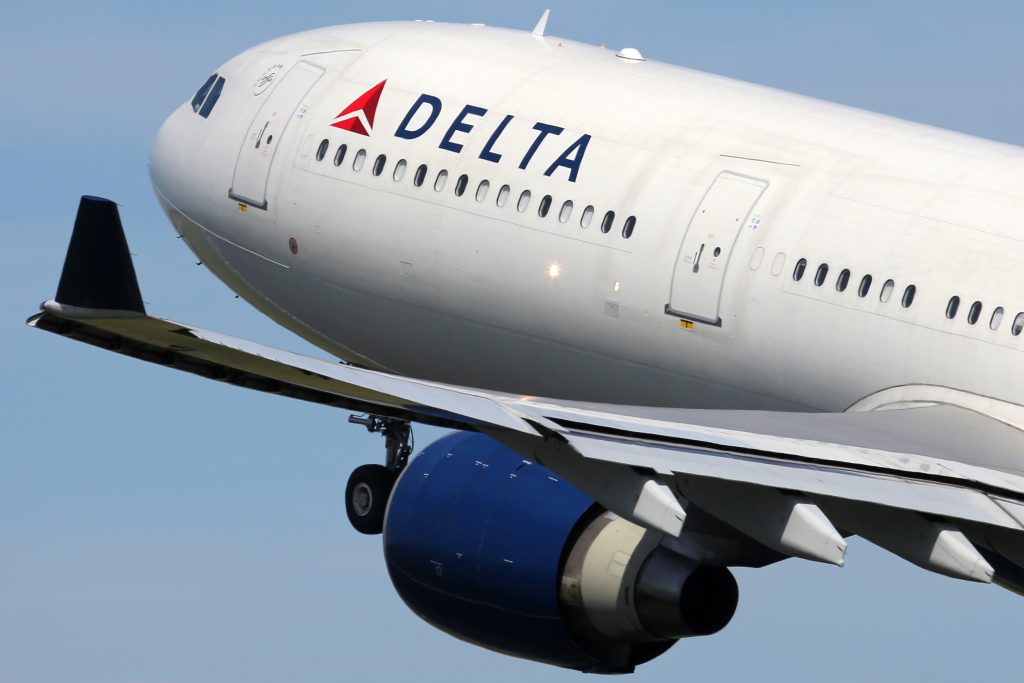
Around 40 minutes after takeoff, the pilots of the 21-year-old plane suddenly diverted and headed towards Accra, Ghana. They reported that one of the galley ovens had caught fire.
Nigerian accident investigators say the flight attendants managed to quickly contain the fire, and while it didn’t pose any threat to the occupants, the pilots still decided to get the plane on the ground as quickly as possible.
The cause of the fire hasn’t yet been established, although, commonly, galley oven fires are caused by something being placed in the oven that shouldn’t be there… such as paper from the catering facility.
Fat residue has also been known to cause galley oven fires, while an electrical fault with the oven itself can sometimes lead to an overheating situation.
Flight attendants have annual refresher training to fight various fire scenarios onboard a plane, and galley oven fires, and are nearly always covered. In most cases, the fire can be contained by isolating the electrical power to the oven.
If there are visible flames, the cabin crew might discharge a halon extinguisher into the oven, or use firefighting gloves to remove the foreign debris causing the fire, and submerge it in water.
Last June, the Dutch flag carrier KLM faced criticism over how cabin crew dealt with a galley oven fire, finding that the airline’s training needed to be improved.
In that incident, the ovens were switched on its the aft galley and then left unattended as the cabin crew went out into the cabin to start serving drinks. Around an hour later, a passenger notified the purser that there was smoke coming from the aft galley.
The purser immediately started a special firefighting procedure and went to isolate the power to the oven. A faulty power indication light, however, confused the crew member, and power was never isolated to the oven.
When the crew opened the oven, they noticed a light orange glow at the back and assumed it was a fire. They discharged a halon extinguisher into the oven, but all it did was create thick black smoke.
The crew got through six halon extinguishers as they tried to put out the fire, but the smoke only stopped, not because of the halon, but because a broken power control board became so damaged that it stopped generating heat in the oven.
The orange glow turned out to be hot metal rather than flames. The cause of the incident was found to be an unapproved aftermarket meal insert, which blocked airflow and caused the oven to get so hot that it sent the electrical circuits haywire.
Matt’s Take – In-Flight Fires Are No Joke
An in-flight fire at 40,000 feet is really a nightmare scenario, so it’s essential that flight attendants are well-trained and mentally prepared to deal with this type of incident.
In this latest incident aboard a Delta flight, it appears that this training kicked in just as it’s supposed to, but as the KLM situation shows, incredibly high-stress incidents like this can lead to mistakes.
That being said, the quality of the training is often to blame, especially when crew become accustomed to the same scenario year in year out, leading to muscle memory in how to deal with a situation, even if that might not be the correct response in a real-life incident.