



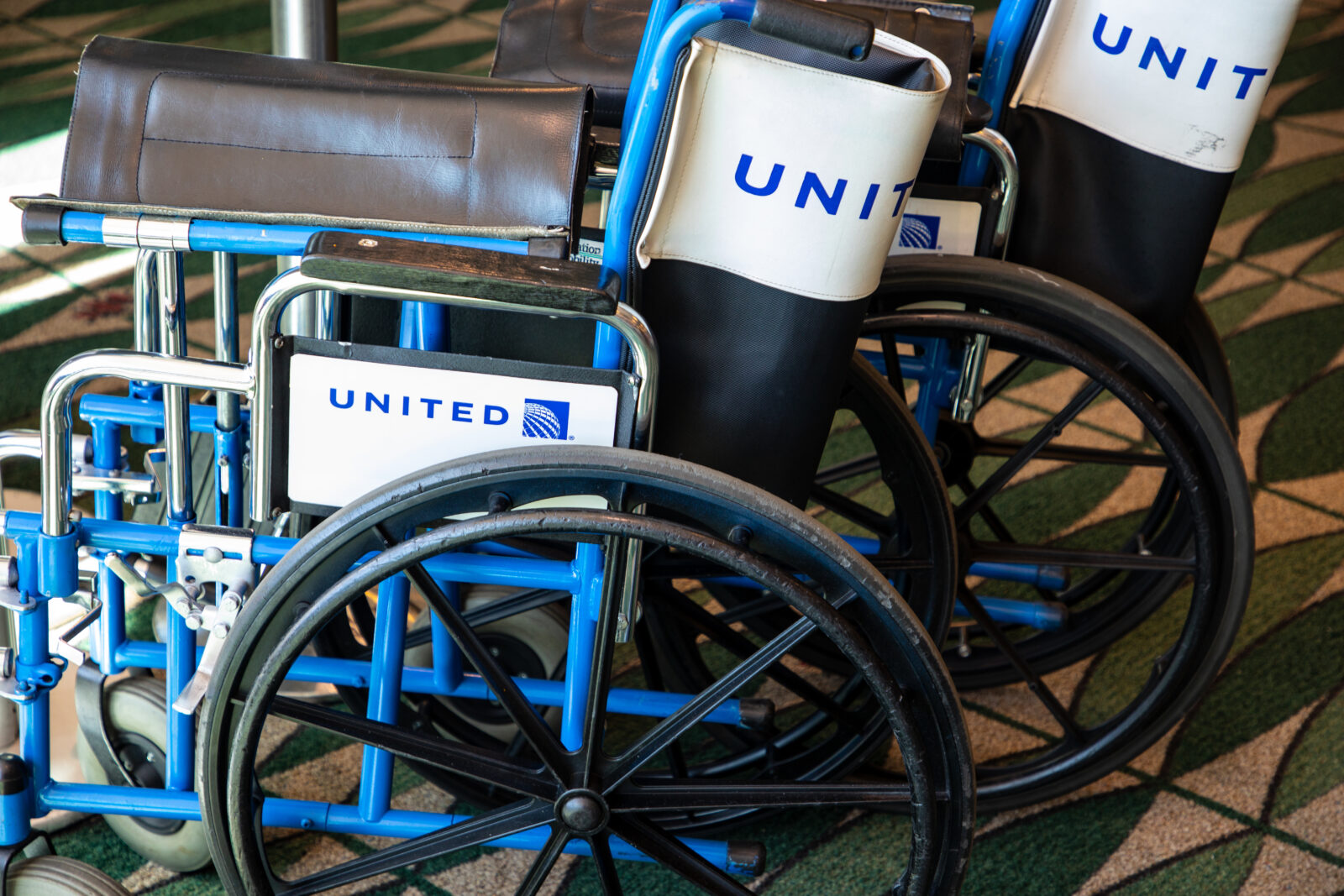
The Department of Transportation (DOT) is further delaying the enforcement of a landmark set of regulations designed to give disabled American air travelers more rights. Under the control of Transportation Secretary Sean Duffy, the DOT is also expected to announce a major rewrite of the rules.
The regulations, known as Ensuring Safe Accommodations for Air Travelers with Disabilities Using Wheelchairs, were one of the last acts of the outgoing Biden administration, which made the final rule in December 2024.
Designed to ensure that disabled travelers, especially those who rely upon wheelchairs or scooters, have access to their mobility devices and professional, well-trained assistance without delay, the policy has been fiercely opposed by the US aviation industry.
The regulations at a glance
The new regulations were designed to build upon existing rules and rights for disabled travelers. One of the key aims of the new was to “increase access to safe and dignified air travel for individuals with disabilities,”
For the first time ever, the rules actually defined what safe and dignified actually means.
The regulations require airlines to:
- Have trained assistance staff ready to deplane a disabled traveler by the time the last able-bodied passenger has disembarked
- Have the disabled person’s wheelchair or scooter available at the aircraft door by the time it comes for them to deplane
- Makes airlines automatically liable for damage incurred to a wheelchair during transit
- And to provide a loaner wheelchair or scooter while the disabled person’s own assistance device is being fixed at the expense of the airline
The regulations also require airlines to return mishandled assistance devices to their owners within 24 hours for domestic flights, using whatever means necessary.
In February, a major aviation lobby group supported by American Airlines, Delta, JetBlue, Southwest, and United Airlines sued the DOT in a bid to have the new regulations overturned.
The lawsuit, filed on behalf of the five airlines by Airlines 4 America, in the 5th U.S. Circuit Court of Appeals, accused the DOT of overstepping its rulemaking authority and asked for the court to have the regulations set aside.
Although some of the rules were meant to take effect in January, the Trump administration quickly moved to delay enforcement, saying officials appointed by the President needed more time to not only ” review the Wheelchair Rule to ensure that it is consistent with the law” but also consider the arguments brought up by A4A in federal court.
The DOT has already used its enforcement discretion powers on several occasions, but now, the department says it will further delay enforcement “while it engages in a new rulemaking that will consider whether to modify those provisions.”
“This exercise of enforcement discretion is intended to remove the burden of complying with requirements under review by DOT and does not prejudge the outcome of the new rulemaking,” the proposed rulemaking explains.
“The Department has now initiated a new rulemaking titled “Airline Obligations to Accommodate Air Travelers with Disabilities Using Wheelchairs” (Wheelchair Rule II).
“The 2025 Spring Unified Agenda identifies four provisions of the Wheelchair Rule that will be among those considered in Wheelchair Rule II:
- (1) airlines’ liability when passengers’ wheelchairs or other assistive devices are not timely returned in the condition they were received
- (2) frequency of required refresher training of airline employees and contractors;
- (3) pre-departure notifications to passengers that check wheelchairs or scooters of their right to contact a Complaint Resolution Official and file a claim;
- (4) reimbursements of the difference between the fare on a flight a wheelchair or scooter user took, and the fare on a flight that the wheelchair or scooter user would have taken if his or her wheelchair or scooter had been able to fit on the flight.”
The proposed new rule is not expected to be published until April 2026, and the earliest date that the DOT expects to make its final rulemaking won’t be until December 2026.