



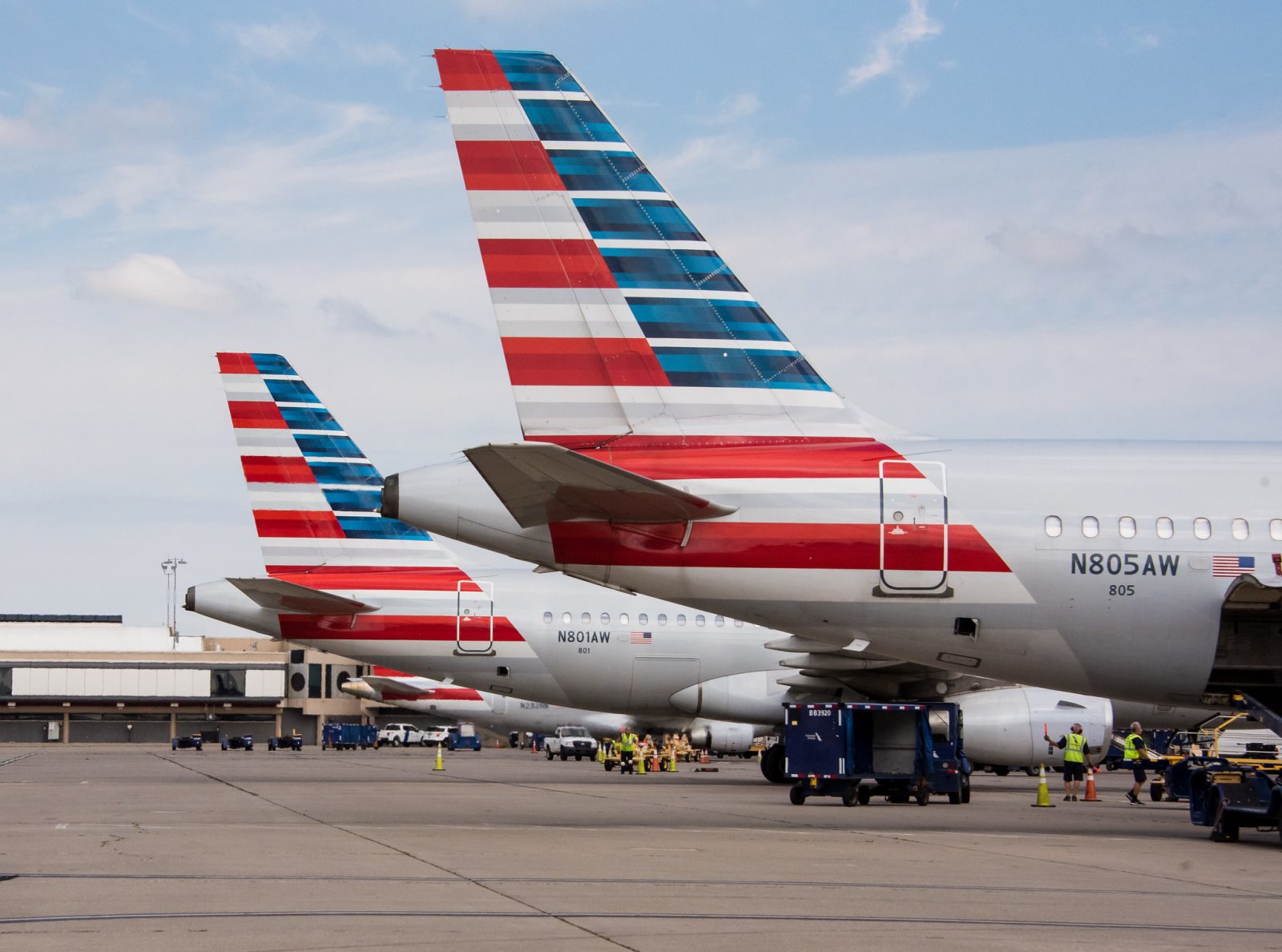
American Airlines is facing a new lawsuit brought by the U.S. Equal Employment Opportunity Commission (EEOC) alleging the Fort Worth-based carrier discriminated against a reservations agent who tragically lost her eyesight.
The employee had been working as a reservations representative at one of AA’s call centers until 2012, when she suffered an injury that resulted in permanent cortical blindness – sometimes referred to as ‘central blindness’ as the problem is in the central nervous system rather than the eyes.
American Airlines placed the worker on a medical leave of absence while she recovered from her injuries, but just months later, she requested to return to work. The issue was that to return to work, she would need to rely upon “assistive technologies” to get around her cortical blindness.
Her healthcare provider suggested a screen reader application known as
Job Access With Speech or JAWS, for short, which would allow her to navigate computers, desktops, and websites.
American Airlines didn’t have to buy this software for the worker to use, and, instead, a local charity in Texas offered to supply the JAWS application for the employee to use while doing her job in the reservations center.
The EEOC believes this was a legitimate ‘reasonable accommodation’ to allow the employee to continue working, but American Airlines initially told the employee that it had never accommodated a fully blind person in one of its reservations centers before.
In fact, American Airlines claimed it was simply impossible to reasonably accommodate the employee in her old role, so it kept her on leave while it explored whether there was an alternative job.
The employee identified several positions on behalf of American Airlines, requesting transfers to become a baggage resolution specialist or a customer service representative, but these ideas were turned down by the carrier.
It took more than a year and a half before American Airlines even carried out third-party testing to check compatibility with JAWS and its own computer systems. Unfortunately, the testing discovered that JAWS wasn’t fully compatible with American Airlines’ aging proprietary software.
There was, however, a glimmer of hope. Custom scripts could be written into the JAWS software to help navigate the airline’s software. American Airlines chose not to explore this option any further.
The employee remained on leave during this entire time. At no point did American Airlines even see if she could work with the JAWS software, and the carrier didn’t make any effort to identify any other possible accommodation.
In early 2020, a senior Human Resources official told the employee that the airline would, at least, look at whether there was an alternative role for her that wouldn’t require the use of JAWS.
The employee waited for news, but with the pandemic now devastating the airline industry, American Airlines initiated a hiring freeze. In October 2020, the employee was terminated.
“The Americans with Disabilities Act mandates that employers must act diligently, in cooperative dialogue with disabled workers, to identify and provide reasonable accommodations for those workers’ known disabilities, absent undue hardship,” commented EEOC Acting Dallas Regional Attorney Ronald L. Phillips.
“Employers violate their workers’ civil rights when they fail to provide required reasonable accommodations or unreasonably delay providing such accommodations, and the EEOC will hold such employers accountable.”
The EEOC filed its lawsuit after failing to reach a conciliation agreement with American Airlines. The carrier is yet to respond to the allegations.
The lawsuit has been filed in a North Texas district court under case number: 4:25-cv-01056