



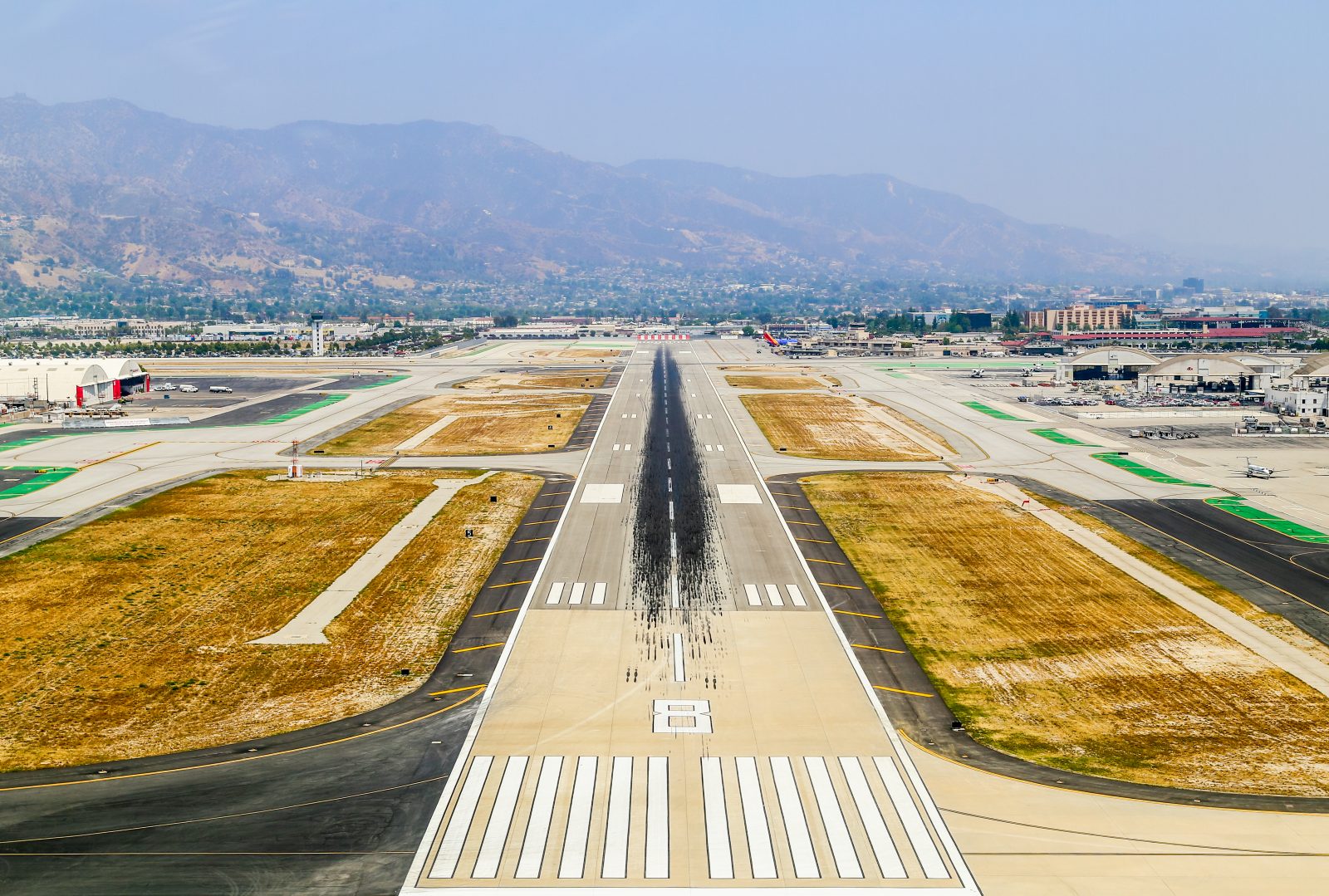
Hollywood Burbank Airport continued operating without any air traffic controllers in the airport’s control tower on Monday afternoon, as the partial government shutdown exacerbated ATC staffing woes across the United States.
At 4:15 pm on October 6, the Federal Aviation Administration (FAA) announced that there would be no air traffic controllers available on site at Burbank, with flights in and out of the airport slowed down for safety reasons.
Rather than being managed by air traffic controllers in the airport tower, duties were handed off to the FAA’s TRACON center for Southern California in San Diego – TRACON facilities typically only manage departing and arriving aircraft at major airports across the United States.
Meanwhile, ground movements had to be managed by pilots talking to one another, rather than being managed by a controller who has a bird’s-eye view of what is taking place on the airfield.
The decision to place Burbank in ‘ATC Zero’ status on Monday afternoon came just hours after Transportation Secretary Sean Duffy admitted that staffing at some major ATC centers had been slashed by up to 50% since the government shutdown.
As essential workers, air traffic controllers are still expected to show up for work during a government shutdown, but go unpaid until lawmakers have settled the funding dispute.
As well as Burbank, air traffic controller shortages have caused delays and disruption at Denver, Las Vegas, and Phoenix Skyharbor amongst others.
The National Air Traffic Controllers Association urged its members to continue showing up for work, saying that “at this critical juncture, it is more important than ever that we rise to the occasion and continue delivering the consistent, high-level of public service we provide every day.”
“NATCA does not endorse, support, or condone any federal employees participating in or endorsing a coordinated activity that negatively affects the capacity of the NAS [National Airspace System],” the statement continued.
In past government shutdowns, air traffic controllers and other essential government-paid aviation workers have stayed at home because they simply couldn’t afford to get to work, or chose to go sick so they could continue earning money with a second job like driving for Uber or DoorDash.
This is likely to be a growing problem in the coming days as the shutdown continues without any sign of resolution, particularly amongst lower-paid workers like the 50,000 airport security agents employed by the TSA.
Last week, the US aviation industry warned lawmakers that a government shutdown could put airline safety at risk, saying it would “degrade the redundancies and margins of safety that our National Airspace System is built upon.”