



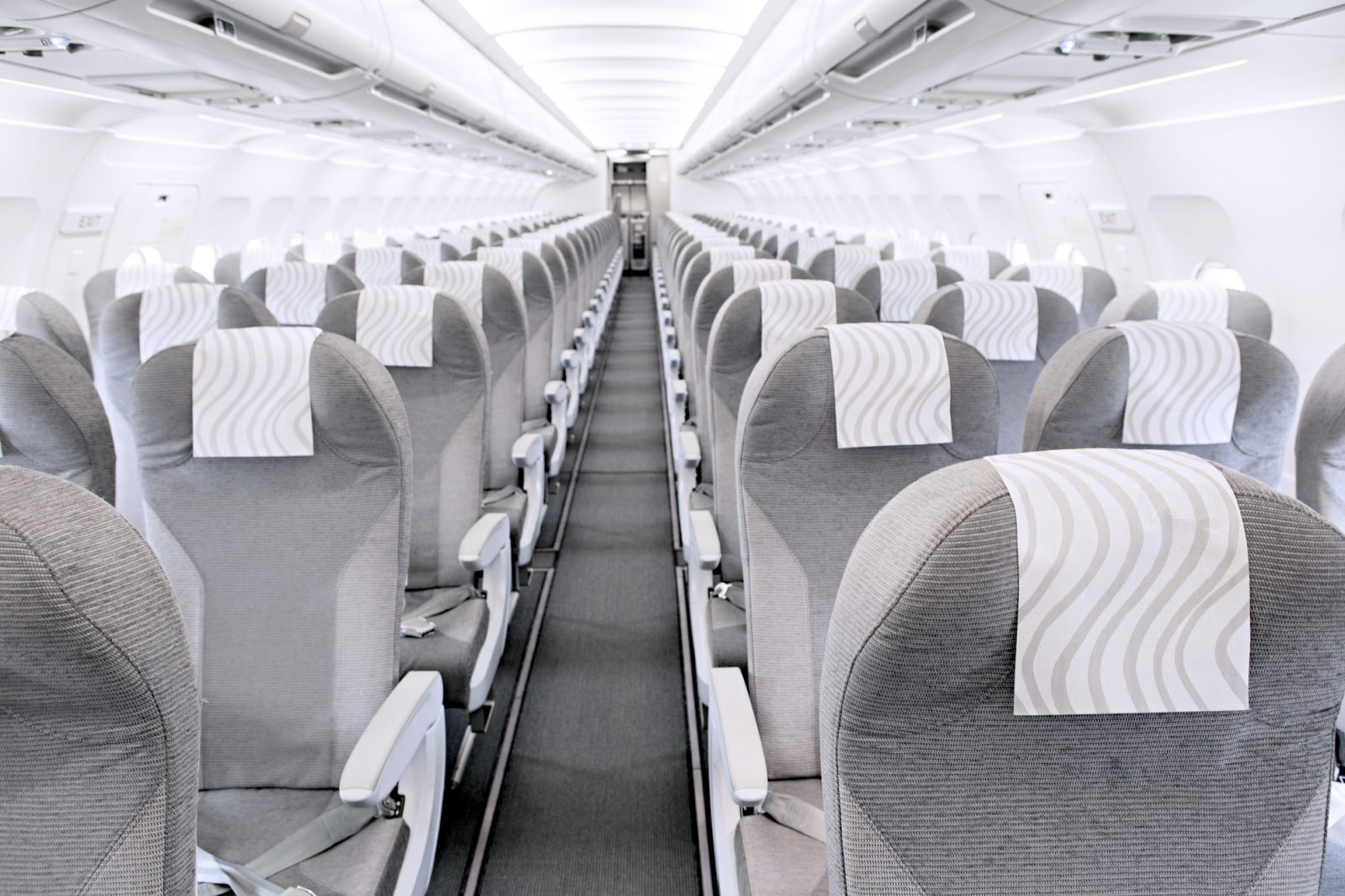
Thousands of passengers have been left stranded after Finnair was forced to ground some of its planes on Monday evening over concerns that overzealous cleaners had destroyed a special fire-retardant coating applied to the material seat covers.
Finnair’s well-meaning attempt to keep its planes looking in immaculate condition went horribly wrong when the seat manufacturer delivered some very unfortunate news … using water to clean the covers could affect the fire protection applied to the seats.
By the time Finnair found this vital piece of information out, however, cleaners had already spruced up eight of its single-aisle Airbus A321 aircraft – representing over a quarter of the airline’s short and medium-haul fleet.
Fire protection is taken so incredibly seriously in the aviation industry that Finnair has had no choice but to ground all eight of the aircraft that have already had the seats cleaned.
In a statement, the airline commented: “Safety is always our top priority, and we always follow the manufacturers’ maintenance instructions as well as the guidelines and recommendations of the authorities.”
Despite following those instructions, however, the seat manufacturer then told Finnair that the impact on water cleaning on the material covers hasn’t been properly assessed and verified, so there’s no way of definitively saying whether the fire resistance has been impacted.
Finnair says the aircraft grounding will hit at least 20 flights per day.
A spokesperson added: “We are very sorry for the uncertainty and harm this situation may cause you, and we will do our best to minimize the impact on your journey.”
Until the 1980s, aircraft manufacturers and airlines didn’t put much thought into the fire resistance of the various materials used in the airplane cabin.
That, however, quickly changed after two horrific accidents, one involving an Air Canada flight in Cincinnati, and the second involving a British Airtours aircraft in Manchester, England.
Both of the incidents involved fires that quickly spread in the cabin due to the wide range of highly combustible materials used at that time on everything from seat covers and blankets to the wall panels and galleys.
Many of the people who died in both of these accidents would have survived if it were not for smoke inhalation from the flammable materials inside the planes.
Seat cushions and covers made out of fire-retardant materials have been required since the late 1980s, so questions over the flammability of a seat are grounds for immediate grounding of a plane until the situation has been resolved.
In this case, Finnair might discover that water washing has not affected the fire retardancy and can quickly put the seats back in service. If there are doubts, however, the issue could become a lot more expensive for the airline to resolve.