



Fancy Bollinger Champagne and Lavazza coffee might be welcome improvements to the American Airlines in-flight experience, but a coalition of unions says the Dallas-based carrier still has a huge mountain to climb if it is to reverse its lagging financial performance and compete with industry leaders Delta and United Airlines.
American Airlines has, perhaps rather too belatedly, realized that the key to success in today’s aviation market is to position itself as a premium carrier that is able to command higher ticket prices for the same flight as struggling budget carriers like Spirit or Frontier.
Gone are the days when American Airlines literally argued that the schedule was its product and it didn’t need to invest in a premium onboard experience. The problem, however, is that mood music coming from the airline’s management hasn’t yet translated into improved customer satisfaction scores or improved financial performance.
In August, a coalition of unions that represent tens of thousands of American Airlines employees, including pilots, flight attendants, passenger service agents, ground workers, and dispatchers, put the carrier’s senior executives on blast for their perceived failures.
The message was clear: American Airlines needs to drastically alter its strategy and fast if it’s to stop the rot and start competing with Delta and United.
But American Airlines continues to face headwinds, and its third-quarter results were sobering to say the least. The carrier expects a Q3 adjusted loss per share in the range of $-0.10 to -0.60, revenue was flat, and margins are lagging behind its rivals.
Now, the unions are back to dial up the pressure, slamming AA’s “poor leadership” and the failure of executives to address the root causes of passengers’ poor perception of the airline.
“Management’s assurances of ‘progress’ to improve earnings, our product, and service levels ring hollow,” the union said on Friday. “The company continues to underdeliver on key financial metrics. These results are not the product of chance; they are the outcome of a series of poor strategic decisions that have weakened our brand and employees’ morale.”
The highly critical open letter continued: “Frontline employees see the effects of American Airlines management’s decisions every day, and passengers notice the difference too. A subpar onboard product and poor leadership at all levels have created inconsistent service levels that continue to take their toll.”
This might all sound like unions angling for better pay and staffing, but it demonstrates how an airline’s marketing and communications can be so incredibly far removed from the experience on the ground – both for employees and passengers.
People are fed up with broken planes, dirty cabins, aging seats, and inconsistent provisioning that leaves flight attendants and other staffers trying to deliver a premium service without the correct tools.
This isn’t necessarily unique to American Airlines, and no doubt, this kind of issue affects every kind of business service in the service industry. What we are seeing at American Airlines, though, is how years of underinvestment and cost-cutting have resulted in rock-bottom morale that is all too evident to passengers.
The unions say they are ready and willing to do their part to improve service and fix AA’s image problem, but only if the airline’s management team is ready to make meaningful investments.
That not only means an upgraded product, but also more flight attendants on every flight to “deliver a competitive onboard experience” – just like you would expect a world-class airline would staff their planes.
At the same time, the unions are also demanding accountability from executives, meaning that managers should face real consequences if the airline’s financial performance continues to lag.
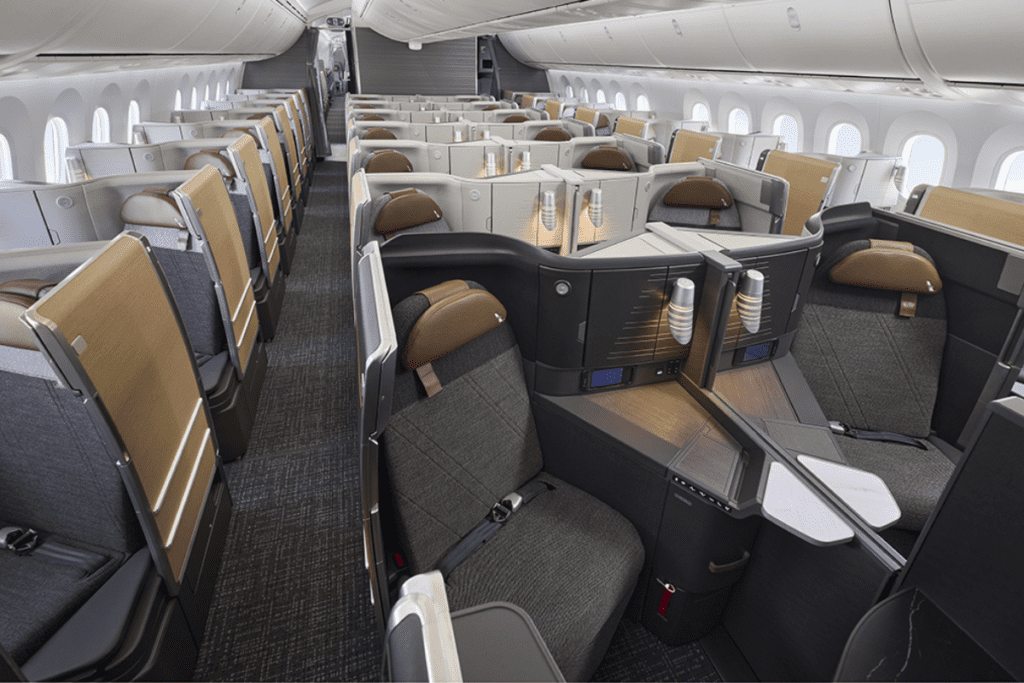
American Airlines appears to be heading in the right direction. New seats on its Boeing 787 Dreamliners have been well-received by passengers, and the carrier has just taken delivery of its first premium-configured Airbus A321XLR, which will allow the airline to open new long-haul routes to destinations with less demand.
Matt’s take – The perception of poor onboard service can’t be ignored
While the unions at American Airlines, including the Association of Professional Flight Attendants, solely blame management for the airline’s current woes, it’s difficult to ignore the perception that many passengers have of poor onboard service, which stems from their interactions with flight attendants and gate agents.
This isn’t about employees not being given the right resources to deliver a good service, but about countless stories of passengers being treated by frontline employees in a way that makes them never want to fly with American Airlines ever again.
While there is an argument that this behavior is a result of a union-backed seniority system, I would counter that this is a symptom of poor morale that has been festering for many years.


Deeply concerning financial results? Ha, you’re definitely not knowledagble in finance. The stock was up almost 8 percent in one day …
AAL is down 75% from the start of 2018 while the S&P 500 has more than doubled. Explain again how you see AA as having capable management?
American has been penny pinching since the AmericaWest ULCC posse took over. That’s a really tough mentality to shake.
AA cabin crew in international business class has led me to my first ever staff complaint in 50 years of flying.