



Thousands of Delta’s regional flight attendants have been told to “act your wage” and avoid getting into arguments with passengers, even over safety-related issues, because management allegedly won’t support them.
The warning came in an internal memo from the Association of Flight Attendants (AFA-CWA), the biggest crew member union in the United States, which represents flight attendants at carriers such as Alaska and United Airlines.
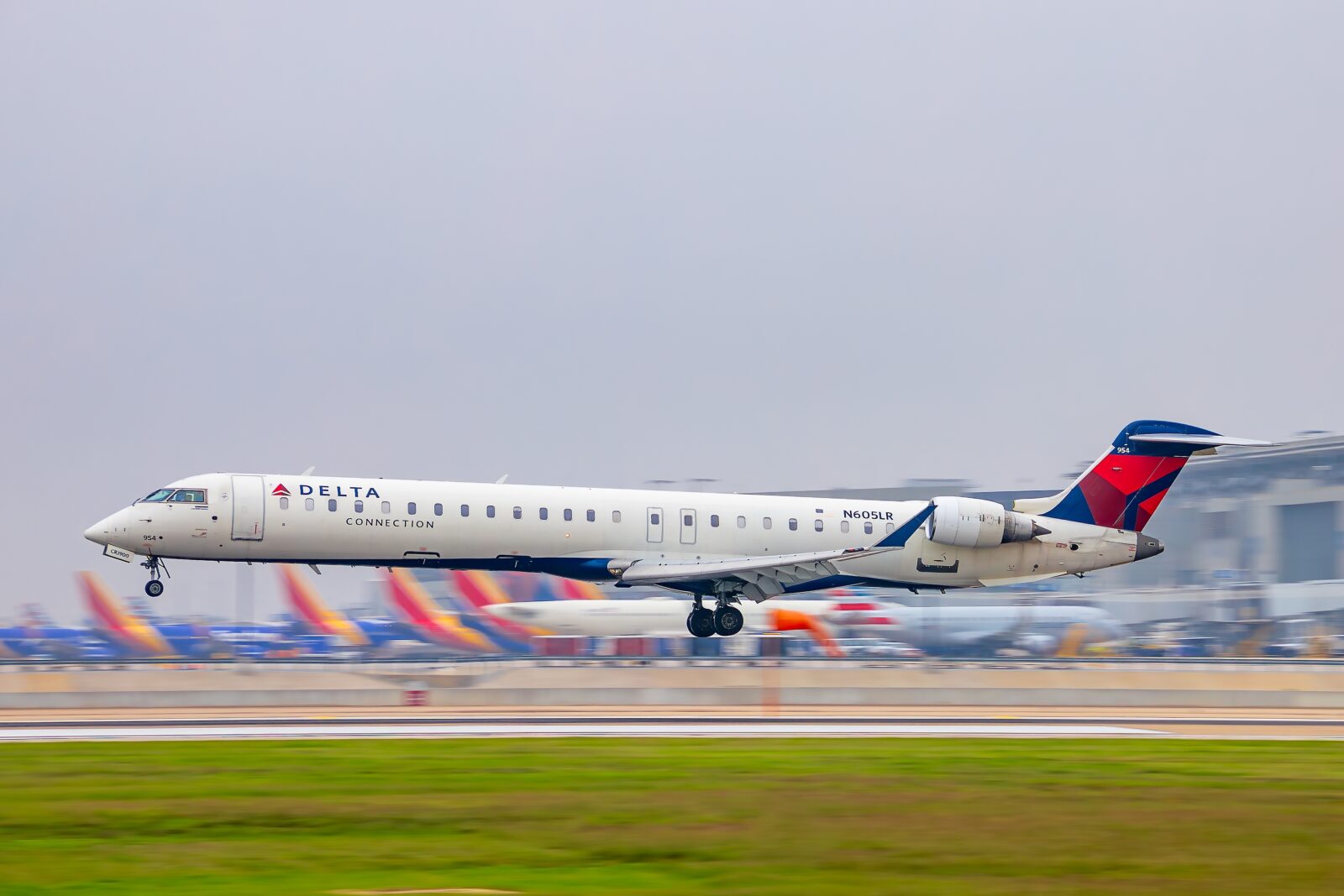
While Delta’s mainline flight attendants are famously not represented by a union, the Atlanta-based carrier does employ thousands of unionized flight attendants at a wholly-owned subsidiary known as Endeavor Air, which operates regional services on behalf of Delta Air Lines.
These flight attendants wear Delta uniforms, work on Delta-branded planes, follow Delta service guidelines, and only operate Delta flights. But there are some major differences.
Endeavor Air flight attendants earn between $10 and $40 less per hour than their mainline counterparts, and never get to enjoy any of Delta’s famed annual profit sharing.
While Delta owns Endeavor Air, it treats the company like it would an outside vendor, and that means it can drive down costs – especially, labor costs.
Contract negotiations are set to get underway in 2027, and while the union says this could be a major fight, their first priority is making sure that their members don’t end up in a meeting for unprofessional conduct.
“The primary focus on all of the rules and regulations that we ask passengers to follow is to inform, not enforce,” the union reminded its members in a recent memo first obtained by PYOK.
What does that mean in practice? Well, if a flight attendant notices a passenger not following a certain safety-related rule, then it’s the job of the crew member to remind the passenger.
If the passenger chooses to ignore the flight attendant, then there’s no point arguing the matter. In the air, the flight attendant should inform the Captain and file a report, and if the plane’s still on the ground, then the gate agent is to get involved.
“We do not get paid to argue. Just stop. There’s absolutely no need to be extra,” the memo warned. “This is not within your job scope. Act your wage. You’re a Flight Attendant, not a Red Coat.”
While the memo is certainly colorful, it makes a very good point, and the ‘inform, not enforce’ principle has been credited with helping to de-escalate in-flight incidents that could otherwise have turned very nasty.
It was United Airlines that notably pushed the ‘inform, not enforce’ principle in the wake of the infamous Dr. David Dao incident aboard a United Express regional service in 2017.
The Vietnamese-American physician was left bloodied and bruised after being forcibly removed by security officers at Chicago O’Hare so that United could make room on the plane for several deadheading flight attendants.
United Airlines quickly reached an undisclosed out-of-court settlement with Dr. Dao, but the ensuing media firestorm from the incident led to United seriously rethinking how it dealt with passenger non-compliance issues.
The work the Chicago-based carrier did in this area really started to be seen during the mask mandate era of the COVID-19 pandemic. While some carriers like American Airlines were witnessing a horrifying spike in unruly passenger behavior, the number of incidents at United remained remarkably low.
Rather than getting into arguments with passengers about the mask mandate, flight attendants would simply inform them of the rules and, if the passenger ignored them, they would complete a post-flight report.
United’s corporate teams could then follow up, issuing warnings or bans based on the severity of the non-compliance.
Matt’s Take – Flight attendants aren’t law enforcement
While flight attendants are trained in physical restraint, I think it’s reasonable to point out that this should only ever be used in the most serious of situations when failing to act could result in harm to a passenger or crew member, or an attempt to breach the cockpit.
It stands to reason, then, that a flight attendant’s job is about de-escalating incidents and not getting into arguments that could aggravate a situation into something a lot worse.
On the face of it, ‘inform, not enforce’ could sound like a flight attendant is ignoring a problem. That, however, is far from the truth.


“Endeavor Air flight attendants earn between $10 and $40 less per hour than their mainline counterparts, and never get to enjoy any of Delta’s famed annual profit sharing.”
Have they tried paying them more? Perhaps, that’s a good start.