



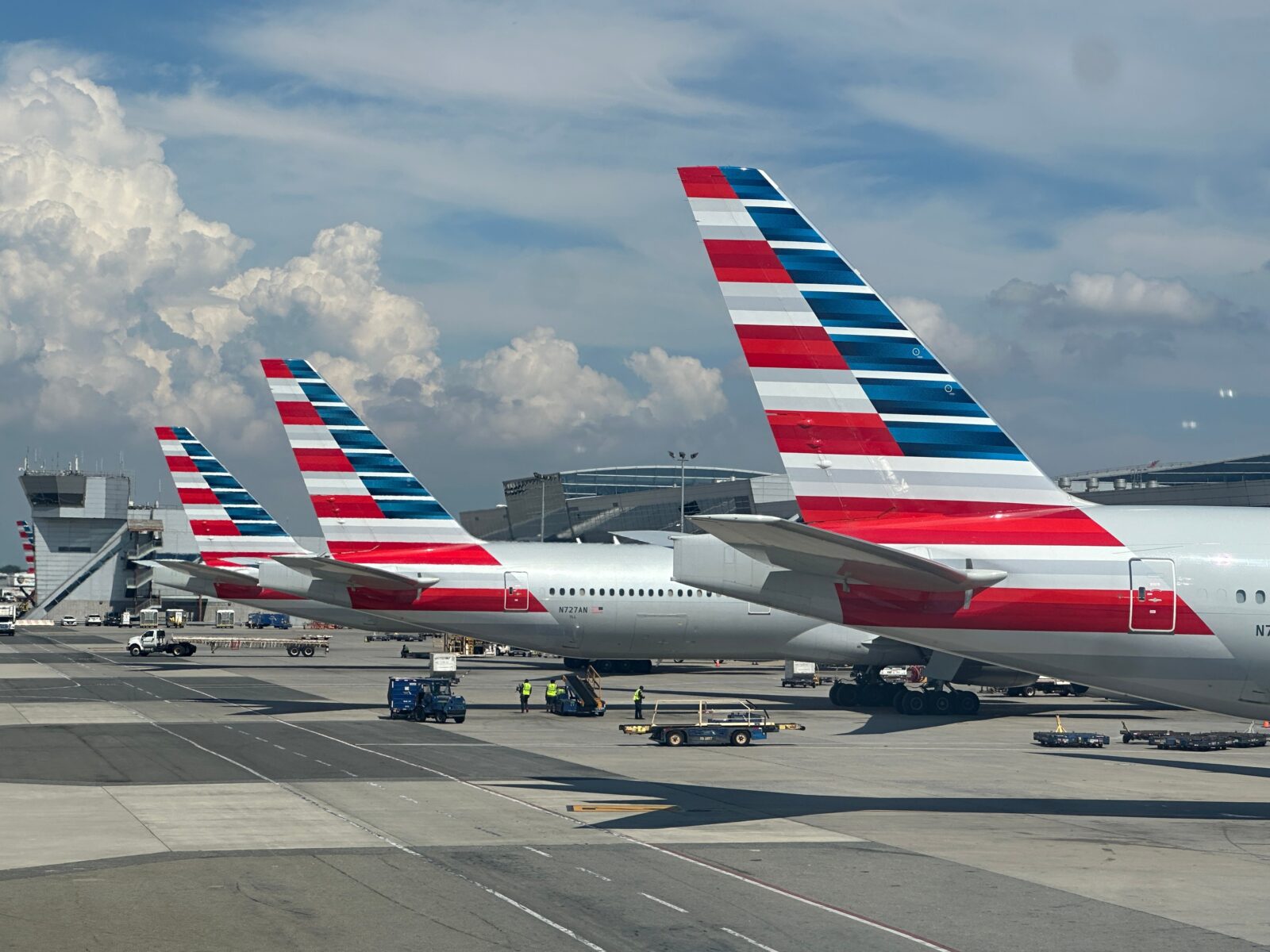
American Airlines has reportedly started a massive round of layoffs targeting thousands of employees in middle management across multiple departments, including airport operations, engineering, customer support, and IT services.
News of the latest layoffs at the Dallas-based carrier emerged on Monday afternoon as employees showed up for work only to have their security passes confiscated before being unceremoniously escorted out of the airline’s offices and airport concourses.
“My husband got laid off today,” one person wrote on Reddit as news of the mass redundancies started to emerge. “Devastated doesn’t begin to cover it,” the person continued.
Another long-serving American Airlines employee wrote: “I was one of the IT people who got laid off. I worked there for over 37 years and was given my notice in February.”
There are reports that American Airlines is looking to shrink its total workforce by 4% to 5%. With a current workforce of around 132,000, that could mean between 5,280 and 6,600 job losses.
Part of the reason for the mass redundancies is that even with American Airlines performing worse than rivals like Delta and United Airlines, the carrier has historically employed tens of thousands more workers than its peers.
Some of these jobs are being cut to reduce duplication and inefficiency, although others, especially in IT, are being transferred to a major new hub in Hyderabad, India.
Given that American Airlines is now attempting to reverse its low-cost strategy and compete head-on with the likes of Delta and United, it may seem strange for the carrier to choose now as the right time to start slashing thousands of jobs.
On the face of it, the layoffs seem almost reactionary, with no clear vision of how cutting jobs and offshoring other roles will help the carrier transform into the ‘premium’ airline that it now says it wants to be.
Of course, some layoffs may actually help concentrate minds at the carrier and help streamline processes that have become unnecessarily bloated in the last few years.
Just like many businesses, the aviation industry typically goes through cycles. During the COVID-19 pandemic, airlines couldn’t act fast enough to cut jobs that didn’t directly impact the operation of their business. But as the world emerged from lockdown and travel demand returned, hiring budgets returned on a massive scale.
It’s frightening how airlines can spend huge amounts of money on hundreds of middle managers having meetings day in, day out, without ever making a decision or implementing anything that will have an impact on the operation or passenger experience.
That’s not to say that all the job losses at American Airlines are for this reason at all. No doubt, some very good employees have been caught up in what feels like an indiscriminate round of layoffs, but it feels like American Airlines wants to prove to investors it’s serious about cutting costs, while investing in the right areas.


Your tile is a bit misleading… thousands of jobs are NOT going to India. Just the IT ones.
And how many IT jobs are actual needed? With Sabre going away all the “sabre guru’s” have become obsolete anyway. AA needs to become leaner and focus on passenger experience.
You guys are satisfield with the number of IT failures and private information hacking and leaks that happen everyday??
The mantra of offshoring IT to India is just weird. Insanity is doing the same thing over and over and expecting different results.
United opened their own IT office in India a few years ago. Not outsourcing or consultants, employees. Airlines all copy each other.
Surviving in IT at United is not easy. I worked there for over 20 years. Over those years, I survived 2 bankruptcies, a merger, mandatory pay cuts, and numerous layoffs, but most friends and colleagues did not. It’s tough emotionally and eventually I left voluntarily in my 50’s. I witnessed way too many “performance “ cuts for employees once they got up there in age. It is not fair and is not a normal industry