



Spirit Airlines has demanded a combined $100 million in concessions from pilots and flight attendants as it attempts to renegotiate their labor contracts at breakneck speed in order to access vital Chapter 11 bankruptcy funding.
The beleaguered budget carrier has until the end of Thursday to reach a tentative agreement with one or both of these two workgroups in order to meet a key requirement in what is known as Debtor-in-Possession financing, or DIP for short.
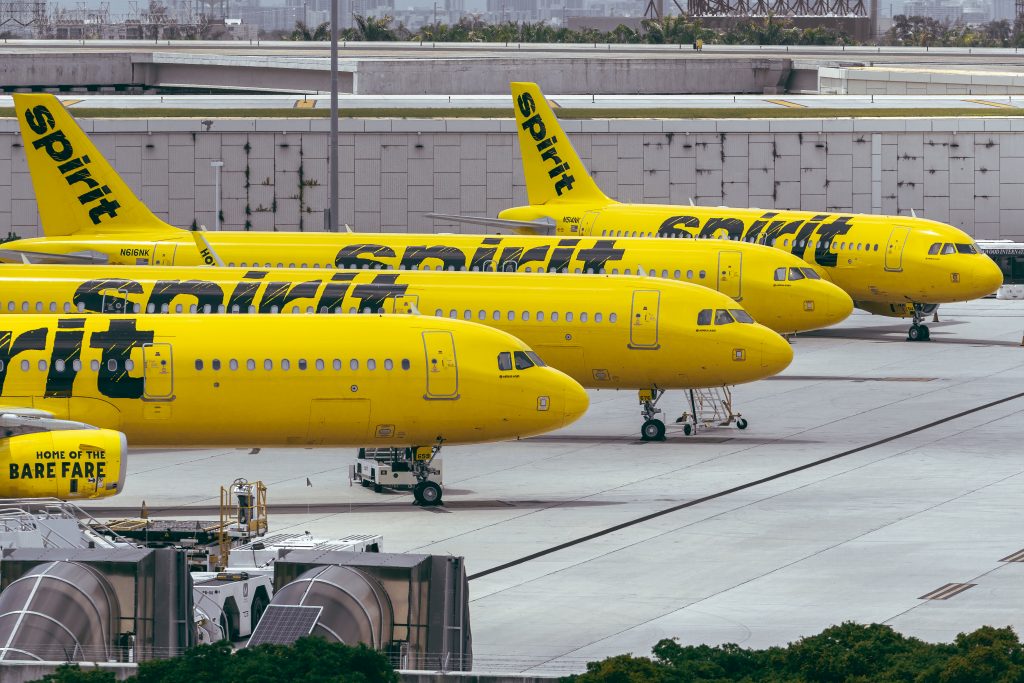
DIP financing allows a company going through the Chapter 11 process to secure new financing from lenders, although these financing agreements often come with a lot of terms and conditions and must be approved by a court.
Last month, Spirit Airlines received approval from a New York bankruptcy court for up to $475 million in DIP financing, with nearly half of that amount made available immediately just to keep planes flying and the airline operating as normal.
Spirit is now trying to get its hands on the second tranche of this funding, and in order to do so, it has to have “reached agreements in principle with one or more labor unions with respect to the key terms of a collective bargaining agreement.”
If, however, none of Spirit’s key unionized workgroups can reach a tentative agreement in the allotted time, the airline plans to file a request with the bankruptcy court to amend or even terminate labor contracts.
Spirit Airlines only told the Association of Flight Attendants (AFA-CWA) a few days ago that it intended to make use of Section 1113 of the Bankruptcy Code to make changes to their collective bargaining agreement.
“Over the past several days, we have been in active negotiations with management,” the union told its members on Wednesday. “We are now up against a tight deadline tomorrow to agree to cost savings under our Collective Bargaining Agreement with management.”
The memo added: “By agreeing in principle to concessions with the company by tomorrow, we avoid the worst of the bankruptcy proceedings that deprive workers of a voice over what our CBA should include.”
To use Section 1113, Spirit must prove to the court that its proposed changes are necessary, fair, and equitable. The two sides must also negotiate in good faith in an attempt to reach a voluntary agreement.
There are, however, already some red lines drawn in the sand by the flight attendant union, including reducing base pay or increasing health care costs.
At the end of September, it was revealed that Spirit planned to furlough as many as 1,800 flight attendants, representing around a third of its total crew workforce.
The airline has slashed underperforming routes, entered into agreements to return planes to lessors, and given up slots and gate space at multiple airports.
This is Spirit’s second Chapter 11 bankruptcy process in less than a year, although chief executive Dave Davis says this time around, the airline is going about proceedings very differently.
The first Chapter 11 was a pre-packaged deal in which Spirit obtained new funding from existing lessors without making any major changes to its business. Unfortunately, the airline quickly burned through that cash injection, which necessitated this second round of bankruptcy proceedings.
Initiated at the end of August, Spirit is hoping to use the Chapter 11 process to completely reorganize its business, reducing costs and shrinking its business to a size that can be profitable.


The workers should not concede anything. Ted Christie, Dave Davis, Fredereick Cromer, Thomas Canfield, and John Benderaitis should all give back their retention bonuses and other compensation for failing at their duties. Period. This is a literal joke to merely see how much they can mess over the workers.