



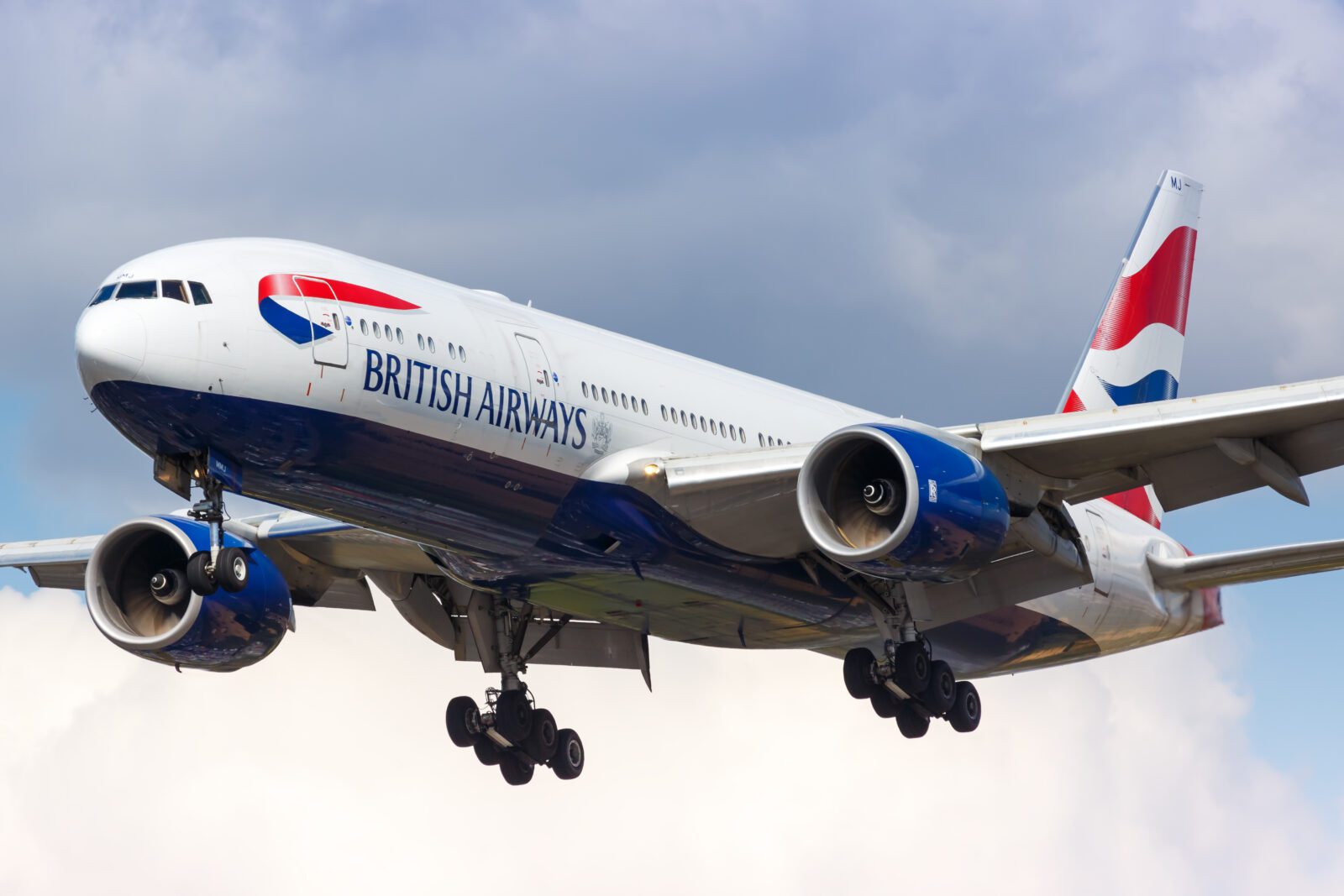
The share price of IAG, one of Europe’s largest airline groups and the parent company of brands like British Airways and Iberia, closed more than 10% down on Friday following the release of the conglomerate’s financial results for the third quarter.
As you might expect, IAG painted a largely positive picture of its results, boasting that it was still on track to achieve its target for the full year, although investors and analysts were spooked, particularly over one specific point.
“As expected, the North Atlantic market saw some softness in US point-of-sale economy leisure and unit prices across our airlines were lower in the European market due to a combination of high growth by British Airways and more competitive markets elsewhere,” IAG wrote in a summary of its results.
In plain English, this all-important sentence can be translated as meaning:
- There’s been pricing pressure or disappointing sales on tickets sold in the United States for non-premium leisure passengers.
- All of IAG’s airlines had weaker-than-expected fares for European flights.
- These issues arose because of a combination of British Airways adding a lot of capacity and increased competition from rivals.
The problem for IAG is that British Airways has gone all-in on the North Atlantic market, adding a lot of capacity on flights between its London Heathrow stronghold and the United States – you might even call it an “America First’ strategy.
There are, of course, plenty of good reasons why British Airways has been aggressively building its presence in the United States while its worldwide route network remains lacklustre at best.
The problem, however, there are now signs that this strategy could be cracking. And this is a bigger problem for IAG because British Airways is the group’s cash cow.
British Airways has long had a significant presence in the United States, but in the last few years, the airline has really concentrated its efforts in this market, while flights to South America, the Middle East, and Asia were put on the back burner.
But why?
There are two main reasons for this:
- First, coming out of the COVID-19 pandemic, British Airways has had a shortfall of long-haul aircraft – partly due to hastily retiring its Boeing 747 jumbojet fleet in early 2020, but also due to significant issues with Boeing 787 Rolls-Royce engines and continuing delays with the certification of the Boeing 777X.
- That means that British Airways has been looking at routes that it can get maximum utilization out of its available fleet. Flights to and from North America tick this box. In the time that you can operate a return flight to the United States, in the time that a single sector to Asia has been completed.
- Second, British Airways correctly identified that there has been huge demand in the US market for flights to Europe, and American consumers generally have bigger spending power than Europeans.
- The problem there, however, is that the US economy is showing signs of weakness, and consumers are putting off travel plans to the last minute in a bid to score the very best deal.
IAG’s results aren’t bad, but they aren’t great either, and analysts are clearly concerned that things could get worse.
Demand has remained steady compared to last year, but with so much extra capacity being added and increased competition from its rivals, yields are starting to suffer.
Passenger revenue per available seat kilometre on North Atlantic routes fell 7.1% in Q3, demonstrating the extent of the pressure being felt on IAG and British Airways in this key market.
The good news is that premium leisure remains pretty strong – a trend that has been seen across the aviation industry, and British Airways is quite well placed here as the airline has gone all-out retrofitting its airplanes with supersized premium cabins.
What’s interesting, though, is that IAG admits that demand and yields are performing stronger in its South America and Asia markets. But as an international aviation group, British Airways doesn’t really fit into these two markets.
- Iberia is IAG’s lead airline for building its South America network
- And with aircraft shortages still very much an issue, IAG’s biggest investor, Qatar Airways, has reaped the benefits of high-performing routes to Asia.
While IAG insists that its strategy and performance are on track, the market’s reaction to its latest set of results might signal that investors aren’t entirely convinced and some changes are needed – especially in terms of limiting exposure to BA’s presence in North America, where demand and yields show worrying signs of cooling.
Is a pivot on the cards in the near future?