



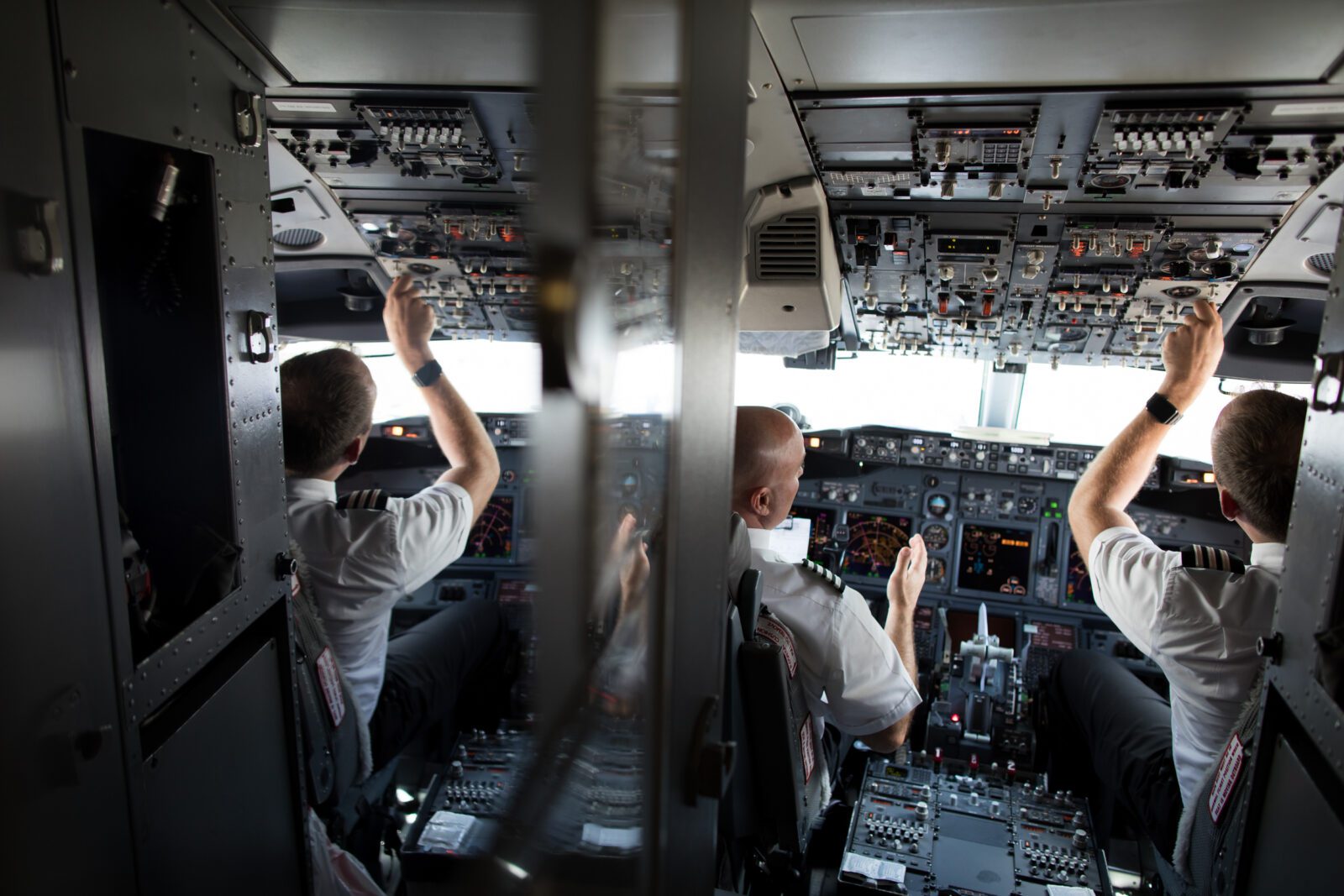
What would you think if you were on an airplane and one of the two pilots in the cockpit was having a nap? And not only are they catching 40 winks at 38,000 feet, but this moment of shut-eye is actually approved and encouraged by their airline?
That’s exactly what could be happening at many airlines around the world, although if you’re flying on a US-based airline, then you should know that your pilots aren’t allowed to nap at the controls.
You should also know, however, that this doesn’t necessarily make flying with a US carrier safer, and some pilot groups have long called for the slumber ban to be lifted.
Officially, pilots taking a nap at the controls is known as ‘controlled rest’ in many regions around the world – what this means is that the pilots haven’t accidentally dozed off because they are so tired, but that the process of having some sleep at the controls is deliberate and regulated.
Controlled rest came about because regulators realized that no matter how well rested a pilot might be when they report for duty, unexpected fatigue could occur at any moment.
Operating red-eye flights, battling jet lag, or simply dealing with a bad night’s sleep could all result in a situation where controlled rest is necessary.
In Europe, there are strict rules over how controlled rest is taken to ensure that, rather than making flying less safe, it enhances safety by ensuring that pilots aren’t battling fatigue at critical phases of flight:
- The period of time that a pilot is in controlled rest should be limited to 45 minutes plus a 20-minute recovery period.
- The non-resting pilot must remain alert and fully briefed to deal with the workload that might be thrown their way.
- Controlled rest should stop at least 30 minutes before top of descent.
The European Air Safety Agency (EASA) has found that controlled rest can “significantly increase the levels of alertness [of pilots] during the later phases of flight, particularly after the top of descent.”
In other words, pilots are far less likely to suffer severe tiredness during landing when it’s crucial that they are on top form.
Bizarrely, however, in the United States, the Federal Aviation Administration (FAA) has never approved the use of controlled rest as a fatigue management strategy, instead preferring to rely on other methods like scheduling rules and augmented crew on longer flights that allow for the use of proper in-flight rest.
Why Boeing 787 Dreamliner pilots can’t get very good controlled rest
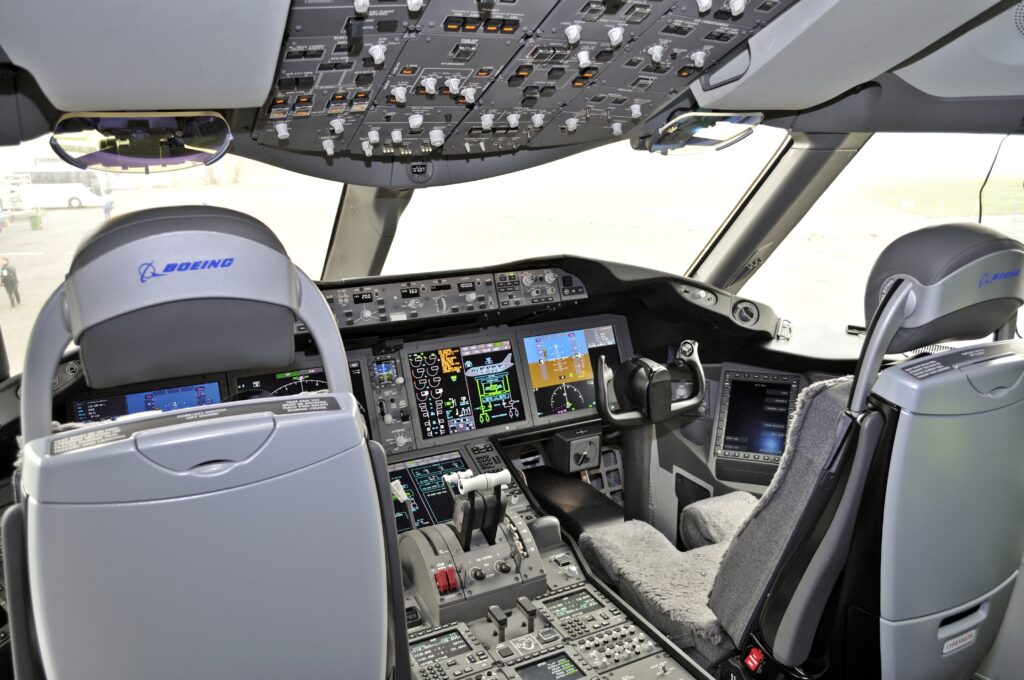
Controlled rest requires pilots to be seated in their assigned seat in the cockpit, just in case they are required, although that doesn’t mean they need to sit bolt upright.
Most cockpit seats have a good degree of recline (far better than Economy seats anyway), but an issue with a faulty safety mechanism built into the bullet-proof doors of Boeing 787 Dreamliners means that the Captain’s seat on the left-hand side can’t be fully reclined.
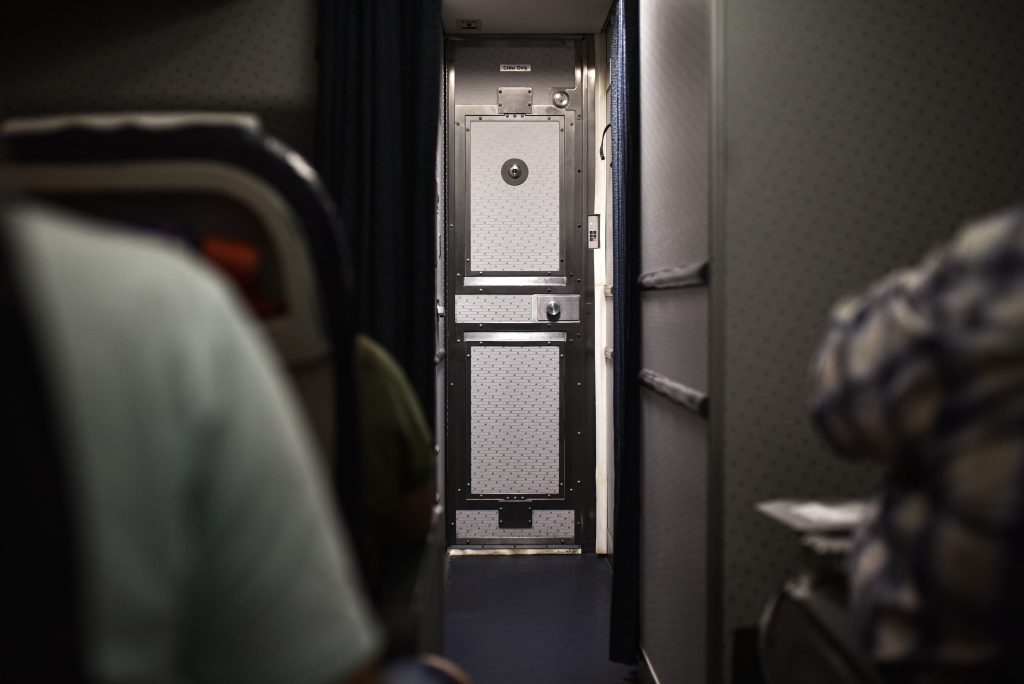
Late last year, the FAA issued an urgent safety bulletin warning that a heavy panel in the cockpit door could be sent flying towards the pilot’s head in just 20 milliseconds, leading to serious injury or even death.
The panel is deliberately designed to blow out in the event of decompression in the cockpit – it’s an intentional design choice, but it only came to light last year that the angle at which the panel blows out could cause serious danger.
The FAA proposed adding a mechanical limiter to the left-hand cockpit seat to stop it from fully reclining, which was met with fierce opposition by European airlines who feared that the risk of disrupting a pilot’s controlled rest was far greater than the tiny risk of a decompression in the cockpit.
Given that the FAA doesn’t approve of controlled rest, it was perhaps unsurprising that the agency dismissed those concerns and went ahead and issued the airworthiness directive.