



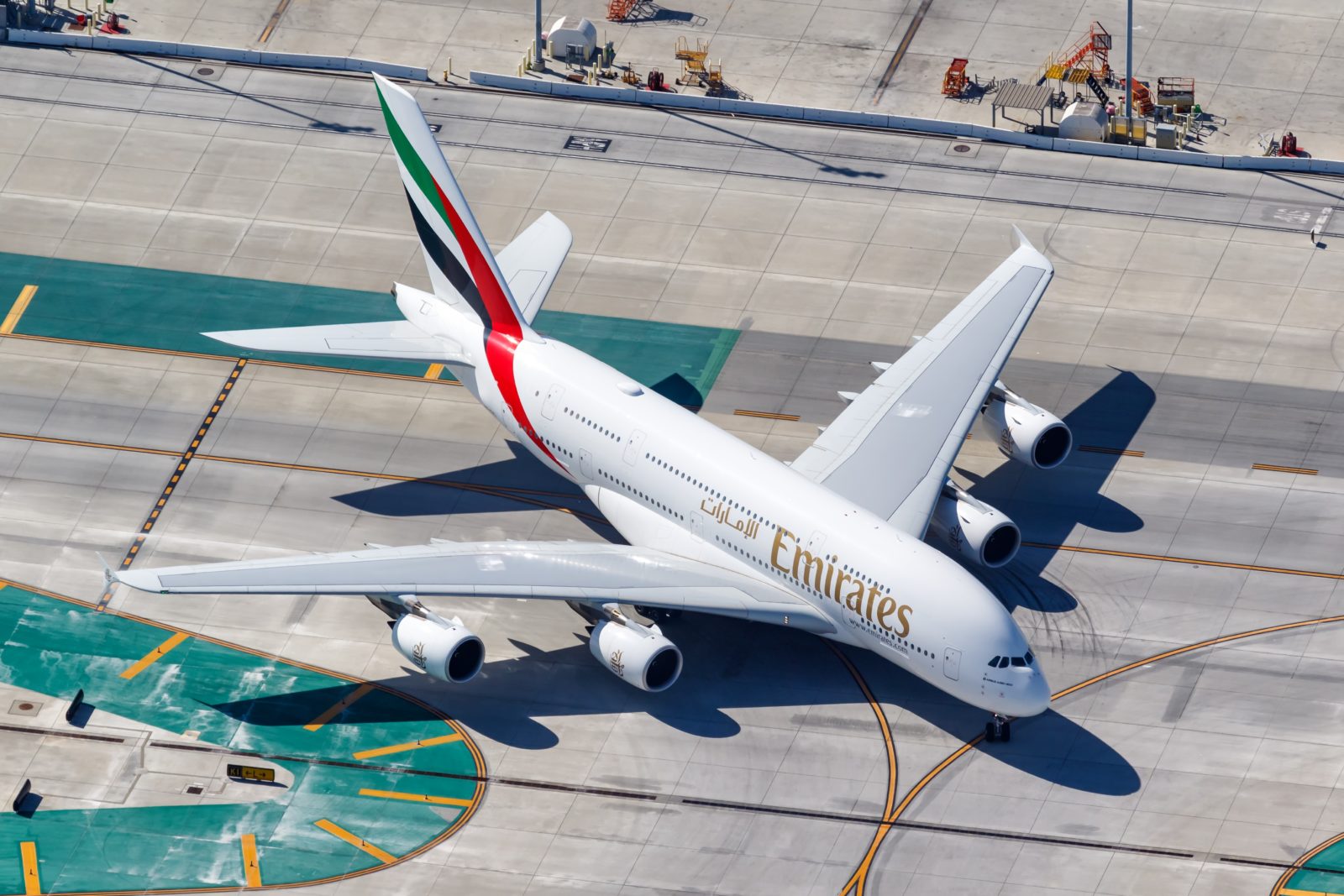
Emirates has become the latest customer of Elon Musk’s lightning-fast Starlink in-flight Wi-Fi service. But unlike rivals who have been very coy about their rollout timelines, Emirates wants you to know that it plans to have its entire fleet of widebody jets equipped with the new service in just two years.
In fact, Emirates has already equipped its first Boeing 777-300 with Starlink, and although the aircraft is currently on display at the Dubai Airshow, the plane will soon be carrying passengers across the airline’s route network.
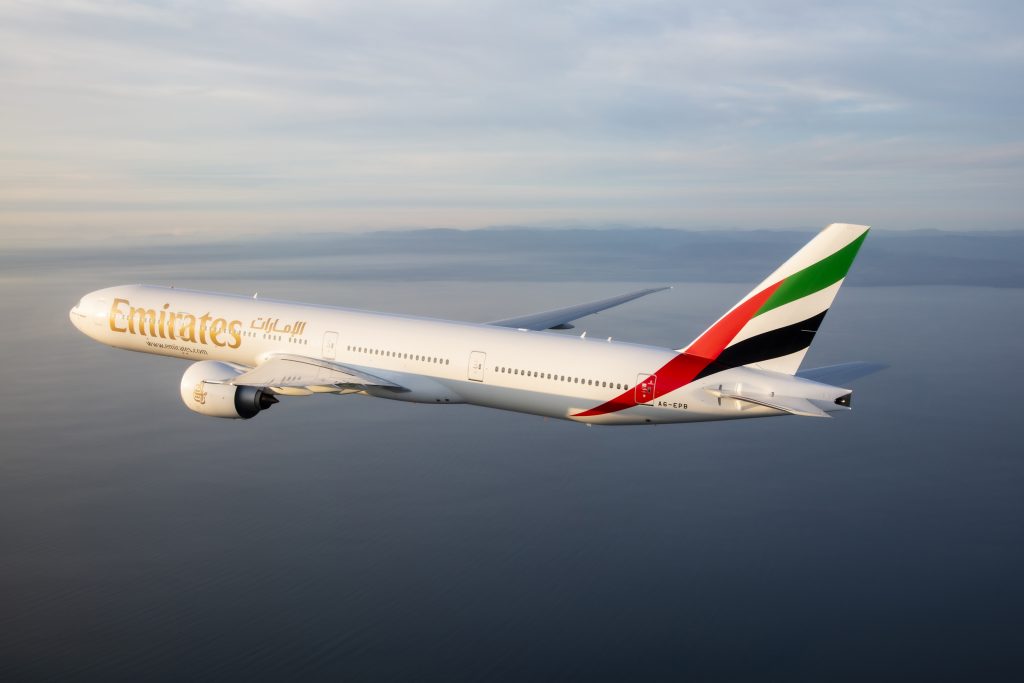
Like other Starlink customers, Emirates will offer the service for free with one-click access across multiple devices. Starlink brings broadband-quality internet to airplane cabins at 40,000 feet, meaning that passengers can use the internet in the air just like they would on the ground.
Rumors of a potential tie-up between Emirates and Starlink first emerged in May, but the airline decided to wait to officially announce the deal until the rollout had already begun.
For the remainder of 2025, Emirates will focus on installing Starlink on Boeing 777 widebody jets, but in February 2026, the airline is planning to start retrofits of its Airbus A380 superjumbos.
There are, though, a few challenges. First, to ensure connectivity of all passengers on its double-deck A380s, Emirates will be the first airline in the world to install three Starlink antennas on a plane.
What is Starlink?
Starlink is a division of Musk’s SpaceX program that provides high-speed broadband service via a ‘constellation’ of more than 6,750 satellites in low Earth orbit, boasting speeds of up to 500 megabits per second.
Live streaming and video gaming at 38,000 feet are easily achievable, according to Starlink.
Starlink has near-global coverage and is authorized for use over all international waters. Coverage over local territorial waters and in motion over land is, however, reliant on approvals from local governments.
Airlines say the Starlink equipment can be installed on airplanes in about half the time of rival products, allowing fast retrofits with minimum downtime.
The second challenge is more of a problem, given that Starlink has yet to acquire a certification for its service on Airbus A380s. It was feared that Starlink might not get the necessary regulatory approvals until late 2026, but it looks like that timeline is being brought forward considerably.
The third issue is that the United Arab Emirates doesn’t yet approve Starlink for in-motion aviation use – presumably, given Emirates’ close connection with the government of Dubai, that regulatory hurdle won’t be too difficult to resolve.
Emirates currently uses the outdated Sita OnAir inflight Wi‑Fi service across the majority of its fleet, which is both slow and unreliable. New Airbus A350s are, however, being fitted with ViaSat Global Xpress in-flight Wi-Fi, which Emirates claims is 10x faster than the internet service on its other airplanes.
A350s will, however, also get Starlink installed as part of ambitious plans to install the service across its entire in-service fleet of 232 aircraft.
Along with offering super-fast in-flight Wi-Fi, the Starlink service will also be equipped with Live TV, which will be available on passenger devices as well as seatback screens starting in December.
What other airlines have signed up for Starlink?
The list of airlines opting to install Starlink is starting to grow and currently includes:
- United Airlines
- Air France
- Hawaiian Airlines
- Air Baltic
- Qatar Airways
- British Airways
- Iberia
- Aer Lingus
- Vueling