



Remember, at the start of the COVID-19 pandemic, when global supply chains came under enormous pressure and popular everyday goods suddenly started to disappear from supermarket and pharmacy shelves.
Some of those issues were just down to sudden and unexpected demand – like toilet paper and disinfectant wipes, while other shortages wore on for much longer due to limited manufacturing ability and shipping delays.
Today, supply chain issues are, thankfully, a thing of the past for day-to-day consumables, but the aviation industry is still grappling with these same issues years later.
And that’s no more so evident with airplane seats. Brand new airplanes have been forced to sit idle for months on end as seat manufacturers struggle to keep up with demand, putting increasing pressure on airlines.
Now, mega-airline Emirates has come up with an ingenious plan to circumvent those supply chain woes. On Tuesday, the carrier announced it had signed a major deal with its lead seat supplier, French company Safran, to establish a manufacturing plant in Dubai.
“We’re bringing world-class seat production capabilities and supply chain to our doorstep,” commented the Emirates Group chairman, Sheikh Ahmed bin Saeed Al Maktoum, on Tuesday.
“The partnership will directly support our retrofit programme and the evolution of our onboard cabin interior requirements,” Al Maktoum continued.
Emirates is in the midst of a massive program to refit hundreds of aircraft with new and refurbished seats from nose to tail.
The huge retrofit program was first announced in 2021, and to date,76 aircraft have undergone a full refit. There is, however, a long way to go as Emirates plans to refit a total of 219 aircraft over the coming years.
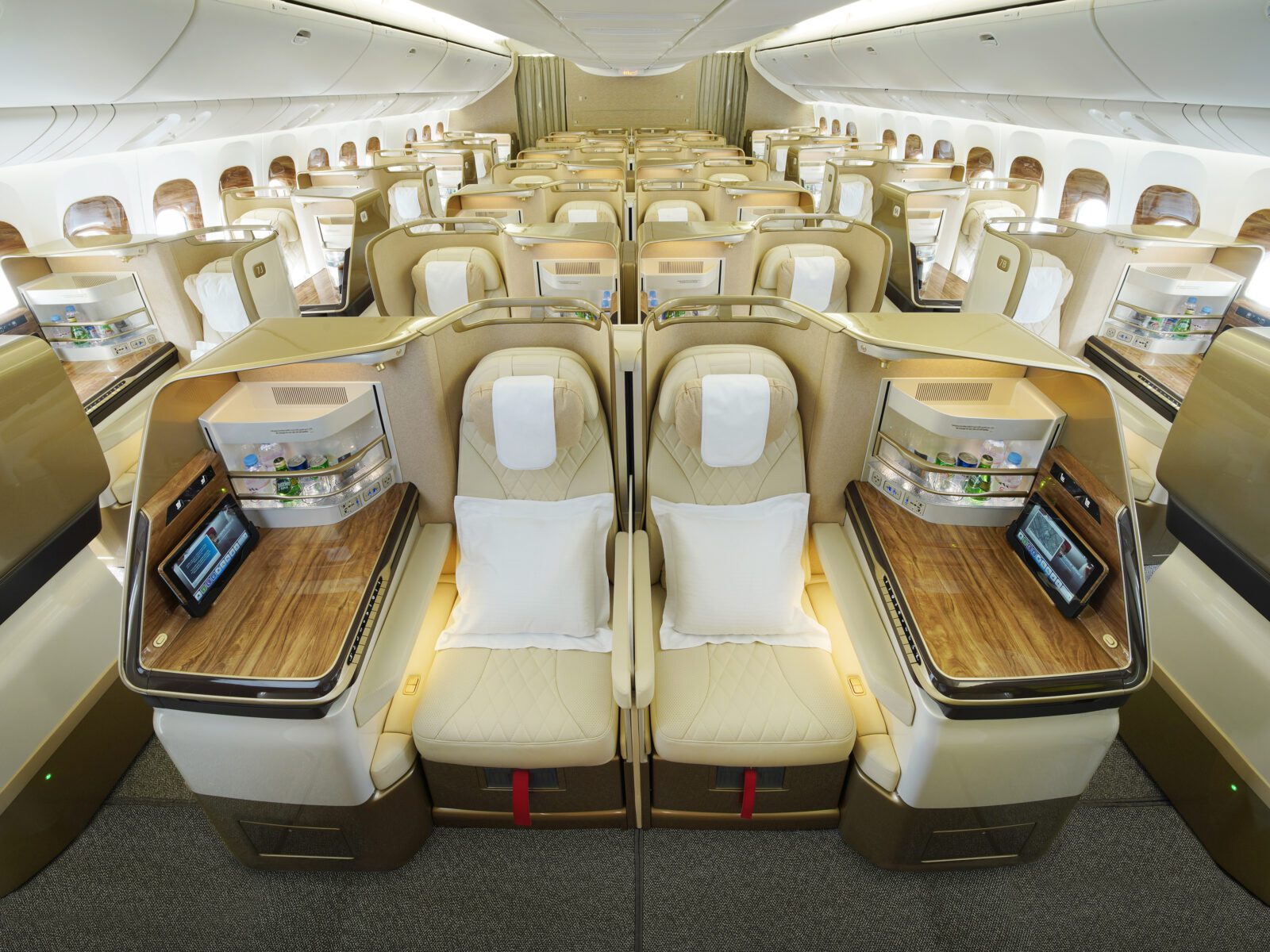
Safran currently produces the S Lounge Business Class seats that debuted on Emirates’ Airbus A350-900, which, itself, is a reworked version of the older SkyLounge platform that is on the airline’s A380 superjumbo fleet.
Emirates plans to install the updated S Lounge seat across its fleet, including on the Boeing 777-300 and as many as 60 Airbus A380s. In addition, the airline will replace thousands of Economy Class seats with the new Z400 seats, described by Safran as the “ultimate economy seat choice for long-range operations.”
Emirates has tried to do as much work in-house as possible, and while the Safran deal will bring seat manufacturing to its doorstep, it’s also hoped that the facility in Dubai will start supplying other airlines around the world.
Slated to begin operations in 2027, the 25,000 square meter plant will initially produce around 1,000 Business Class seats per year as part of a phased ramp-up approach.
The very real seat supply issues affecting airlines
In September, it emerged that Delta Air Lines was going to start flying new Airbus A321neos with as many as 44 First Class seats. This isn’t, however, a crazy new configuration but a stopgap measure because lie-flat seats that are meant to debut on these planes are so heavily delayed. The reported manufacturer of these seats is no other than Safran.
And while American Airlines took delivery of its first A321XLR back in July, the plane is only set to start flying commercially next month because the new Business Class seats set to debut on these planes were also delayed.
Other airlines that have faced supply chain headaches with their seating suppliers include British Airways, which is still potentially years away from completing an upgrade of its outdated ‘ying-yang’ long-haul Business Class seating – the project has already dragged on for more than five years.