



Ryanair Threatens To Abandon The Azores Unless Airport Operator Lowers Landing Charges

- Ryanair is dropping flights to destinations across Europe with rising aviation taxes or access costs. Is the airline trying to pressure local officials into giving it preferential treatment?
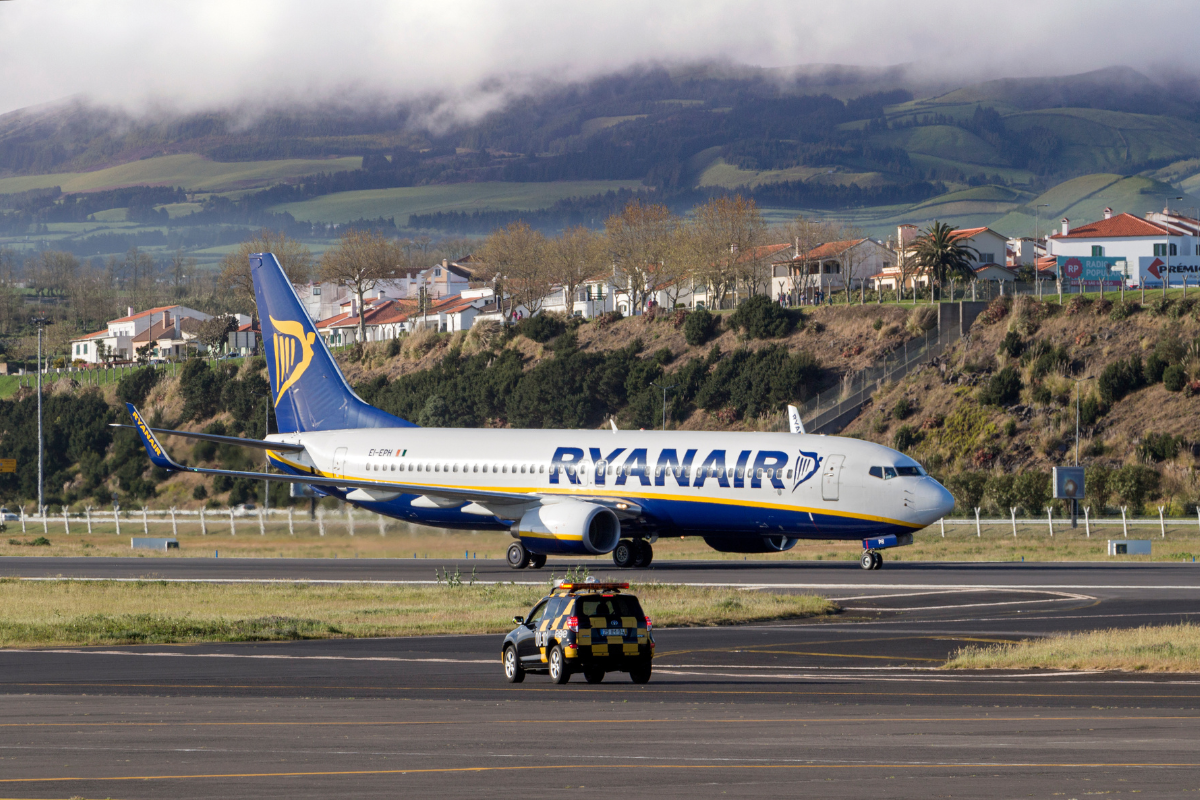
Ryanair is on a warpath of sorts, threatening to ground flights to a slew of destinations across Europe unless regulators across the continent make it cheaper for the low-cost airline to fly to these airports.
Of course, Ryanair is perfectly within its rights to choose where it does and doesn’t fly to, but its latest route cuts announced on Thursday are proving controversial because it could further isolate a remote island community.
Reacting to the news that Portugal’s national airport operator doesn’t intend to lower its access fees for airlines, Ryanair says it will cut all six routes it currently operates to the Azores – a remote archipelago of nine islands located 1,500 km from mainland Portugal in the North Atlantic Ocean.
The decision could impact as many as 400,000 passengers per year and make it a lot more expensive for people to fly to and from the Azores. Ryanair has given the Portuguese government until March 29, 2026, to intervene, at which point all of its flights to the Azores will be axed.
Portugal’s national airport operator, ANA, is owned by the French consortium Vinci, and it’s the French that Ryanair is blaming for its decision to abandon the Azores.
“We are disappointed that the French airport monopoly ANA continues to raise Portuguese airport fees to line its pockets, at the expense of Portuguese tourism and jobs – particularly on the Portuguese islands,” slammed Ryanair’s chief commercial officer, Jason McGuinness.
“This loss of low-fare connectivity to the Azores is a direct result of the French monopoly airport operator – VINCI – imposing excessive airport charges across Portugal,” McGuinness added.
Ryanair claims Portuguese airport costs have shot up 35% since the COVID-19 pandemic, and that doesn’t include a €2 travel tax, along with European environmental taxes for air travel that disproportionately impact short-haul flights.
Flights between the Azores and London, Brussels, Lisbon, and Porto could be lost if Ryanair follows through with its threat.
Ryanair has already announced a slew of other flight cuts, including in Austria, Germany, Latvia, and Spain, over rising airport costs.
In September, a nasty public spat between Ryanair and Spain’s national airport operator Aena blew up when the airline threatened to slash capacity to the country’s regional airports by as much as 41%, losing 1.2 million seats next summer.
Aena’s chief executive, Maurici Lucena, went on the defensive, claiming that Ryanair wanted to frighten the public by threatening the axing of flights so that it could win preferential treatment from governments across Europe.
Even before the latest round of threatened flight cuts, Lucena said Ryanair had “threatened and tried to intimidate public authorities in Germany, France, Belgium, Portugal, Italy, Greece, Austria, the Netherlands, Denmark, and the United Kingdom.”
“It is not true that Ryanair is genuinely concerned about the well-being of Spanish citizens and the competitiveness of the regions,” Lucena continued. “What Ryanair wants is simply to earn more money, even if it is paid for by the pocket of Spanish taxpayers.”
At the same time, Ryanair is promising to build capacity in markets when airport taxes are being reduced or the airline is being offered incentives. Ryanair is adding seats to Morocco, Italy, Croatia, and Hungary, where landing fees are cheaper and the airline believes it’s getting a good deal.
For the time being, at least, Ryanair might have the upper hand. Capacity is currently constrained across Europe due to ongoing aircraft delivery delays from both Boeing and Airbus, so airlines have to think very carefully where they plan to grow.
Ryanair has decided it will concentrate growth in markets where it is being incentivised – this isn’t my words but that of the airline. The carrier has been very open about this fact.
This upper hand, according to Ryanair’s own predictions, will remain in effect until at least 2030, at which point, persistent aircraft shortages that have plagued the industry will be resolved.