



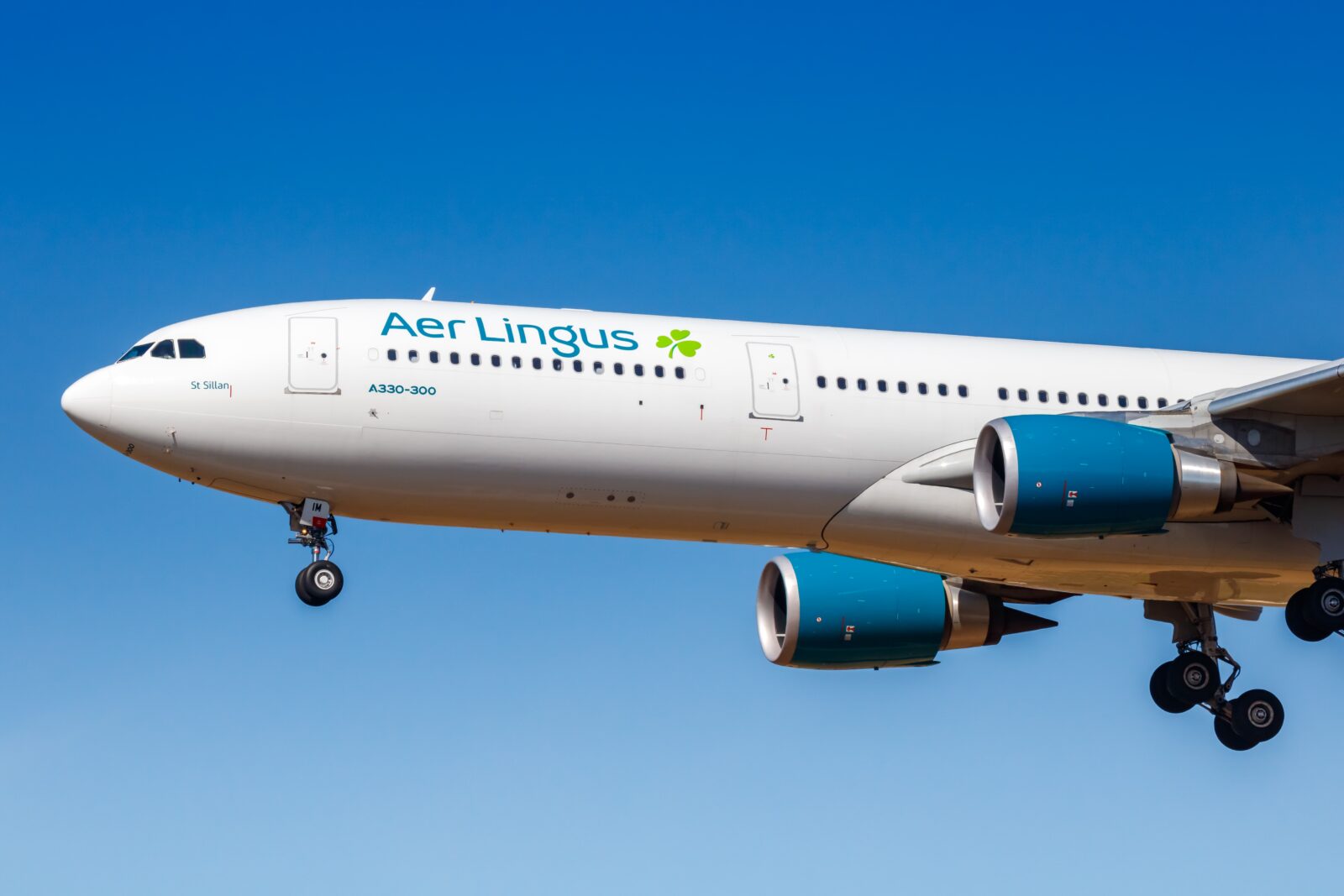
Last week, Irish flag carrier Aer Lingus dropped a bombshell announcement when it announced it was considering closing a base in Manchester, England, from where it operates long-haul leisure flights to Barbados, New York JFK, and Orlando, putting 200 jobs at risk.
The shock announcement, which took workers by complete surprise, came just a month after the workers at this base voted in favor of going on strike in a dispute over pay and conditions, and just a couple of weeks after the walkouts began.
Aer Lingus claims it is struggling to make the Manchester operation profitable and that operating margins “significantly lagged” its long-haul flights out of Ireland. As a result, the airline has started a compulsory consultation in preparation for mass layoffs.
More sceptical observers, however, might question whether the threat of shuttering the Manchester long-haul base isn’t, at least partly, connected to the ongoing pay dispute.
Was Aer Lingus trying to end the strikes by making employees scared witless that their jobs might no longer exist?
If that was the intent, it certainly worked. On Monday, the United Union, which represents the striking cabin crew, said it was pausing any further strikes as it concentrated on trying to save the livelihoods of its members.
“Our members working for Aer Lingus at Manchester Airport are understandably distressed and anxious about their futures,” commented Unite regional officer John O’Neill.
“Unite’s focus is now on saving jobs. The union is prepared to pause further industrial action to create space for consultation with Aer Lingus,” O’Neill continued.
That’s not, however, to say that Unite isn’t preparing for a fight. The union claims that the Manchester base is surprisingly profitable, generating as much as £35 million in annual profits with just two long-haul aircraft.
It has claimed in-depth financials from Aer Lingus, along with future modeling and a detailed business rationale that would explain why closing the Manchester base has been raised as a possibility.
Under British employment law, Aer Lingus is required to supply the union with the reasons for the proposed mass redundancies, although the airline has so far failed to provide Unite with all the information it has demanded.
Aer Lingus says this information is “unlikely to be necessary” in the legal consultation process, but Unite is setting itself up for a legal battle, arguing that the information it is seeking is necessary for “meaningful consultation.”
The term is important because the union might be able to convince an Employment Tribunal that it wasn’t supplied enough information for meaningful consultation to take place, and have Aer Lingus slapped with a protective monetary award.
For now, the union is preparing to suspend future strike action, but travelers could still be hit if Aer Lingus follows through with its threat and closes its Manchester long-haul base.


Aer Lingus is right. I routinely fly the MAN-JFK route and it’s usually super empty. also business is never more than half full. This is a case where the company is being honest and the unions need to back off.