



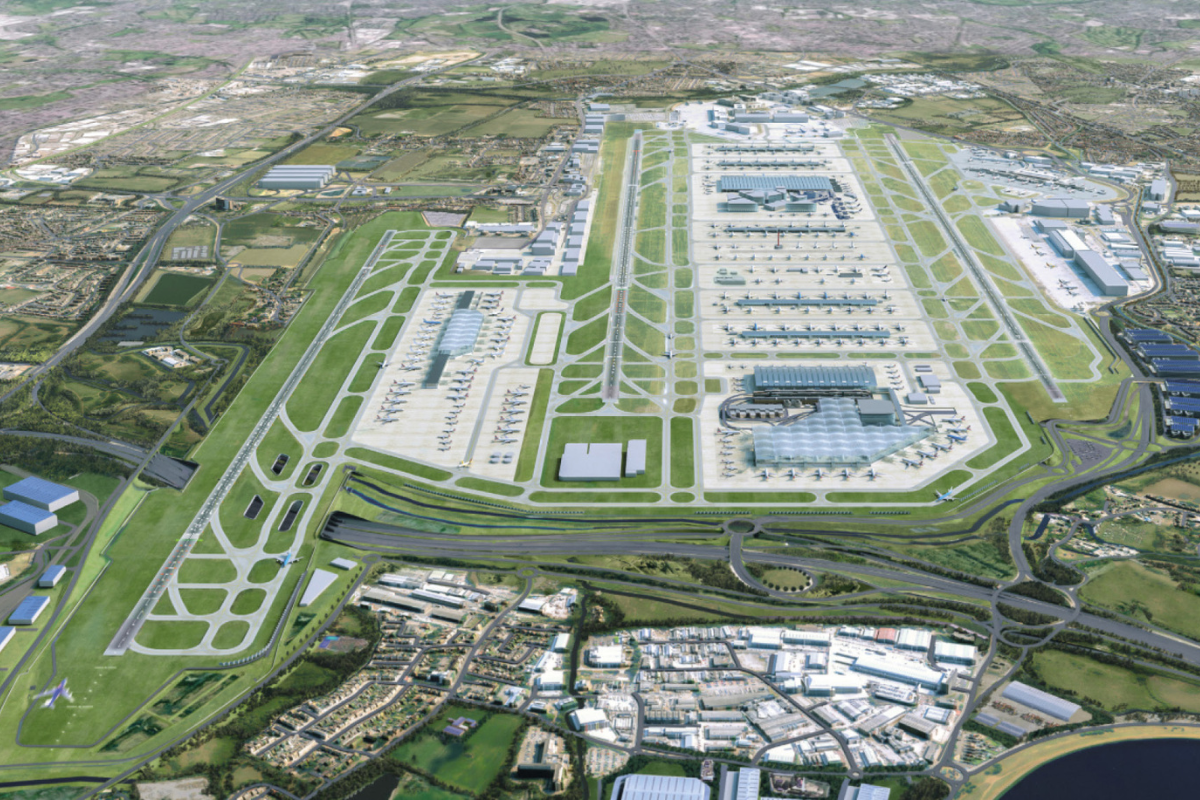
The British government has picked its preferred proposal for a third runway to be built at the capacity-constrained Heathrow Airport, although it could still be years before shovels break the ground – and that’s if the expansion plans aren’t delayed by yet another legal challenge.
In January, the Labour government revived Heathrow expansion plans for a third runway as part of a desperate bid to drive economic growth. The government reviewed a proposal from the airport operator, as well as a rival bid that had the backing of many airlines.
Heathrow’s own plan is for a new 3,500-meter runway to be built northwest of the two existing parallel runways. Due to its length, it will run over the busy M25 motorway.
Airlines are, however, concerned that the complexity of constructing the runway over Britain’s busiest motorway would make the project prohibitively expensive, and so they back a rival proposal from the Arora hotel group.
Arora suggested building a shorter 2,800-meter runway, which wouldn’t run over the M25, and would be cheaper to build.
Although the shorter runway would be able to handle most aircraft, Secretary of State for Transport Heidi Alexander said on Tuesday that the government was backing Heathrow’s longer runway because it was “considered to be advantageous in terms of providing greater resilience and potential futureproofing for next-generation aircraft.”
So what happens next? Well, Heathrow isn’t yet allowed to file a formal planning permission application.
Instead, the proposal will be fed into an ongoing government review of national airport capacity, which will decide next year whether Heathrow can be expanded in a way that meets crucial criteria, including ambitious climate goals.
If Heathrow’s third runway does get the green light from the government, then planning permission could be granted by 2029, followed by six years of breakneck construction to get the runway open by 2035.
What other plans does Heathrow Airport have?
The northwest third runway is just one part of a massive multi-decade plan to substantially expand capacity at Heathrow Airport.
At present, Heathrow has four terminal buildings – Terminal 2, Terminal 3, Terminal 4, and Terminal 5 (Heathrow’s Terminal 1 was permanently shuttered in 2015, but the naming convention never changed).
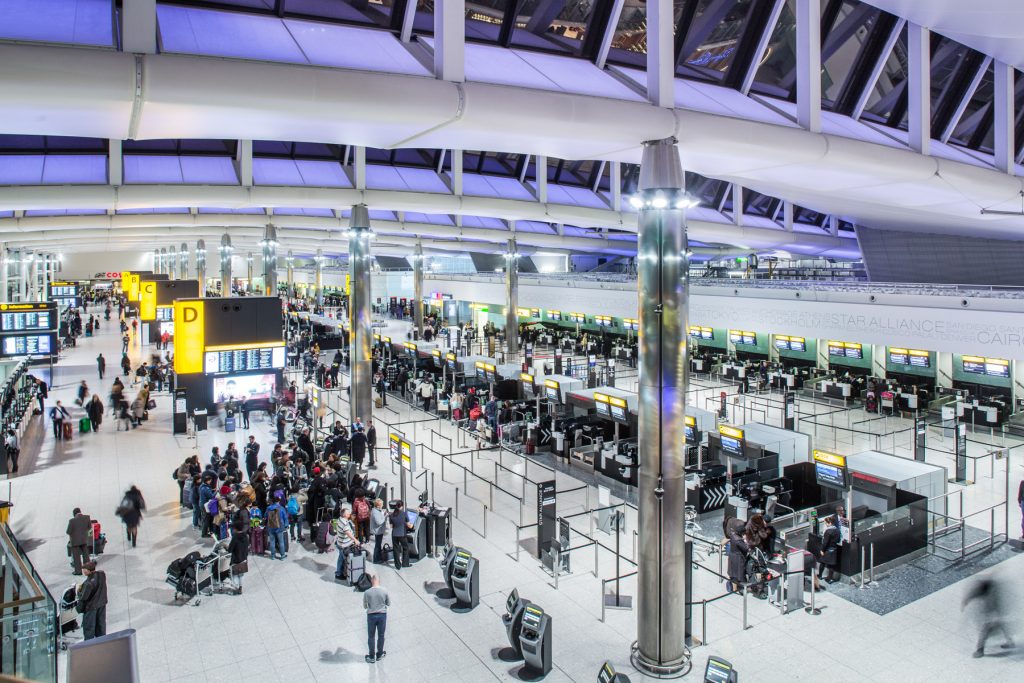
Under the proposals, the main Terminal 2 building would be expanded, doubling its current size and paving the way for the older Terminal 3 complex to be demolished.
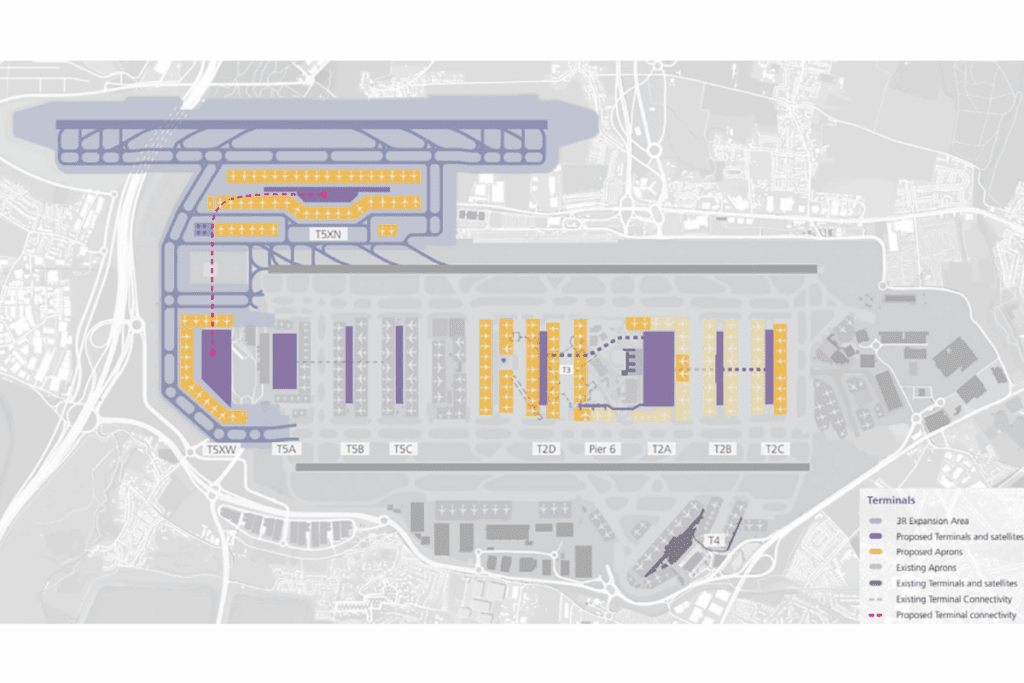
Along with an existing satellite terminal, two new satellite terminals would be built as part of the Terminal 2 expansion, with an underground train system connecting the four buildings.
To the West, Terminal 5 would also be set for a massive expansion as part of a new complex known as T5X.
There are two main elements of T5X – the first is T5XW, which would be located just to the West of the existing main Terminal 5 building. T5XW is a large ‘walk-in’ terminal, adding more gates and retail space to the airport.
To the North of the existing Terminal 5 building, would be T5XN, adding tens of new gates right next to the third runway.
How will Heathrow expansion be funded?
The Labour government has stated that Heathrow expansion must not cost the taxpayer a penny. The whole project will be privately funded, although some of this money will come from airlines in the form of takeoff and landing charges.
Airlines have already warned that they can’t absorb these additional expenses, and this will be passed onto passengers in the form of higher ticket prices.
Heathrow expects the third runway to cost £14 billion to build, but the entire expansion and upgrade works could cost as much as $49 billion.
Would Heathrow expansion pave the way for low-cost airlines to fly from the airport?
Given that Heathrow is already one of the most expensive airports in the world for airlines to operate, an expanded Heathrow still isn’t going to appeal to many low-cost carriers.
That being said, some budget airlines, including EasyJet, have indicated they would like to operate out of Heathrow. Don’t expect the likes of EasyJet to operate ultra-low fares from Heathrow, but the presence of discounters could still help drive down some flight prices, especially on short-haul routes.
Will the M25 grind to a standstill during construction?
Heathrow says it has developed a sophisticated plan to build the runway over the M25 motorway while causing minimal traffic disruption.
The airport plans to build a new section of the motorway, including the tunnels and bridges required for the third runway, right next to the existing lanes, which will remain in full operation throughout construction.
After the new section has been completed, the existing motorway is connected overnight and the old lanes decommissioned.
Will a third runway now actually happen?
Maybe, maybe not! Getting to this point has been decades in the making, and Heathrow has faced multiple legal challenges over its plans to build a third runway.
The thinking is that following a Supreme Court ruling in 2020, all the possible legal challenges have been exhausted, and as long as the planning permission to followed properly, then expansion should go ahead as planned.
Don’t be surprised, however, if there are yet more bumps in the road.
Will a third runway cause lots more noise for local residents on approach paths?
Heathrow claims a third runway will actually reduce noise for many local residents blighted by the roar of aircraft engines. That’s in part because Heathrow will be able to switch between each of the three runways, giving relief to residents on the approach paths.
At the same time, the position of the third runway will mean that planes flying over London will do so at a higher altitude than at present, while new routes are being drawn up to reduce the effects of aircraft noise pollution.
Residents are, however, still sceptical, and there remains a lot of opposition from people living close to Heathrow.