



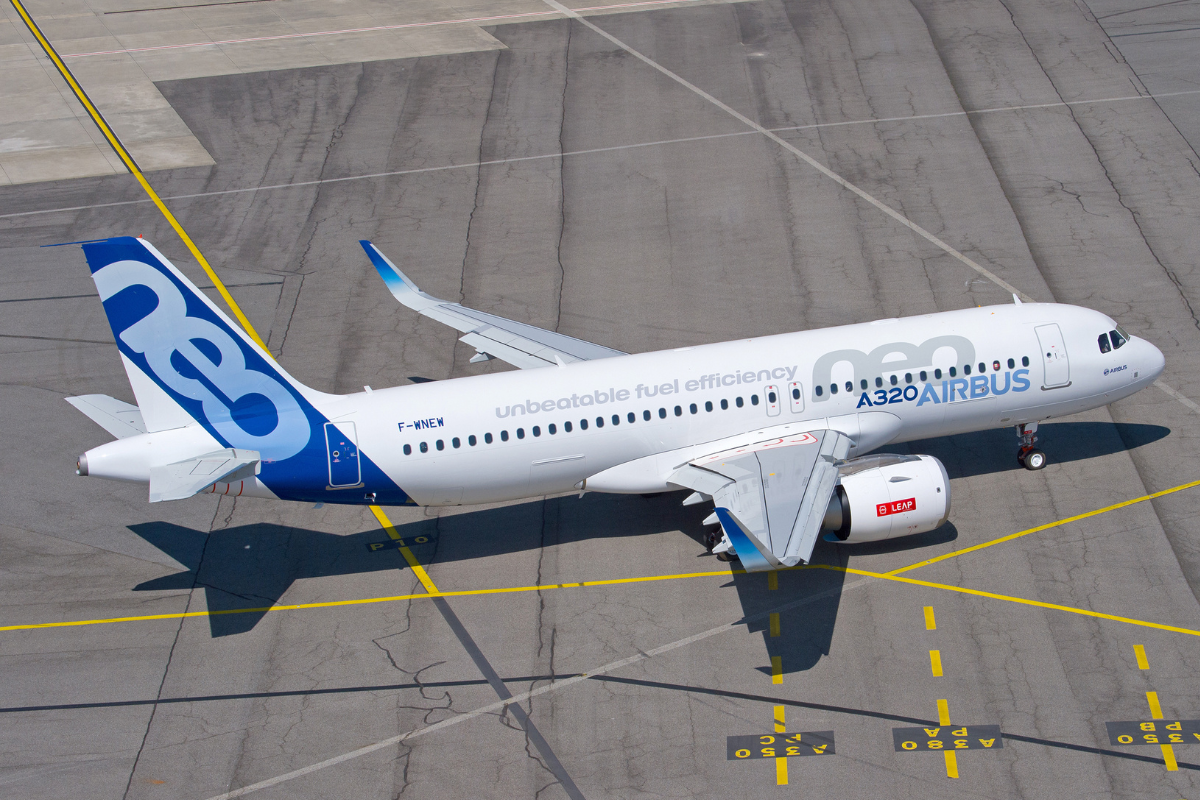
When aircraft manufacturer Airbus issued an urgent safety alert for its range of best-selling A320 family single-aisle aircraft on Friday evening, there were very real fears that the emergency fix required to keep them airworthy could lead to mass worldwide flight disruption.
Thousands of aircraft around the world would have to be taken out of service unless engineers could install a software update by Sunday – a process that could take several hours per aircraft.
A race against time began, but fears of widespread delays and cancellations failed to materialize, as airlines quickly installed Airbus’ software fix on affected A320 series aircraft.
What’s important to understand, though, is that this wasn’t necessarily a permanent fix but rather a software rollback to a previous version that is known to be safe.
But how did this come about in the first place?
On October 30, JetBlue flight 1230 was flying from Cancun to Newark when the plane suddenly pitched down, or in layman’s terms, the nose of the plane pointed downwards without warning or any input from the two pilots in the cockpit.
Given that no one was expecting the aircraft to suddenly start descending in otherwise smooth air, at least 15 passengers and crew on board ended up being injured, with the plane making an emergency landing at Tampa International Airport.
The pilots reported serious concerns to JetBlue, which took the aircraft out of service so that the root cause could be established.
Engineers were able to establish that the unexpected pitch-down input came from a malfunctioning ELAC computer unit. The ELAC stands for Elevator & Aileron Computer, and it is designed to interpret the inputs the pilots are putting into the controls and then elevators and ailerons smoothly and correctly.
The next question was what caused the ELAC to malfunction in the first place?
Experts from Airbus were called in, and they discovered that intense solar radiation could have corrupted data in the ELAC, which triggered the sudden pitch-down movement.
The final question, then, is how this could be fixed, and quickly?
It turns out that Airbus pinpointed the risk of solar radiation corrupting data within the ELAC to a specific and recent software update known as L104. The easiest and quickest solution to the immediate safety threat was simply to revert to the last software version that is known not to be susceptible to solar radiation.
In most cases, this required engineers to plug a Portable Data Loader with the older L103 software into the cockpit computer of affected planes and reinstall the tested software.
But why was there a lot less disruption than originally feared?
Not all Airbus A320 family aircraft have the faulty L104 version of the software installed, and it was estimated that of nearly 11,500 Airbus A320 series aircraft in active commercial service around the world, around 6,000 would need to have remedial work.
It then transpired that the data upload with the L103 software actually only took around 15 minutes, far less time than initially feared.
Unfortunately, there are some planes with older computer systems that can’t simply be reverted back to the old software, and these need to be taken out of service for the replacement of the ELAC hardware. These aircraft are, though, few and far between.
Thankfully, apart from the United States, which was in Thanksgiving holiday mode, the rest of the world is between big travel demand periods, so airlines had additional aircraft capacity to implement the software fix with minimal disruption to flights.
What happens next?
The faulty version of the software provided improvements for very specific situations, which won’t have an impact on the vast majority of flights. Reverting back to the previous software version isn’t a big issue as this is the software that many airlines have been using on their A320 series aircraft for some time and without issue.
That being said, Airbus will be looking to debug the malfunctioning software so that the improvements can be installed again with the release of the next software update.