



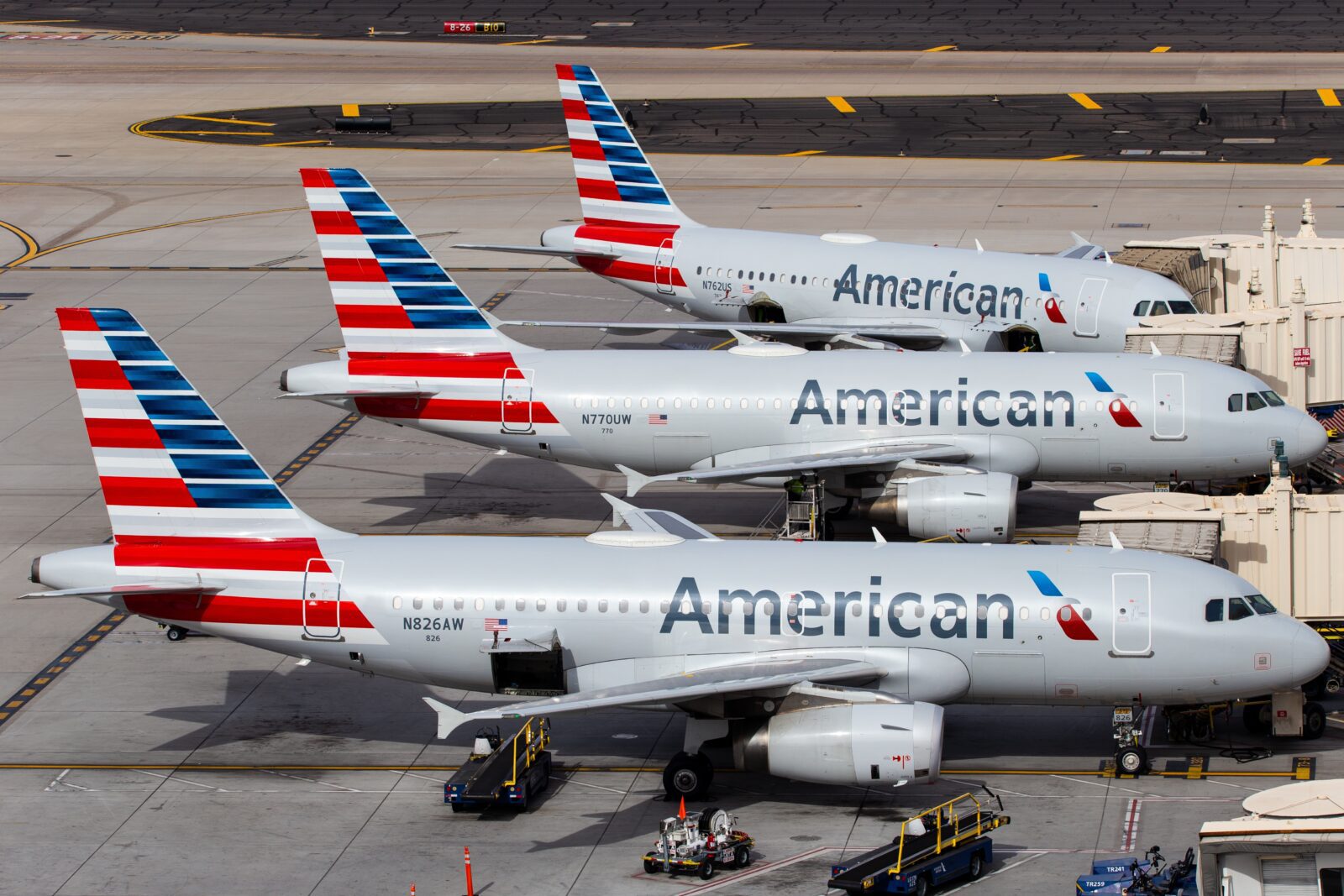
American Airlines has failed in its attempt to have a lawsuit brought by a veteran flight attendant who developed cataracts thrown out of court. The flight attendant claims the airline started to treat him as a liability after he disclosed his condition, despite the fact that he was scheduled to have corrective surgery.
After being dismissed for performance-related issues, the flight attendants filed a lawsuit against his long-time employer, accusing the Fort Worth-based carrier of disability and race discrimination.
Long-serving flight attendant develops cataracts
56-year-old Melba Hudson had worked for American Airlines for over two decades, initially as a ticket agent, before becoming a flight attendant in 2000 based out of Chicago O’Hare.
All appeared to be well until Hudson developed cataracts just months after transferring to Philadelphia International Airport. The situation became so bad that Hudson struggled to see in direct sunlight, and on one occasion, he even had all the window shades pulled down after takeoff so that he could carry on performing his job.
Hudson sought treatment and was approved for surgery to treat the cataracts, but, in the meantime, he informed his supervisor that he was struggling to see well and only saw the outlines of figures if the sunlight shone through the windows of the plane in flight.
American Airlines treats the flight attendant as a liability
After disclosing his disability, Hudson claims American Airlines started to treat him unfavorably and started to ‘write him up’ for minor transgressions that younger and Caucasian coworkers were never pulled up for.
Hudson was accused of at least one operational delay, along with other minor performance violations that culminated in his termination on December 3.
The Association of Professional Flight Attendants (APFA) attempted to challenge his dismissal, but after exhausting the internal grievance procedure, Hudson was advised to lawyer up.
Flight attendant accuses AA of race and disability discrimination
After being given leave to sue by the Equal Employment Opportunity Commission (EEOC), Hudson filed a lawsuit against American Airlines in a Chicago district court in July 2025.
Hudson accused American Airlines of disability discrimination because the way he was treated by the carrier changed after he disclosed his cataracts. He was also suing for race and age discrimination, along with retaliation, claiming that he was treated differently from other flight attendants who were younger.
Ideally, Hudson wants American Airlines to be compelled to rehire him at the exact same seniority he left at, along with back pay and punitive damages.
American Airlines fails to have case dismissed
A key part of Hudson’s lawsuit rests on his being able to use the Rehabilitation Act for his claims of disability discrimination and retaliation.
But the Rehabilitation Act can only be used if the employer receives federal funding. In this case, Hudson argues that American Airlines receives federal funding under the Essential Air Service program.
AA’s attorneys, however, tried to get Hudson’s disability claims thrown out on the grounds that he had failed to connect his employment with the Essential Air Service program.
On Tuesday, U.S. District Judge Robert W. Gettleman rejected AA’s argument, concluding that at this point in the proceedings, Hudson had done enough simply by stating that American Airlines receives EAS funds.
American Airlines has, therefore, been given until December 29 to submit its formal answer to Hudson’s lawsuit.
EEOC is also suing American Airlines over eyesight discrimination
A couple of months ago, the EEOC revealed that it was taking American Airlines to court for allegedly discriminating against a reservations agent who tragically lost her eyesight.
The woman started working for AA in 2012, but her world was turned upside down when she suffered an injury that resulted in permanent cortical blindness.
Several months later, the woman was desperate to return to work despite her disability, and this might have been possible with the use of screen reader software.
American Airlines, however, was more than hesitant, telling the woman that it had never employed a fully blind person in one of its reservations centers before. So, it kept to woman on medical leave until she was eventually dismissed at the start of the COVID-19 pandemic.
The EEOC first attempted to each a conciliation agreement with American Airlines, but when that failed, it decided to sue the carrier on behalf of the woman for disability discrimination. This lawsuit is also still in progress.
Bottom line
It’s not uncommon for an airline to try to have a case dismissed at the earliest possible opportunity, so AA’s approach to this lawsuit isn’t necessarily unusual.
That being said, Judge Gettleman did indicate that going forward, Hudson might have to provide more evidence to link his employment to the EAS program if his disability discrimination claims are to survive.


Let’s face it. In late stage American capitalism, corporations have largely become ebmvil empires, devoted solely to profit and willing to destroy anything and anyone who stands in the way of that goal.