



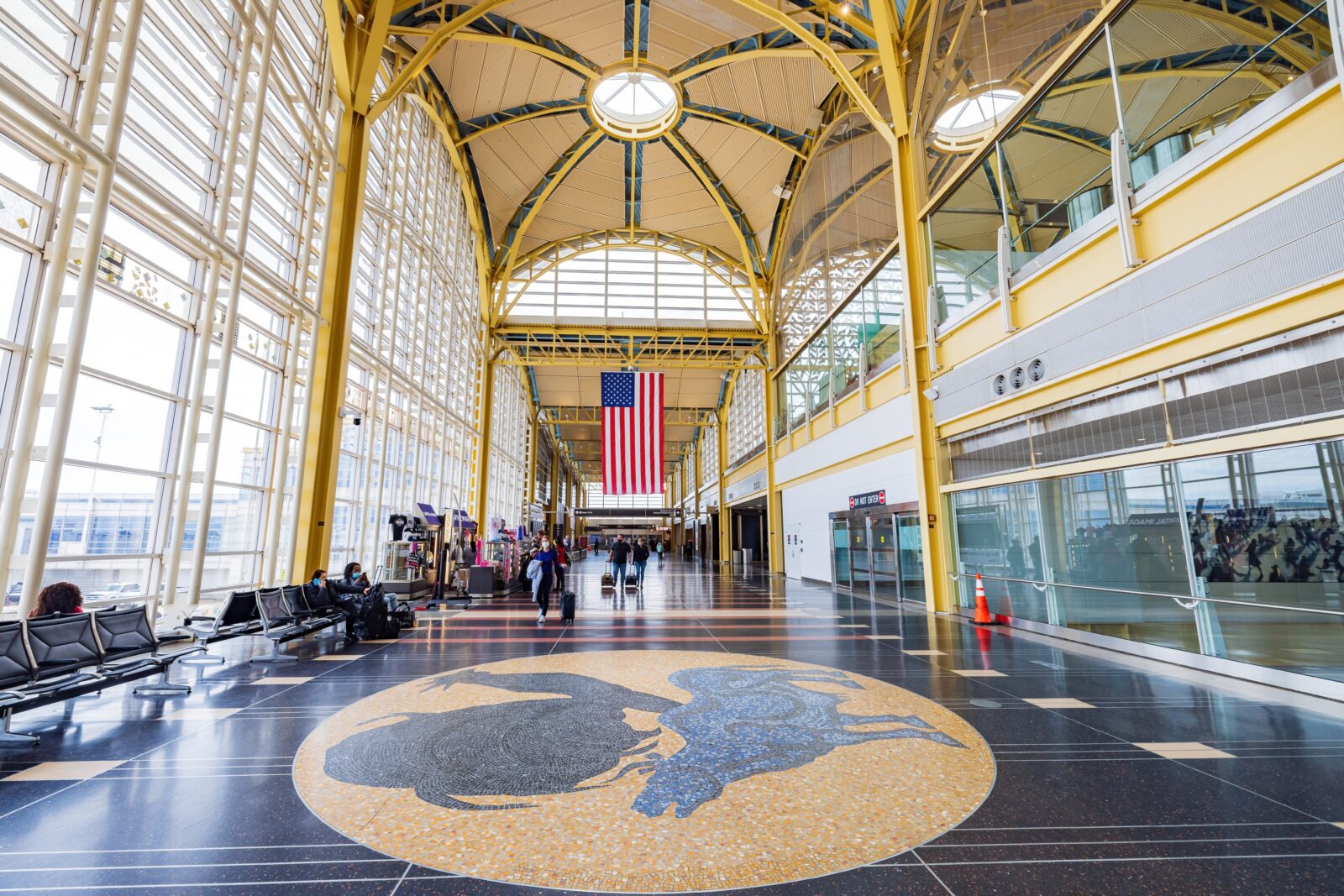
The National Transportation Safety Board (NTSB) has ripped into a new defense spending authorization bill that would allow military training flights to resume in the crowded airspace close to Reagan National Airport in Washington DC.
The controversial provision has been shoehorned into the 2026 National Defense Authorization Bill just months after a military Black Hawk helicopter downed an American Airlines regional jet on final approach to DCA airport, tragically killing all 64 passengers and crew.
And while, at first glance, it looks like the provision was written in such a way to enhance airspace safety in the DCA area, the NTSB says it will actually “significantly reduce” safety, reversing measures that were introduced in the wake of the tragedy.
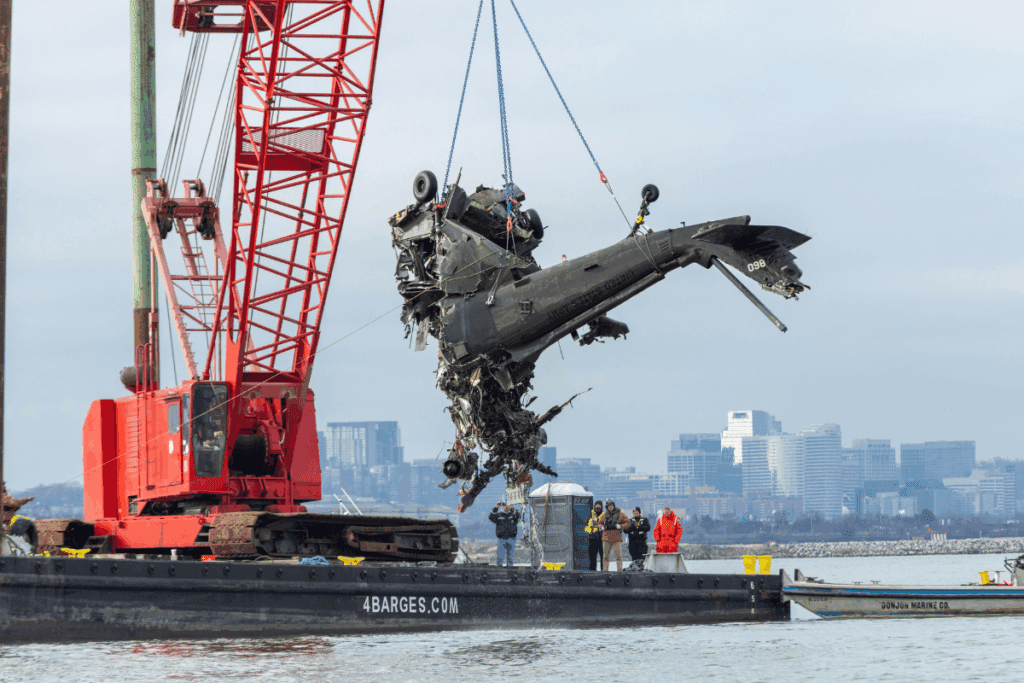
Military Helicopter Route Was Closed Down After Fatal January Crash
On January 29, 2025, a military Black Hawk helicopter flying at low altitude along the Potomac River close to Ronald Reagan Washington National Airport (DCA) collided with an American Airlines airplane that was on final approach for landing.
Onboard American Airlines flight AA-5342, a CRJ regional jet flying from Wichita, Kansas, to Reagan National, were 28 figure skating athletes, coaches, and family members who were returning home after attending the 2025 U.S. Figure Skating Championships.
Those young athletes and their families never made it home. Along with everyone else aboard flight AA-5342, they died in the icy cold water of the Potomac River after their plane plunged from the sky.
In total, 64 passengers and crew on the American Airlines flight perished, along with the three crew members on the Black Hawk helicopter.
In the wake of the accident, the NTSB described military training flights along a certain designated route on the Potomac as an “intolerable risk to aviation safety.”
Investigators discovered that military and police helicopters had been permitted to fly at altitudes of just 200 feet, with a vertical separation of just 75 feet from civilian aircraft that were coming into land at DCA.
Between 2021 and 2024, there had been a reported 15,214 close calls between helicopters and airplanes close to DCA, leading experts to warn that a fatal tragedy was just a matter of time.
National Defense Authorization Bill Would Allow Banned Training Flights To Resume
Following the accident, the Department of Transportation and the Federal Aviation Administration banned military helicopters from using the risky route along the Potomac that is known as ‘Route 4’ whenever DCA is using a certain runway for landings.
But Section 373 (Manned Rotary Wing Aircraft Safety) of the National Defense Authorization Act 2026 would effectively allow these flights to resume.
The actual wording states:
“The Secretary of a military department may not authorize any manned rotary wing aircraft of DoD to operate a training mission in covered airspace unless that aircraft, while being operated, is actively providing warning of its proximity to nearby commercial aircraft in a manner compatible with those aircrafts’ TCAS (traffic alert and collision avoidance system).”
In other words, this section would give powers to any military department the “broad authority” to resume flights close to DCA, so long as the aircraft is broadcasting its position in a manner that would activate a special collision alert system known as TCAS.
NTSB Says Safety Provisions Are Fatally Flawed
The problem, however, is that while Section 373 sounds like it’s designed to significantly enhance safety, the very opposite is true: at least, that’s the view of NTSB Jennifer Hommendy, who has made her concerns very clear.
The main issue? TCAS simply doesn’t work under 900 feet, Homendy explains.
What is TCAS?
TCAS stands for ‘Traffic Alert and Collision Avoidance System’ (TCAS), although internationally, it is also sometimes known as the Airborne Collision Avoidance System (ACAS).
TCAS functions independently of ground-based alert systems, and the more advanced system, known as TCAS II, provides both traffic advisories and resolution advisories.
When TCAS is activated, the system will instruct pilots to climb or descend in order to avoid a collision. It is a ‘last line of defense’ which works very well at high altitudes, but is much less accurate closer to the ground.
At low altitudes, TCAS isn’t used because it would create lots of false alerts. In fact, the crew of flight AA-5342 received a TCAS alert just 20 seconds before the January accident, but it didn’t do anything to prevent the collision.
Hommendy explains that a safer alternative to TCAS would be the use of ADS-B surveillance, which automatically broadcasts the exact position, altitude, velocity, and other flight data of a vehicle via GPS.
Following the January accident, the DoD agreed with the FAA that military aircraft would broadcast their position via ADS-B. Section 373 would, however, roll this significant safety improvement back.
Hommendy has penned a letter to lawmakers criticizing Section 373, in which she concludes:
“This provision is an unacceptable risk to the flying public, to commercial and military crews, and to residents in the region. It’s also an unthinkable dismissal of our investigation and of 67 families who lost loved ones in a tragedy that was entirely preventable.”
“I urge you to consider the consequences of this provision, and I stand ready to work with you to address these urgent safety concerns.”
Lawmakers Also Slam Authorization Bill
Lawmakers representing Virginia are up in arms over the provision, with U.S. Representatives Don Beyer, Suhas Subramanyam, James Walkinshaw, Bobby Scott, Jennifer McClellan, and Eugene Vindman coming together to slam the proposed waiver in a joint statement.
“We are deeply disappointed that this provision, which only applies to training flights, creates a waiver process to allow training flights in the region that further congest the airspace, an issue that contributed to January’s deadly crash,” the lawmakers said on Wednesday.
“Further action is needed to prevent a repetition of the mistakes that led to this incident, and we will continue working with all possible speed on a legislative solution.”
Bottom Line
What looked like a provision to make military training flights close to National Reagan Airport safer has been exposed as a rollback of protections put in place after the fatal collision between a Black Hawk helicopter and an American Airlines regional jet in January.
The chair of the NTSB has slammed the provision and has called on lawmakers to urgently rethink.