



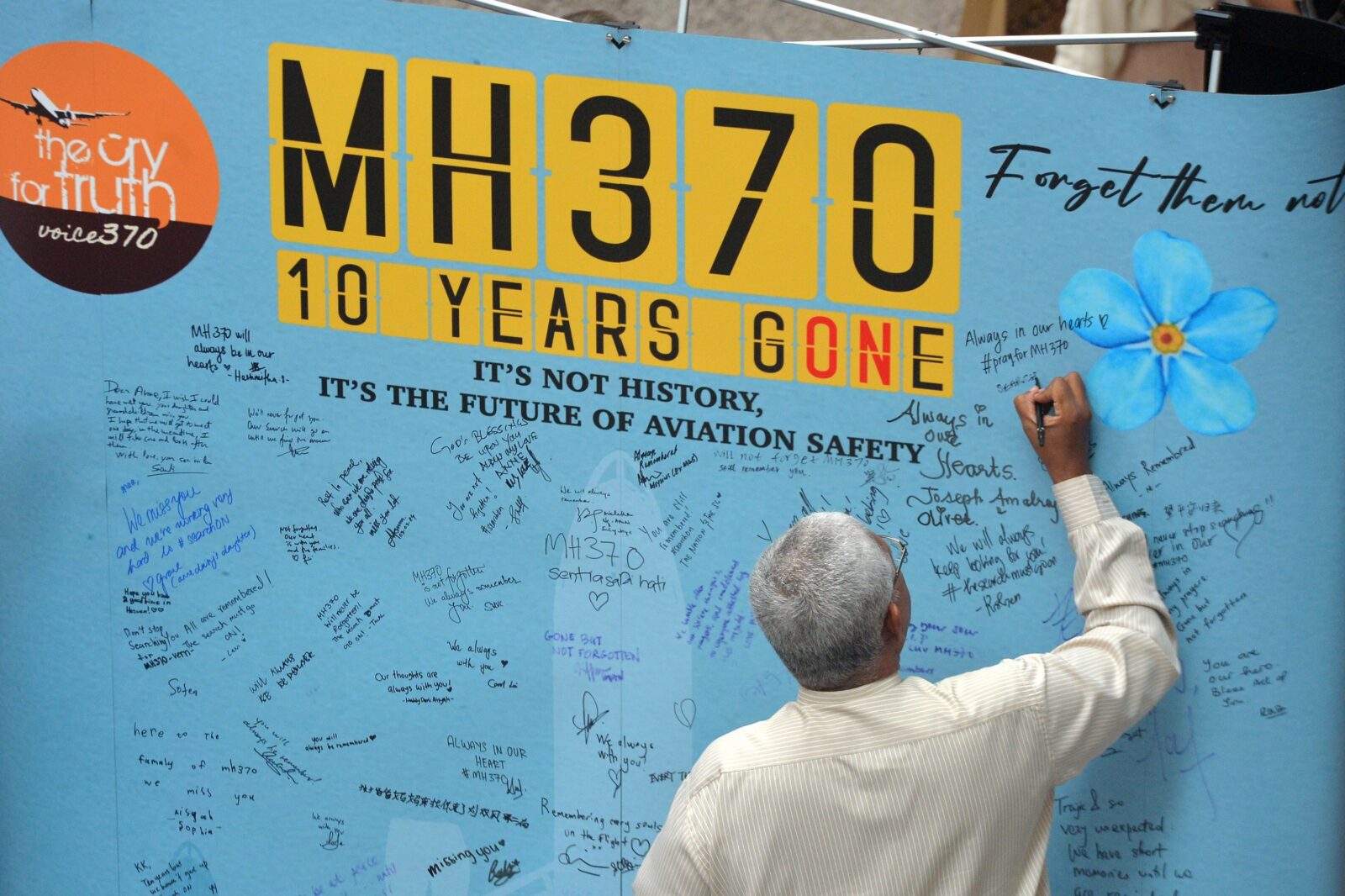
A Chinese court has ordered Malaysia Airlines to pay the families of eight victims of the MH-370 airplane disappearance 2.9 million yuan each – the equivalent of around US $410,930.
The court ruling comes just weeks ahead of a major new search operation to find the remains of the Boeing 777-200, which disappeared off radar screens nearly 12 years ago.
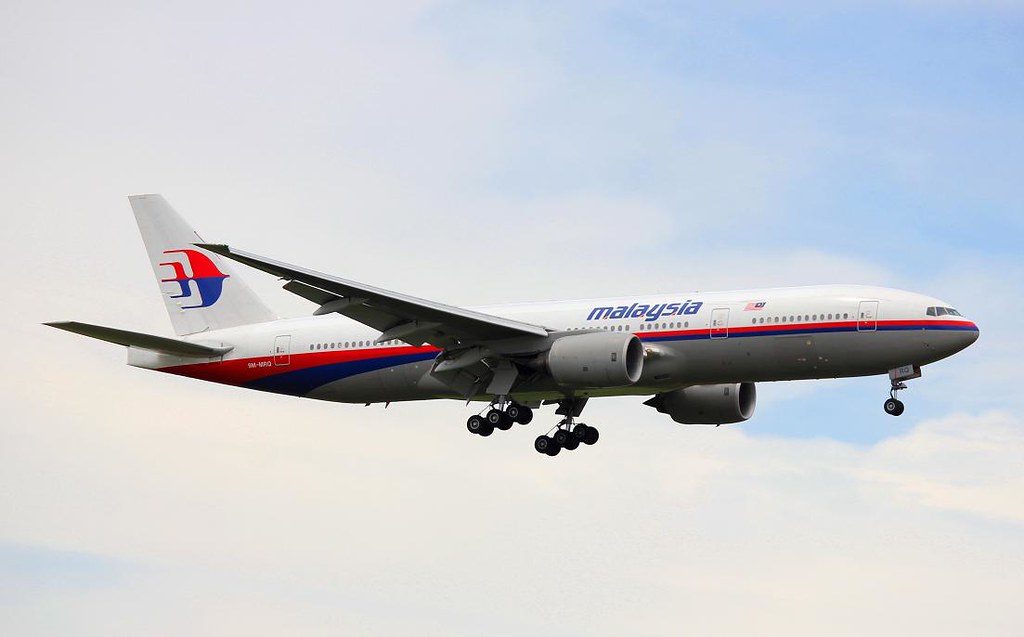
Chinese court orders big payout to victims’ families
For years, the families of dozens of victims of the Malaysia Airlines MH-370 disappearance have been pursuing damages against the airline in a Chinese court.
Eight of those cases have now been resolved, with Malaysia Airlines ordered to pay 2.9 million yuan for emotional distress and to cover funeral expenses.
While eight families have now reached a settlement, the court said that 23 cases remain pending. A further 47 cases have been resolved in out of court settlements.
Search for wreckage set to resume this month
On March 8, 2014, Malaysia Airlines flight MH370 from Kuala Lumpur to Beijing suddenly disappeared from radar screens just 38 minutes after takeoff as it flew over the South China Sea.
It’s believed that the plane may have crashed off the coast of Perth, Australia, but extensive open water searches have failed to find any sign of the plane’s wreckage.
Earlier this month, however, the Malaysian government inked a ‘no find, no fee’ search agreement with Ocean Infinity, a US-based seabed exploration and robotics firm, to resume the search for MH-370.
The new search is expected to get underway on December 30, 2025, and last for a maximum of 55 days. Ocean Infinity will only get paid a fee of US $70 million if it locates the remains of the aircraft.
The firm has identified a 5,000-square-kilometre zone in the southern Indian Ocean which it has assessed to have the “highest probability of locating the aircraft.”
What happened to Flight MH370?
Aboard Flight MH370 were 227 passengers and 12 crew members – most of the passengers were Chinese citizens, hence the reason that a court in Beijing has been dealing with many of the compensation claims.
After departing Kuala Lumpur International Airport, the aircraft was tracked by air traffic control for around 38 minutes before disappearing from radar screens. The aircraft was then tracked by military radar for the next hour, but eventually went out of range and was never heard from since.
The disappearance of MH370 triggered the most extensive search in human history, with authorities sweeping over 120,000 square kilometres of ocean up until 2017 in an attempt to locate the wreckage.
A second attempt to locate the plane was launched in January 2018 but was wound up just six months later without success.
What happened to MH370 remains a mystery to this day.
Was MH370 a ‘murder suicide’?
Despite the actual cause of the MH370 disappearance remaining a mystery, there are a number of theories about what happened to the plane, including a ‘murder, suicide’ plot carried out by the Captain of the plane.
Investigators have previously looked into the possibility that Captain Zaharie Ahmad Shah deliberately downed the jet in open water. At his home, investigators were able to recover deleted data from an aircraft simulator that backed up this theory, although an official cause of the accident has never been published.
In fact, there are a number of other competing theories about what happened to MH370, including the possibility that the passengers and crew succumbed to hypoxia.
There is also a chance that a major mechanical failure, like a mid-air engine stall, could have caused the plane to crash into the ocean, or even a cargo hold fire or terrorist attack.
Bottom Line
While the families of eight victims of MH370 have now reached a court settlement over monetary damages, they are still no closer to learning what caused the disappearance of the plane.
That, however, may change if Ocean Infinity is able to locate the wreckage of the Boeing 777-200. Finding the wreckage would be a major achievement, but recovering the remains of the plane and those onboard would be a major challenge.