



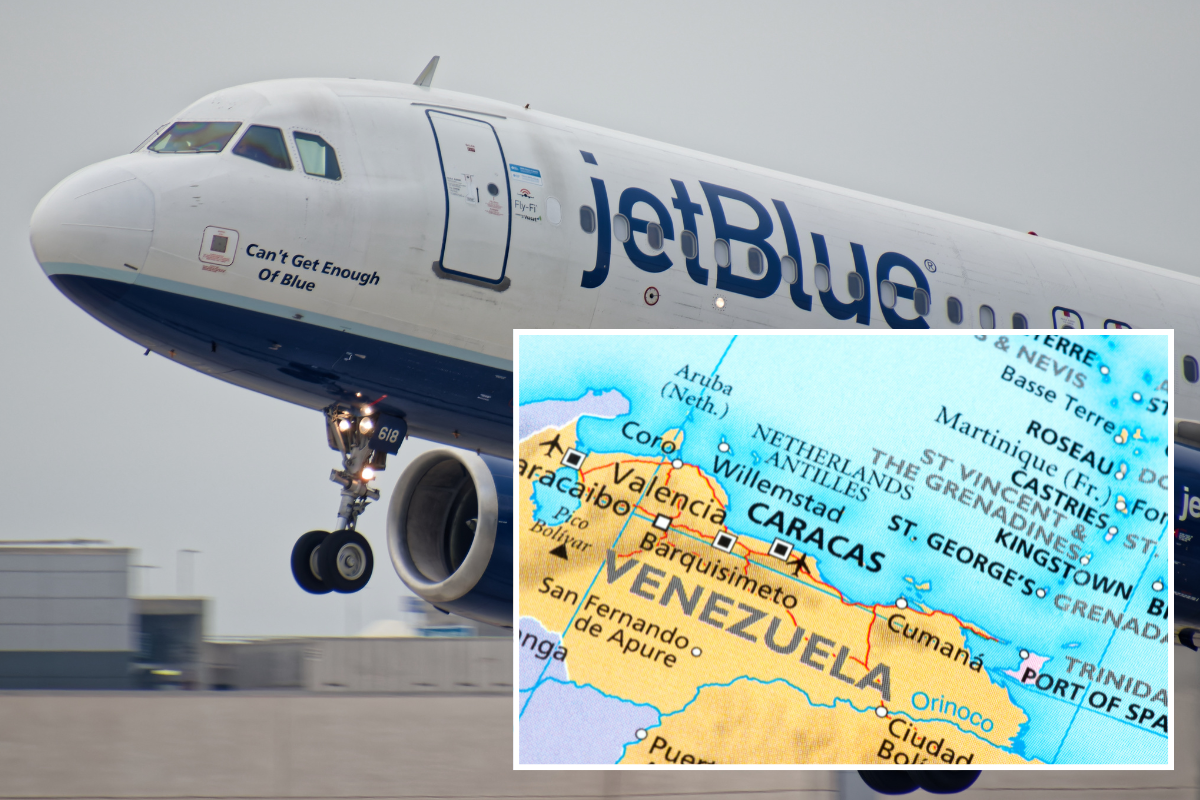
It has emerged that there have been two potentially catastrophic near-misses between ‘invisible’ U.S. Air Force refueling aircraft and passenger planes close to the airspace of Venezuela.
In both cases, the U.S. Air Force aircraft was flying without its transponder on and was therefore hidden from air traffic control radar screens. Passenger aircraft had to take evasive action to avoid colliding with the refueling tanker after visually spotting the plane in their flight path.
Second close call close to Venezuelan airspace
On Saturday afternoon, the pilots of a private passenger jet flying from the Dutch Caribbean island of Aruba to Miami reported to air traffic control that they had just narrowly avoided colliding with a U.S. Air Force refueling tanker as they were in their initial climb.
“They were really close,” one of the pilots reported to air traffic control, in audio first obtained by CNN through the LiveATC service.
To give a sense of just how close the two planes got, the pilots were able to identify the aircraft type, saying: “It was big, maybe a [Boeing] 777 or a 767.”
The incident occurred as the private jet was at around 26,000 feet. The pilots noticed the invisible military jet in their flight path and had to stop their climb to avoid a collision.
JetBlue in ‘outrageous’ near-miss
The incident occurred just one day after another near-miss, this time involving a packed JetBlue Airbus A320, which was flying between Curaçao and New York JFK.
In this case, the JetBlue plane was also in its initial ascent to cruising altitude when the pilots suddenly spotted the U.S Air Force aircraft in their flight path above them.
Again, the pilots had to stop their climb to avoid a collision with the military jet. There was no other warning that the two aircraft were on a collision course until the pilots visually spotted the military jet.
“We just had traffic pass directly in front of us, within five miles of us, maybe two or three miles. But it was an air-to-air refueler from the United States Air Force, and he was at our altitude, so we had to stop our climb,” one of the pilots of the JetBlue plane explained.
“They are not painting; they don’t have their transponder turned on. It’s outrageous,” the pilot continued.
FAA warned airlines about avoiding Venezuelan airspace
The two near-misses come just weeks after the Federal Aviation Administration (FAA) warned airlines to avoid overflying Venezuelan airspace due to heightened military activity in the region.
The warning was issued to pilots in the form of a NOTAM, which stands for Notice to Airmen, covering the 1,204,815 square kilometer Maiquetia Flight Information Region, which is effectively all of Venezuela and its territorial waters.
Warning of a “potentially hazardous situation,” the NOTAM states:
“OPERATORS ARE ADVISED TO EXERCISE CAUTION WHEN OPERATING IN THE MAIQUETIA FLIGHT INFORMATION REGION (SVZM FIR) AT ALL ALTITUDES DUE TO THE WORSENING SECURITY SITUATION AND HEIGHTENED MILITARY ACTIVITY IN OR AROUND VENEZUELA.”

“THREATS COULD POSE A POTENTIAL RISK TO AIRCRAFT AT ALL ALTITUDES, INCLUDING DURING OVERFLIGHT, THE ARRIVAL AND DEPARTURE PHASES OF FLIGHT, AND/OR AIRPORTS AND AIRCRAFT ON THE GROUND.”
U.S. airlines have been banned from flying to and from Venezuela since May 2019, following an assessment by the Department of Homeland Security, which concluded that the domestic security situation in the country posed a threat to airlines, their crew, and passengers.
How are U.S. officials responding to these near-misses?
The two near-miss incidents last weekend are believed to be linked to U.S. military activity around Venezuela, but they occurred outside of the airspace that airlines have been put on heightened alert about.
In response, the National Transportation Safety Board (NTSB) said it was working to gather information about the incidents, while the United States Southern Command said it was “aware of the recent reporting regarding US military aircraft operations in the Caribbean and currently reviewing the matter.”
Bottom line
There were two near-misses in just two days between passenger jets and U.S. Air Force refueling tankers close to Venezuela last weekend. In both cases, the Air Force jet did not have its transponder activated, and collisions were only avoided when the pilots of the commercial planes visually spotted the hazard.