



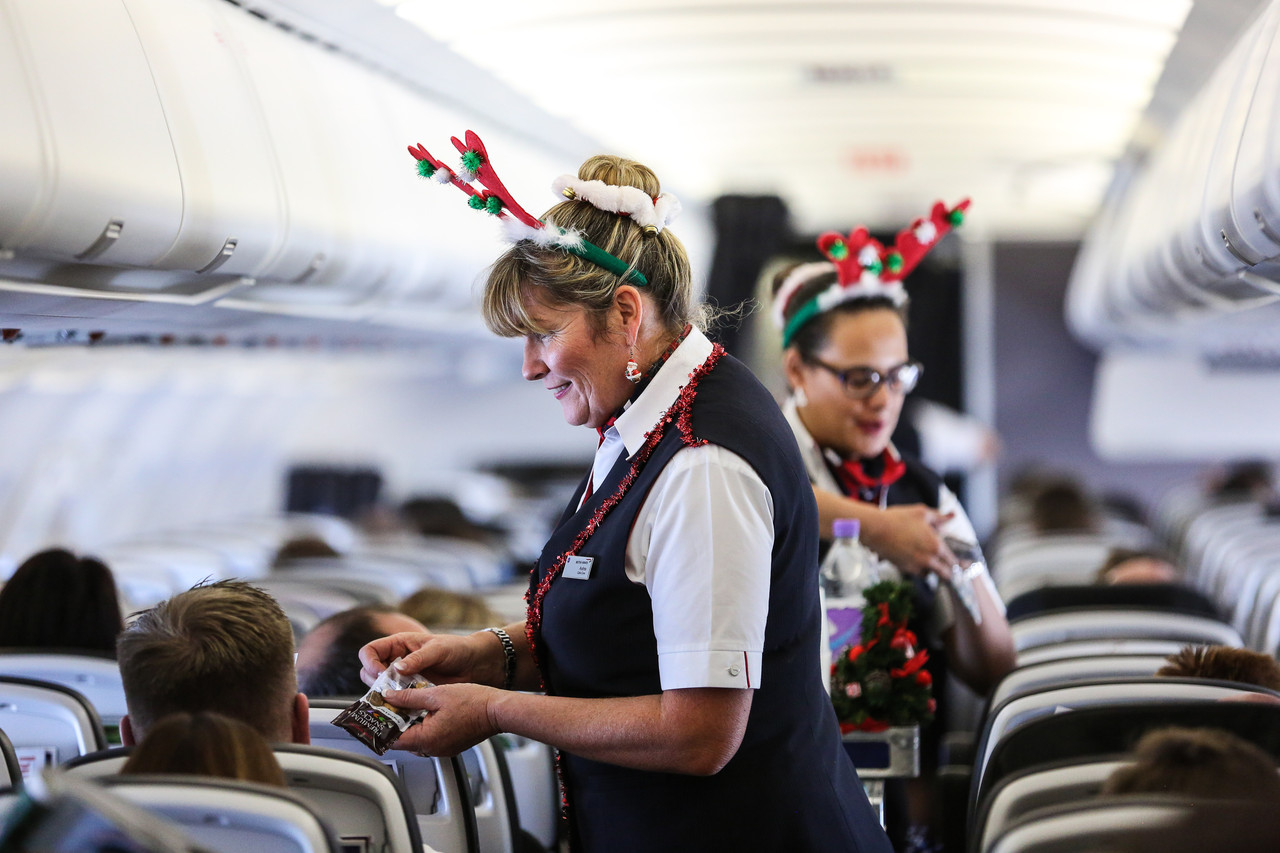
Traveling on Christmas Day used to be a rare event, but it’s quickly turning into another routine day for many airlines.
British airports are bracing themselves for their busiest ever Christmas Day, with a record number of travelers slated to pass through major hubs like Heathrow Airport on December 25.
But ahead of the big day, the festive travel rush is already in full swing, with British regulators predicting that as many as 460,000 passengers will take off on Friday – marking the busiest day of the Christmas travel period.

160,000 passengers expected to fly with British carriers on Christmas Day
The Civil Aviation Authority (CAA) has been tracking Christmas travel trends for years, and in the last decade, between 2015 and 2025, it’s seen the number of passengers traveling on Christmas Day swell by a huge 72%.
The CAA currently estimates that 160,000 passengers will fly on Christmas Day in 2025 – a 13% surge on the number of passengers who flew on Christmas Day 2024.
Many of those passengers will be flying through London Heathrow Airport, which has reassured travelers that it will have a record number of employees working over the festive period to get passengers where they want to be over Christmas.
Can you bag a bargain flying on Christmas Day?
In the past, proponents of traveling on Christmas Day used to boast about getting amazing deals on flights with airlines heavily discounting tickets to fill seats.
That’s quickly becoming a very outdated travel hack and passengers can expect to see much more dynamic pricing when booking flights that depart on December 25.
What airlines don’t fly on Christmas Day?
Many well-known international carriers, such as British Airways, Virgin Atlantic, and the likes of EasyJet, Air France, Lufthansa, and Qantas, operate flights year-round, including Christmas Day.
That being said, many carriers operate reduced schedules with limited frequencies on December 25.
There are, however, a few airlines that are outliers and completely ground their fleets on Christmas Day.
The most famous of these carriers is European budget behemoth Ryanair, which completely shuts down its operations across the continent on December 25 as a yearly, pre-planned shutdown so that staff can celebrate the holidays.
British leisure carrier Jet2 (famous for its viral ‘Nothing beats a Jet2 holiday’ jingle) also shuts down on Christmas Day, along with the Irish flag carrier Aer Lingus.
Regulators urge passengers not to pack party poppers
Selina Chadha, the CAA’s Director of Consumer & Markets, is warning passengers to double-check that they don’t let the festive spirit get the better of them and pack items are banned on British planes.
In particular, Chadha says passengers need to be aware that party poppers are completely banned on British carriers, while travelers need to check with their individual airline whether they will be allowed to bring Christmas crackers onboard with them.
Chadha also suggests keeping presents unwrapped if you plan to take them in your hand luggage, as they might need to be inspected at the security checkpoint, which could end up with all the wrapping paper being torn off.
Know your rights: What are you entitled to if winter weather delays your flight?
Hubs like Heathrow say they are more than prepared to deal with winter weather, but the CAA is also urging passengers to be aware of their rights should their festive getaway be hit by disruption.
When the UK left the European Union, the government adopted its own set of passenger rights regulations, which largely mimic the EU’s famous EC261 rules. There are, however, some important differences.
The biggest difference is whether your flight is subject to British law. Unlike EC261, which applies to any flight departing or arriving in the EU, British law applies when:
- Departing from a UK airport on any airline.
- Arriving at a UK airport on an EU or UK airline.
- Arriving at an airport in the EU on a UK airline.
The second difference is the length of delay that will trigger the right to assistance and, potentially, compensation.
- Short-haul flights of under 1,500km require a delay of more than two hours
- Medium-haul flights of 1,500km and 3,500km require a delay of more than three hours
- Long-haul flights over 3,500km require a delay of more than four hours.
If you qualify for assistance, airlines must provide:
- A reasonable amount of food and drink
- A means for you to communicate
- Accommodation like a hotel room for overnight delays
- Transport to and from the accommodation
Airlines must provide this assistance regardless of the reason for the disruption.
The CAA says that in times of mass disruption, it understands that airlines may not be able to proactively offer the legally mandated assistance. Instead, passengers are allowed to claim back reasonable expenses at a later date, including the cost of food, taxis, and hotel accommodation.