



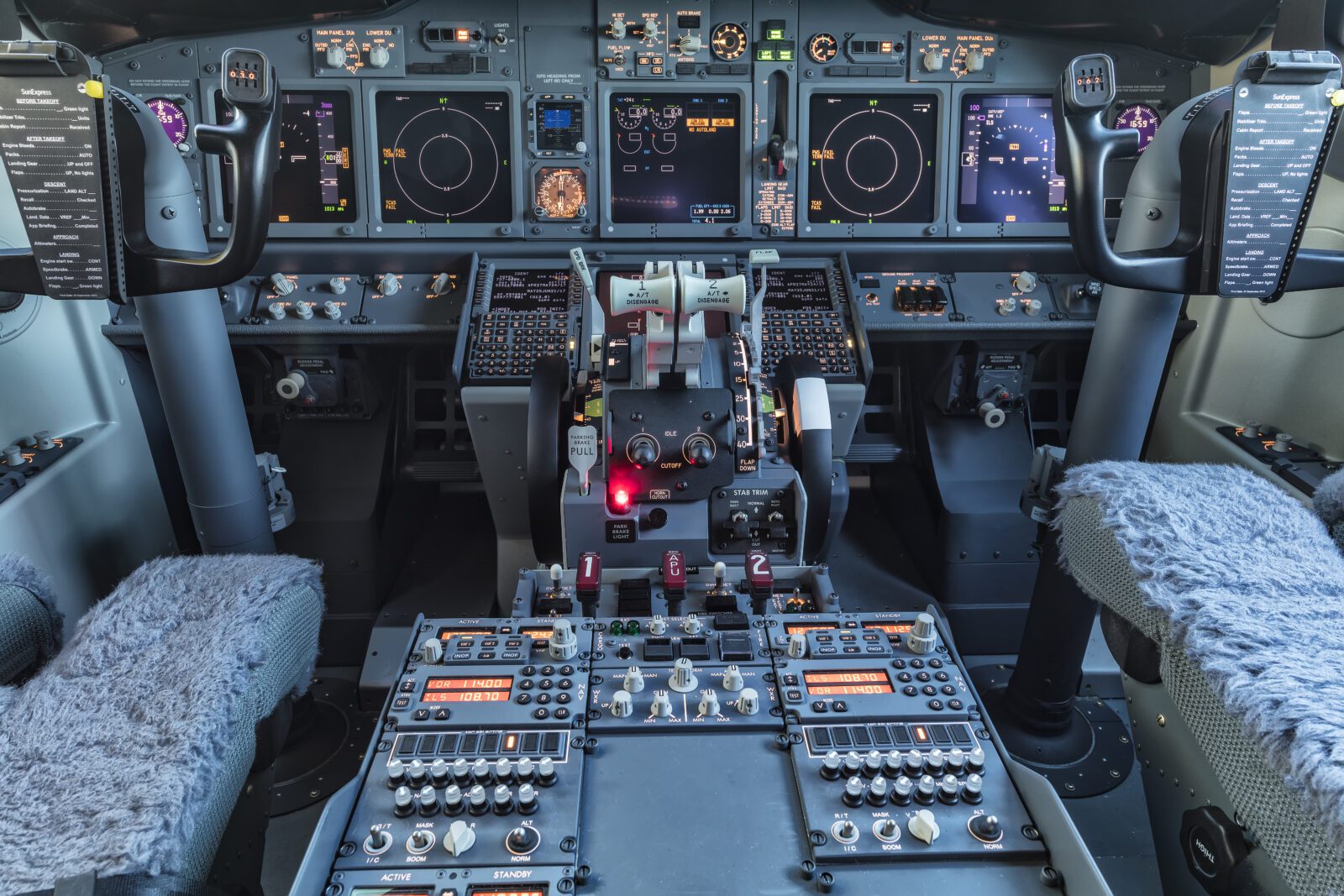
Aircraft accident investigators have opened a probe into a serious incident in which one of two engines on a Boeing 737MAX aircraft with as many as 197 passengers on board suddenly shut down immediately after takeoff at just 8,000 feet.
The cause of the engine shutdown? Investigators are examining whether a faulty sun visor may have been the root cause after it crashed down from the windscreen and hit the engine shut-off switch.
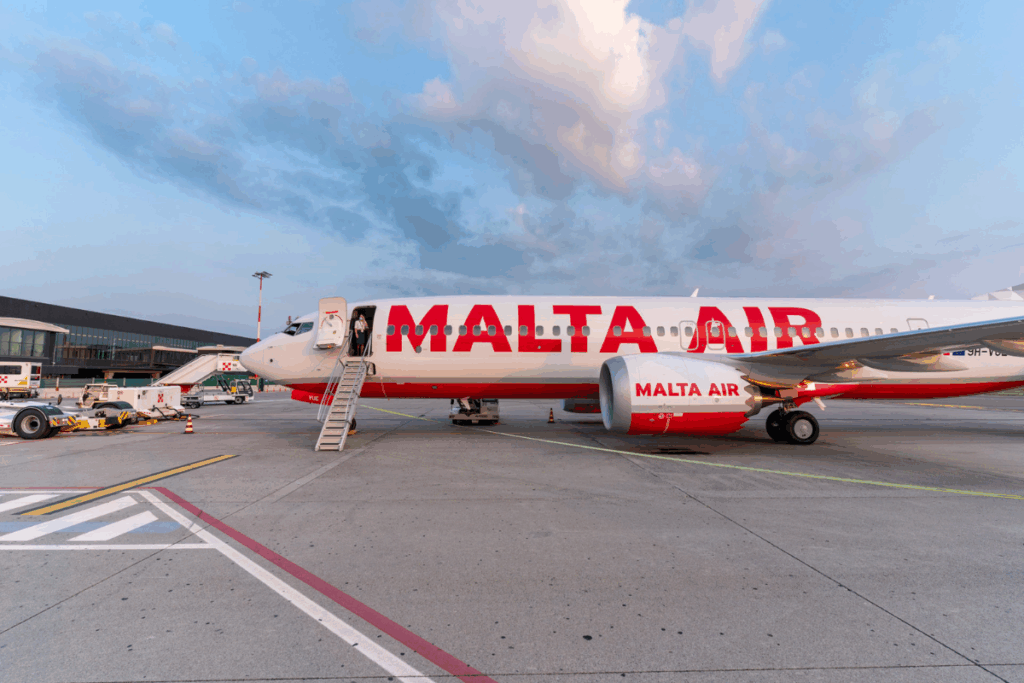
Investigators probe incident on Ryanair flight heading to Milan
The incident occurred on December 8 but is only now coming to light after a trusted accident reporting service, the Aviation Herald, obtained information from Malta’s aviation accident agency about the serious occurrence.
Here’s what we know so far:
The flight from Krakow in Poland to Milan, Italy, was being operated by a four-and-a-half-year-old Boeing 737MAX-8200 (registration: 9H-VUE), which is a high-capacity variant of Boeing’s standard 737MAX-8.
The aircraft is owned by Malta Air, which is a fully owned subsidiary of Ryanair, and it was actually operating the service on behalf of its parent company, as flight FR-3505.
At around 1:10 pm on December 8, the aircraft took off from Krakow Airport, but within minutes, the pilots declared a so-called PAN PAN emergency because one of the two engines had suddenly shut down while the aircraft was still in its initial climb at just 8,000 feet.
According to the Aviation Herald, investigators are looking at whether a sun visor fitted to the cockpit windscreen could have been the cause of the accident. One theory is that the sun visor was “torn off” during takeoff, and it impacted one of the engine start levers and cut off the fuel supply to the affected engine.
Thankfully, the pilots were able to successfully restart the engine, and the plane continued on to Milan, where it landed without further incident.
Once in Milan, however, the plane appears to have been grounded for two days before it was cleared to return to service.
What are the fuel cut-off switches?
The engine start levers are also commonly referred to as the fuel cut-off switches, and, as the name suggests, they control the fuel supply to the two engines.
There is one switch for each engine, and there is commonality of design for these switches across Boeing’s aircraft range.
To start the fuel supply, the pilots must lift up the switch from the CUTOFF position, move it over a gate, and then lower it into the IDLE position. To stop the fuel supply, the same procedure is done in reverse.
From engine startup to engine shutdown at the end of the flight, the switch must remain in the IDLE position for fuel to continue running to the engine.
Boeing says it has a ‘significant interest’ in incident
As you can probably imagine, accident investigators from Malta’s Bureau of Air Accident Investigation (as the plane is registered in Malta) have decided to open an investigation into the incident.
In a statement, the BAAI said it was probing the occurrence because “valuable safety lessons may be learned from this event, a sentiment underlined by Boeing’s significant interest in the matter.”
Ryanair declines to comment on the incident
Ryanair says it is fully cooperating with the investigation but has declined to comment further, saying in a short statement:
“As this is subject of an ongoing investigation, which we are cooperating fully with, we are unable to comment.”
Fuel cut-off switches at center of Air India Boeing 787 Dreamliner crash investigation
The design of Boeing’s fuel-cutoff switches has attracted media attention in recent months following the first deadly crash of a Boeing 787 Dreamliner on June 12, involving an Air India flight that had just departed Ahmedabad, killing all but one of the 230 passengers and 12 crew members onboard.
Data from the aircraft’s Black Boxes in that separate and unrelated investigation revealed that the engine start levers for both engines had been moved to the CUTOFF position. The pilots then moved the levers back to the RUN position, but it was already too late, and the plane crashed into the side of a building at the end of the runway.
In the aftermath of the tragedy, some airlines independently chose to carry out inspections on the fuel cutoff switches in their Boeing 787s, although no concerns were raised as a result of these checks.


DID NOT HAPPEN. The fuel cut off switches are gate protected so being bumped by a sun shade would not move it. FYI I have been flying airbuses for a major airline for 30 years so I have some experience in this area.