



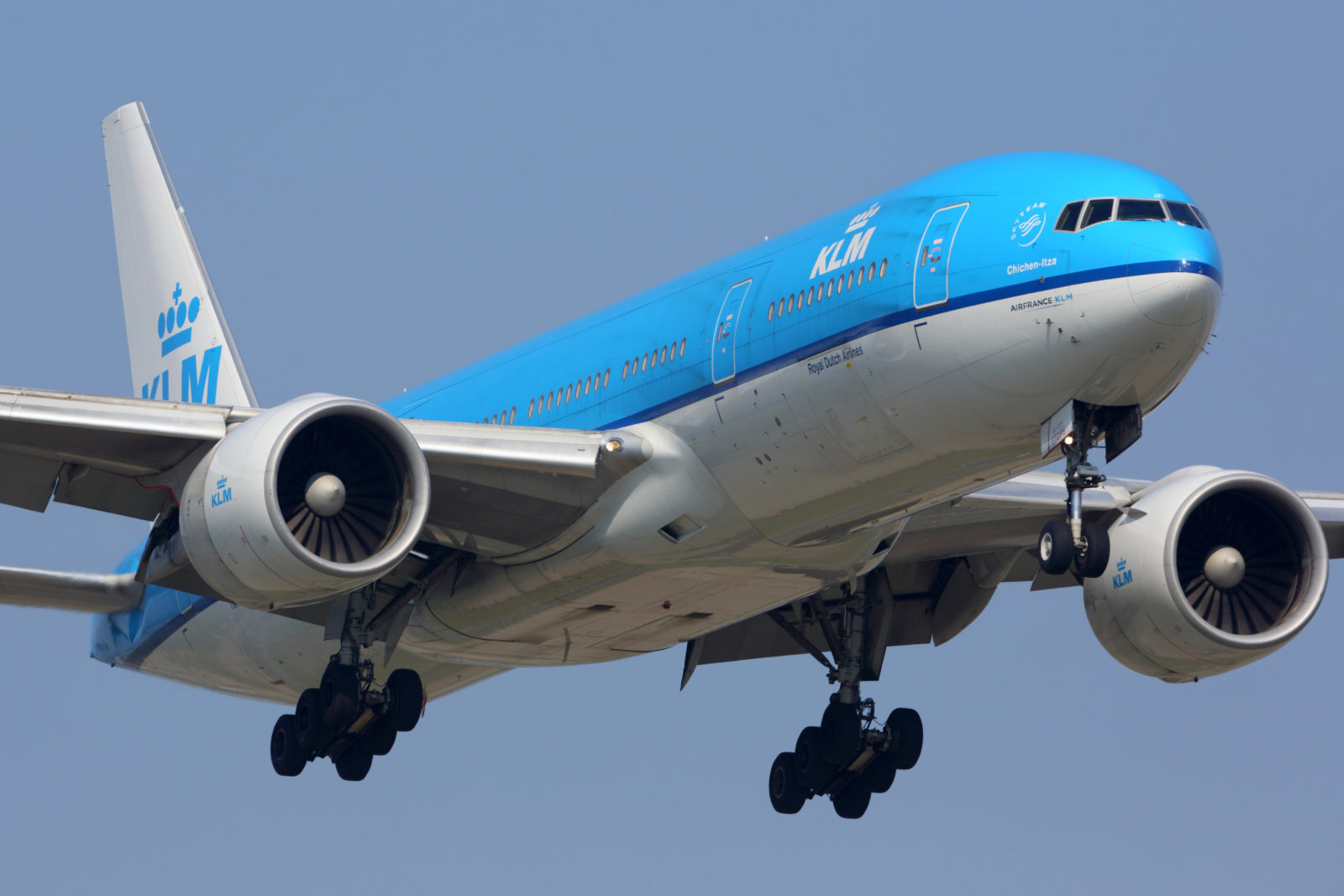
A Framingham, Massachusetts woman says she was left with traumatic brain and spinal cord injuries that required her to undergo surgery after a seatback collapsed on a KLM Royal Dutch Airlines flight from Amsterdam to Boston Logan.
The woman is now suing KLM for gross negligence, as the flight attendants let the plane depart with a passenger sitting in the faulty seat, which later fell back without warning and hit her in the head.
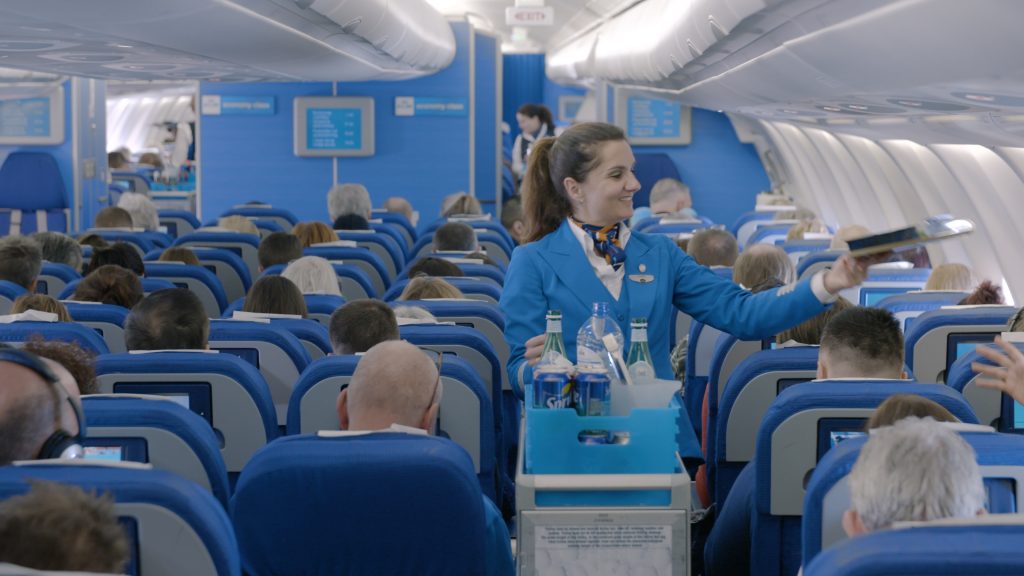
Passenger says the seat in front of her was broken
Julie Nee was traveling with her husband aboard KLM service KL-616 from Amsterdam Schiphol to Boston Logan on December 27, 2023, for what should have been a routine and relatively short seven-hour daytime flight to the United States.
The couple took their assigned seats in 19J and 19K in the Economy Class section of the plane. A short time later, another couple boarded the plane and started to make themselves comfortable in 18J and 18K, directly in front of the Nee’s.
When the man assigned to seat 18K sat down, it immediately unlocked and “flew into Julie’s seat area with force.” The man hadn’t reclined the seat and was of the opinion that it was broken, so he set about tracking down a flight attendant to tell them of the problem.
After eventually finding a flight attendant willing to help, the Nee’s say the crew member looked over the seat and asserted that it “should be okay.” Besides, the flight attendant explained, this was a full flight apart from some open seats in Business Class, and they weren’t going to offer an upgrade for a broken seat.
The flight continued smoothly for some hours, but at some point Julie got up to use the restroom. When she returned, she sat in her seat and bent down to adjust her shoelaces. At this point, the seatback in front of her suddenly unlocked without warning and flew back.
Julie was struck on the head by the seatback with such force that her vision went black and a shooting pain in her head. She would later learn that the impact had caused a concussion and a spinal cord compression, among other injuries.
Injuries required surgery
After being struck on the head, Julie was left in agonizing pain so her husband flagged down the same flight attendant who had examined the seat at the start of the flight and asked if there was a medical kit and an ice pack on board.
The flight attendant said there wasn’t an ice pack, but fashioned a makeshift one with ice from the bar cart that she was working on. Although the flight attendant was told what had just happened, the Nee’s claim she returned to working the drinks service and never checked on Julie’s welfare.
For the rest of the flight, Julie’s pain intensified, and she was left with a pounding headache. After seeking professional medical treatment, Julie was diagnosed with traumatic brain injury and a concussion. She had also injured her spinal cord in the accident and developed bulging discs in her neck at the C6/C7 level.
The injuries were so severe that she required a type of neck surgery called an ACDF (anterior cervical discectomy and fusion). Julie says she has been left permanently disabled as a result of the events on Flight KL-616.
Passengers sues KLM for gross negligence
The Nee’s are now suing KLM in a Massachusetts district court, alleging negligence and gross negligence against the Dutch flag carrier. The lawsuit is also making a claim under Article 17 of the Montreal Convention, which makes airlines liable for injuries sustained by passengers during the course of an international flight.
The Montreal Convention sets compensation limits in ‘Special Drawing Rights’, which represents a basket of currencies, meaning that its value can fluctuate just like a real currency.
Last year, the limit for death or bodily injury under Article 17 increased from 128,821 SDRs to 151,880 SDRs, which is equivalent to around $218,000 at today’s exchange rate.
However, an injured passenger can claim above that limit if:
- Their injuries exceed the set SDR limit
- And the airline isn’t able to prove that the injury wasn’t due to the carrier’s negligence and was, in fact, the sole fault of someone else’s negligence or ‘wrongful act.’
In this case, the Nee’s argue that Julie’s injuries exceed the standard SDR limit and KLM is responsible due to its own negligence.
Similar incidents
You might think it would be difficult to sustain a spinal cord injury on a commercial flight, but there have been several other examples of this type of injury in the last few years:
- Last August, an American Airlines passenger sued the carrier, alleging that he suffered permanent and debilitating back and spinal injuries after a rough landing, which the pilots should have been able to avoid.
- In September, a Delta passenger claimed he was left with inoperable spinal injuries after a flight attendant knocked a beverage cart into his leg during a flight from Detroit to Phoenix in 2022.