



Airlines Launch Study Into Why Passengers Risk Their Lives to Take Bags During Emergency Evacuations

- The airline industry is launching a major new study to understand the psychology behind why passengers stop to take their luggage during an emergency evacuation. Could major changes be coming?
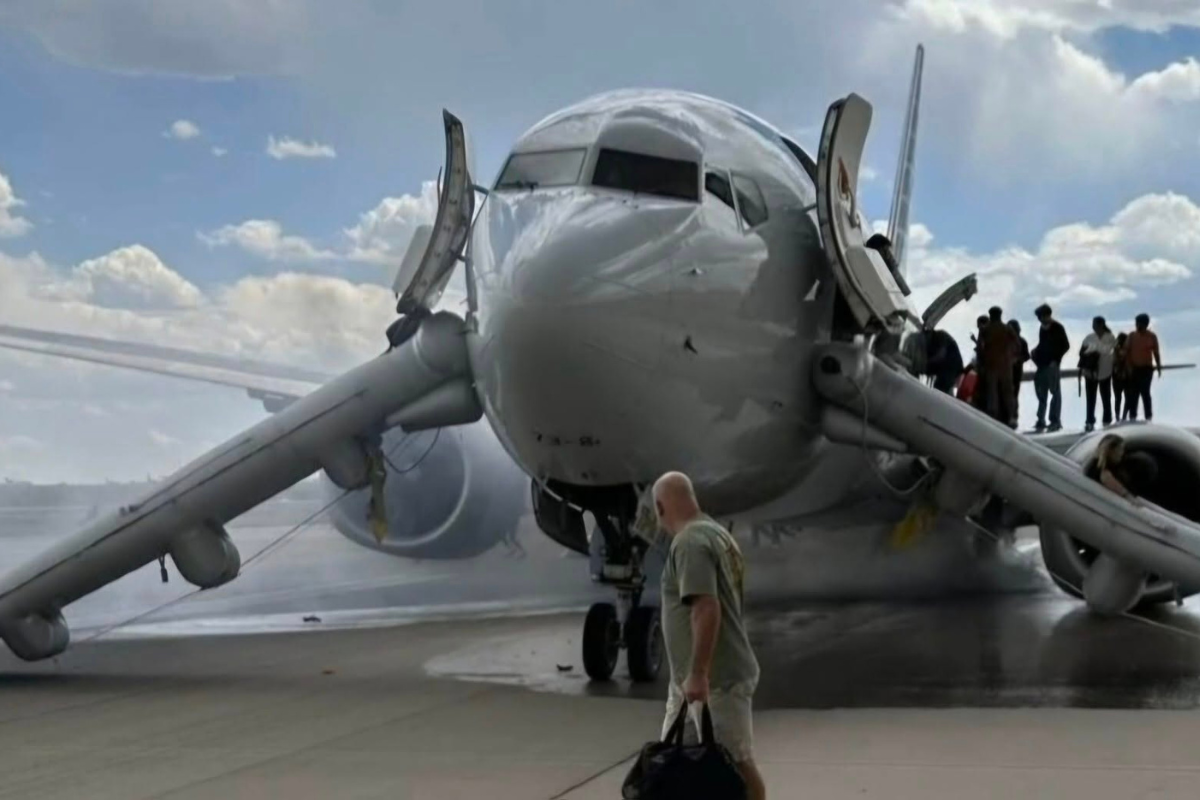
By now, it’s widely known that airplanes are designed to be evacuated in just 90 seconds with only half of the emergency exits operational. What aircraft designers don’t, however, account for in these designs is passenger behavior.
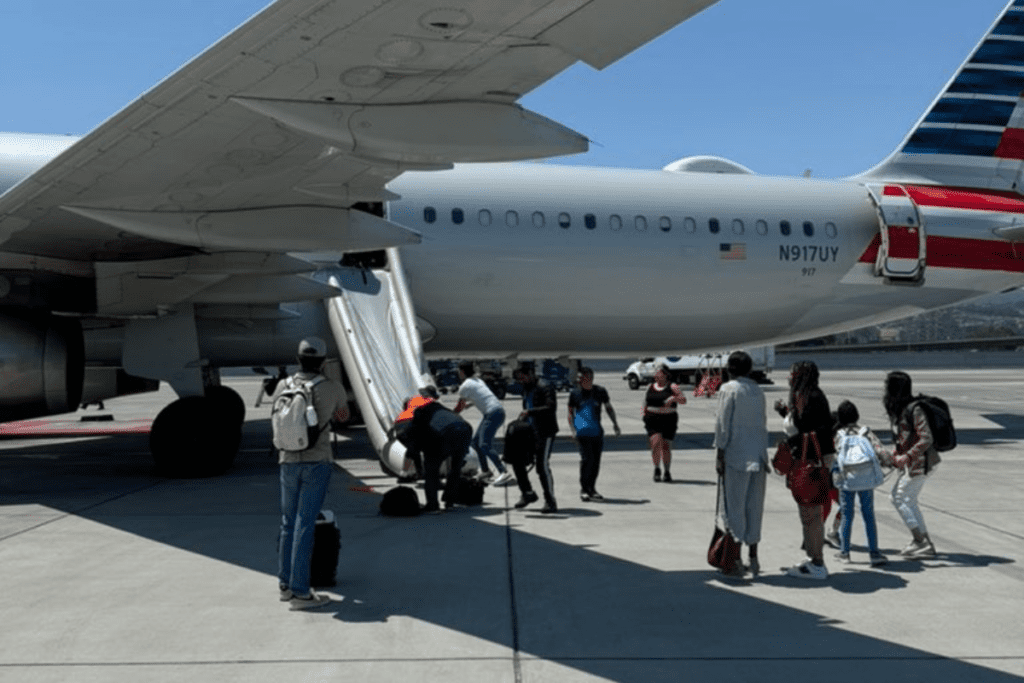
Specifically, passengers who delay an evacuation to retrieve heavy, cumbersome hand luggage from the overhead bins that then block the aisles and could tear the inflatable evacuation slide.
The Aeroflot Tragedy: A Warning Sign
This has been an issue for several years, but with the widespread use of mobile phone cameras capturing recent emergency evacuations from every angle, it’s a problem that’s becoming increasingly difficult to ignore.
Thankfully, in the West at least, this kind of seemingly selfish passenger behavior doesn’t appear to have resulted in any serious injury or death, but passengers delaying an evacuation to take their personal belongings could have led to catastrophic results in at least one recent crash.
In 2019, a fire engulfed an Aeroflot Sukhoi Superjet 100 regional jet that made an emergency landing at Moscow Sheremetyevo Airport following a lightning strike.
The fire erupted at the back of the plane, where the emergency exits couldn’t be activated. Everyone on board had to get to the front of the plane, but there has been widespread speculation that the evacuation was significantly slowed by people at the front stopping to retrieve their luggage.
41 passengers and crew perished in the blaze.
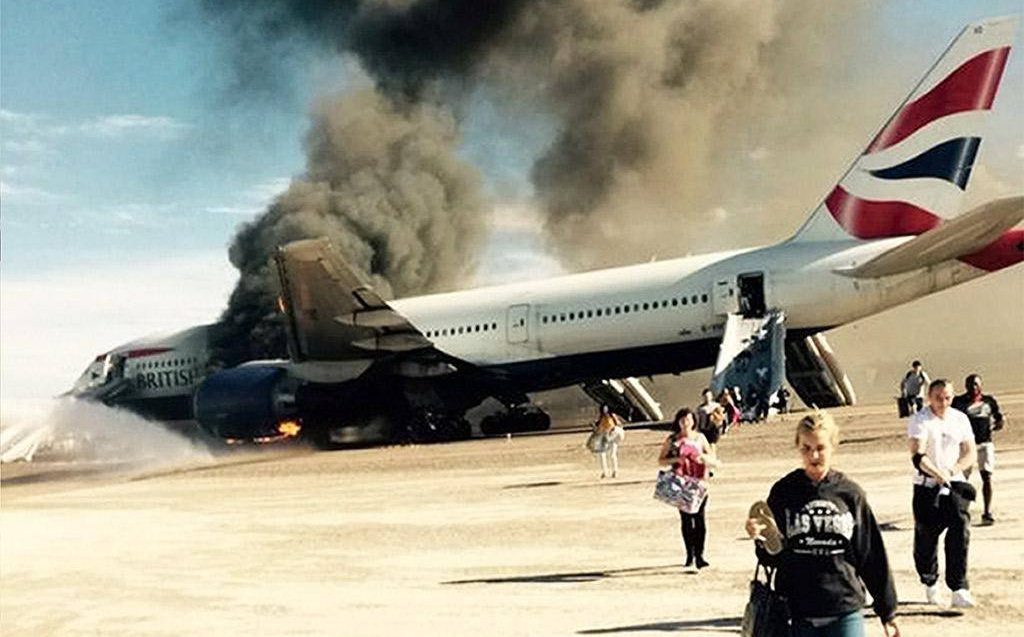
The airline industry now wants to study passenger psychology
“These images are very worrying, and we intend to do more research to better understand what is happening. It’s an absolutely crazy thing to do,” Willie Walsh, director general of the International Air Transport Association (IATA), told The Telegraph in a recent interview.
“If I’m on an aircraft and it has to evacuate, I’m getting off and not waiting for anyone. There is nothing more important in your luggage than your life,” Walsh continued.
Walsh started his career in the aviation industry as a pilot for the Irish flag carrier Aer Lingus. He quickly worked his way up through the ranks of management, ultimately becoming the chief executive of British Airways and then its parent company, IAG.
When Walsh left IAG during the COVID-19 pandemic, he quickly found a new home at IATA, a powerful trade body that represents more than 360 global airlines, representing the vast majority of international air traffic.
In the New Year, IATA plans to start a study to investigate the psychology of why passengers not only risk their own lives, but the lives of other people, by stopping to get their luggage in an evacuation.
The 90-second evacuation mandate is rarely achieved
“Looking at this from a psychological perspective is going to be really important in understanding whether this is a behaviour that we can change, and if it is, what do we need to do to appeal to people to do the right thing?” commented IATA’s head of safety, Nick Careen.
Careen is worried that the 90-second evacuation mandate – once tested in a simulated environment with real people but now increasingly done via computer models – was not even close to being achieved in many recent evacuations.
“It’s something that’s become noticeable. Luckily, it hasn’t resulted in deaths, but what we’re trying to do is avoid that,” Careen added.
Previous studies have concluded that passengers are more inclined to ignore flight attendants screaming at the top of their voices for everyone to leave everything behind if they don’t think their safety is at immediate risk.
Passengers would risk it all even if they thought their life was in danger
In 2018, for example, a study commissioned by the Royal Aeronautical Society (RAeS) in the United Kingdom revealed that:
- As many as 75% of Britons would stop to retrieve their luggage in an evacuation if they believed there was no immediate risk to their own safety.
- More worringly, 35% of respondents said they would still stop to get their bags, even if they thought there was an immediate risk to their safety.
This study also looked at why passengers might ignore safety instructions, and found:
- Nearly two-thirds of respondents claimed they would have an instinctive reaction to retrieve their belongings
- Around half said they didn’t trust the airlines to return their belongings.
- Around a third said they didn’t want the ‘hassle’ of replacing their belongings.
- Just over a third claimed their personal belongings were ‘too valuable’ to replace…. yes, apparently even more valuable than their life.
Are lockable overhead bins the answer?
If the IATA study comes to a similar conclusion, it’s hard to see how airlines can effectively change this behavior, especially with the gimmicky safety demonstrations that have become all the rage.
It’s hard to believe that the airline industry would try to mitigate this problem by limiting the amount of hand luggage that passengers can take into the cabin with them. This is a huge revenue earner and a benefit that has become increasingly important to passengers.
The alternative may be to develop lockable overhead bins, although critics of this idea claim emergency evacuations would still be delayed by passengers trying to pry open the bins.
It’s been more than seven years since RAeS recommended lockable overhead bins, and in that time, there has been literally no movement from aircraft manufacturers, third-party suppliers, or airlines to develop such a system.
Another option is to slap passengers with hefty fines if they are caught taking their personal belongings in an emergency, although that might be unpopular given the fact that you are turning victims into criminals.
What this IATA-commissioned study does suggest, though, is that the industry realizes that the current situation has to change. What those changes might look like, though, is still very unclear.


It’s tough to see a viable alternative to locked overhead bins unless people suddenly start to regard the lives of fellow passengers as being more valuable than possessions. The 90 second evacuation standard is already widely recognized as a farce. Make it so passengers know with certainty that overhead bins are locked to save lives in an emergency.
I’d still dearly love to see a widebody with dozens of wheelchair-restricted passengers along with other people with various restrictions and issues evacuate in 90 seconds in real world conditions.
How about… Permanently ban any passenger who is caught retrieving their bags during an evacuation. Explicitly warn about this in the safety demonstration.