



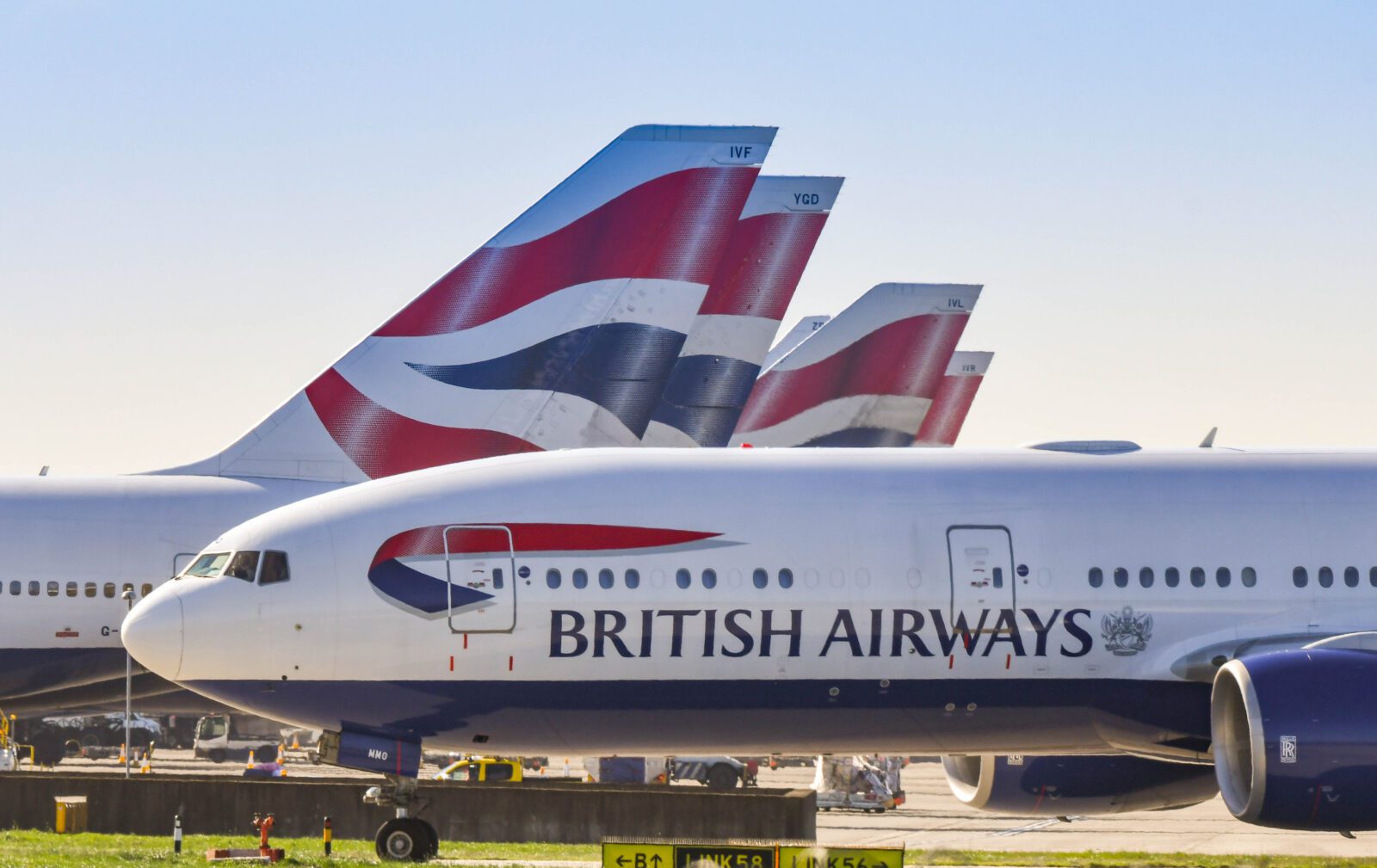
Just months after boasting about its use of artificial intelligence to improve operational performance and get its flights away as scheduled, British Airways has crashed out of an influential list of the most on-time airlines.
It’s quite the reversal of fortune for British Airways, which has reportedly spent millions of dollars trying to improve its performance after it started to become known for its frequent delays and last-minute cancellations.
According to aviation analytics firm Cirium, British Airways was the 7th most on-time global carrier in 2024 and the 8th most on-time airline in Europe: a testament to the investment the airline had made.
In 2025, however, British Airways had dropped out of Cirium’s Top Ten most on-time list – both globally and in Europe. What’s perhaps most alarming is that BA’s failure to keep up with rivals happened during a remarkably mild year that didn’t see any major disruptive events at its home base at London Heathrow Airport.
According to Cirium, Mexican flag carrier Aeromexico was the most on-time airline again in 2025, followed by Saudi Arabia’s Saudia, Scandinavian airline SAS, Brazil’s Azul, and then Qatar Airways.
The remaining Top Ten was made up of Iberia (which is owned by the same parent company as British Airways, LATAM Airlines, Avianca, Turkish Airlines, and Delta Air Lines.
There are two main approaches to how airlines and the wider aviation industry measure on-time performance. Airlines prefer what is known as the D-15 method, in which a flight is considered on-time if it pushes back from the gate within 15 minutes of its scheduled departure time.
Cirium, however, has chosen to rank airlines by what is arguably the method that is far more important to passengers – measuring on-time performance by the number of flights that arrive at their destination within 15 minutes of their scheduled arrival time.
One of the biggest problems with the D-15 method is that there can be little correlation between a plane pushing back from the gate on time and its arriving at its destination as scheduled.
When airlines focus solely on improving D-15, they get to boast that their on-time performance has improved, but it doesn’t mean that passengers feel the benefit of what they really want – arriving at their destination on time.
Most airlines will naturally see fluctuations in their on-time performance: bad weather and congested airspace are the two primary challenges that airlines face in consistently delivering an on-time operation.
That’s why the industry is often focused on ‘banking’ good performance metrics when conditions are good and giving their stats a buffer for when severe weather or traffic control shortages hit.
Given the primary reasons that affect on-time performance, some airlines are better positioned than others to deliver an on-time operation. If you are operating an airline in markets with year-round mild weather or between airports that aren’t running at full capacity, you have a better chance of delivering that all-important on-time arrival.
That being said, ideal operating conditions have to be accompanied by a laser focus on the right systems, processes, and infrastructure to deliver an on-time schedule.
British Airways did not reply to a request for comment.